The Haka: History and Significance
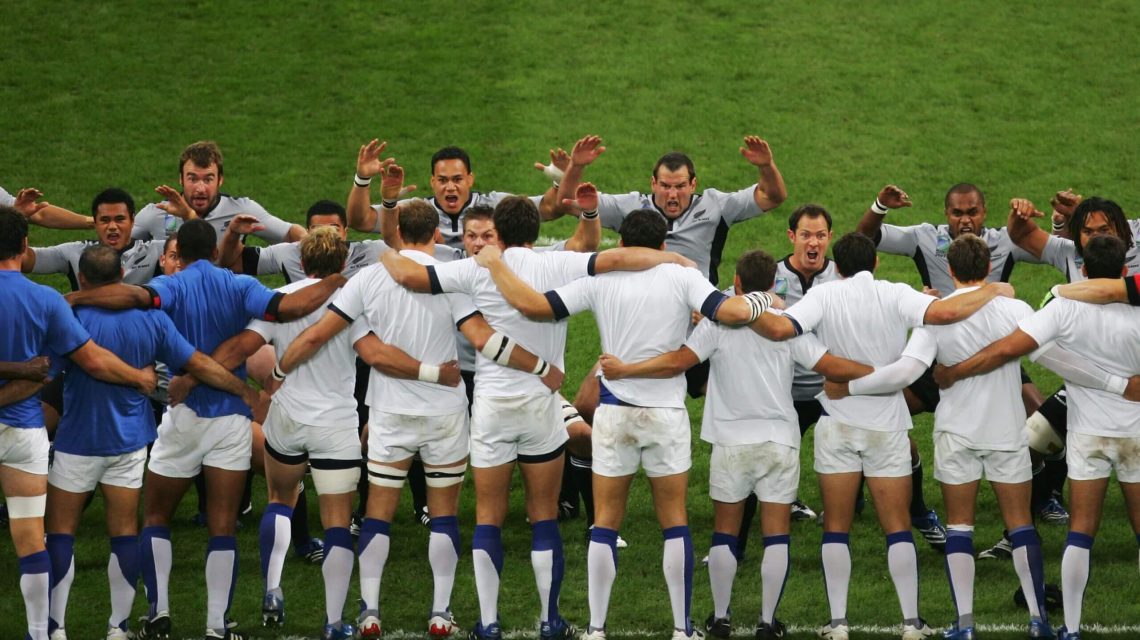
The haka, a ceremonial Maori dance, is a powerful ritual performed by the New Zealand rugby union team, the All Blacks, and other teams from New Zealand. It embodies the spirit and tradition of rugby, symbolizing unity and challenge. This weekend, a sell-out crowd at Baltimore’s M&T Bank Stadium will witness the All Blacks perform the haka against South Africa, in their first clash on American soil.
The Haka’s Controversial Past
Twenty years ago, the haka faced criticism. Opponents argued that it gave New Zealand an unfair advantage moments before kick-off. Tana Umaga, former All Blacks captain and current defense coach, recalls how the ritual was misunderstood. Teams were skeptical, perceiving it as a time-wasting advantage.
Umaga sought guidance from Maori elder Derek Lardelli to deepen the team’s understanding of the haka, which led to the creation of a new version, Kapa o Pango, enhancing the traditional Ka Mate. The new haka emphasizes unity with the land, drawing power and strength from the ancestors and their history.
The Evolution of Kapa o Pango
Introduced in 2005 against South Africa, Kapa o Pango captivated audiences with a move resembling a throat-slitting gesture, symbolizing air drawn into lungs. This version brought diverse players together under one team, whether of Pacific Island, European, or Maori descent, emphasizing inclusion and unity.
Choosing the haka for each match is the leadership committee’s decision, often reserving Kapa o Pango for major games, like the current series against South Africa.
Respect and Responses to the Haka
Throughout the series, the South Africans have shown respect for the haka. Despite efforts to gain competitive edges, their coach Rassie Erasmus has maintained a respectful stance toward this tradition.
Historically, the haka sparked varied reactions. Opposing teams have faced penalties or defeats after devising unique responses. For instance, Australia once turned their backs in 1996, resulting in a heavy loss. In 2007, France wore jerseys resembling their country’s flag, and England presented a V-shape formation in 2019, both contributing to victories over New Zealand.
Current Regulations and Spectator Interaction
The IRB now mandates that teams must stay within their territory, at least 10 meters away from the halfway line during the haka. While this attempts to avoid pre-match confrontations, it also preserves the commercial value associated with the ritual.
Fans, meanwhile, are not bound by these rules. Irish and English supporters often sing during the haka, adding a cultural dimension to the spectacle. Ahead of recent matches, Erasmus requested silence during the haka, advocating respect, although not always fully adhered to.
With South Africa currently leading the series after a comeback win in Soweto, the upcoming game in Baltimore serves as the decisive match. Umaga reflects that responses are natural and expected, emphasizing that the All Blacks’ focus remains on representing their roots and embracing the challenge.
 British Police Arrest Man Suspected of Terror Plot
  Nick Saban’s Comments on ESPN Spark Debate Over College Sports Regulations
  Activists Push for Nationwide Ban on Child Marriage in the U.S.
  Freddy’s American Adventure: From Soccer to College Football
  Investigation into Alleged Incident at Cornell University
  Rising Drone Threats Highlight Vulnerabilities in Moldova’s Airspace Defense