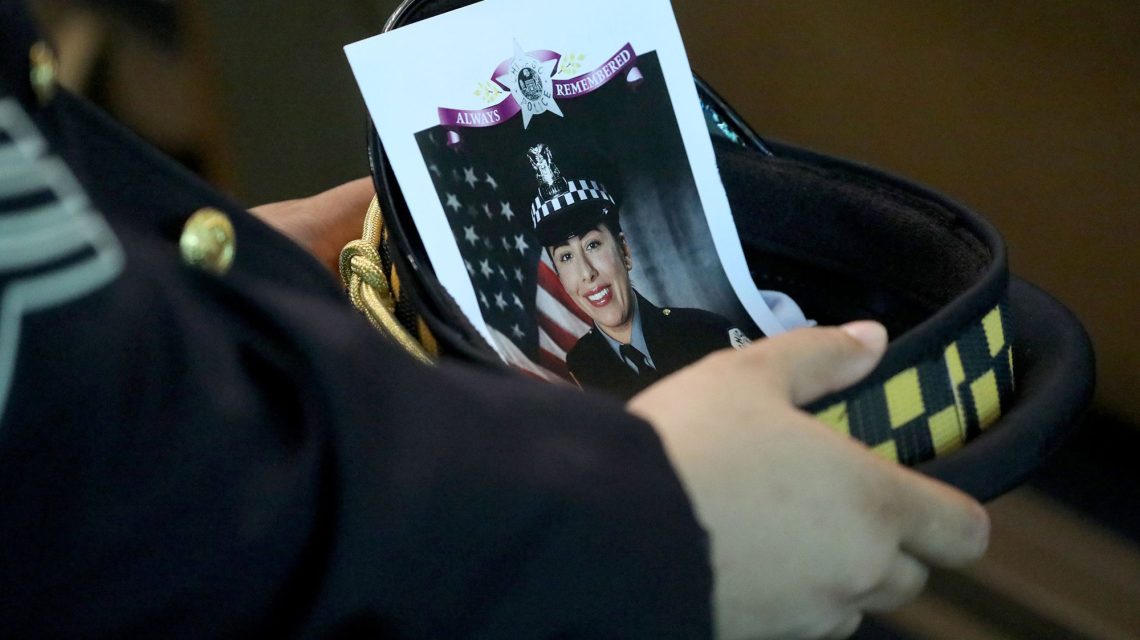
Nearly three years have passed since the tragic 2021 murder of Chicago police officer Ella French. During this time, much has been revealed about the circumstances surrounding her death, such as the grim details of her final moments and the type of weapon used against her. However, one significant piece of information remained undisclosed until recently: the name of the retail shop where the gun was purchased.
The shop in question is Deb’s Gun Shop, an Indiana-based retailer near the Illinois border. This retailer has been under scrutiny by federal regulators due to the frequency with which its firearms surface in crime investigations. Information about the retailer was revealed by James Vanzant, an attorney representing the man convicted on federal charges for purchasing the gun. Speaking through his lawyer, Ed Estack, the owner of Deb’s Gun Shop, acknowledged the tragedy but refrained from further comment.
Two decades ago, the source of firearms used in crimes was readily available to law enforcement and the media. This transparency changed in 2003 when Congress enacted the Tiahrt amendment. Named after Rep. Todd Tiahrt, this legislation restricts the Bureau of Alcohol, Tobacco, Firearms, and Explosives (ATF) from releasing trace data on guns, including retailer information. The change stymied efforts to investigate gun trafficking patterns and protect retailers from being publicly associated with crimes linked to their merchandise.
Critics argue that the Tiahrt amendment creates a gap in public safety knowledge, shielding retailers from scrutiny. Gun safety advocates emphasize the importance of such data to understand the pattern of illegal firearm sales that enable criminals.
The story of the gun used in French’s murder traces back to March 2021. Jamel Danzy purchased the Glock from Deb’s Gun Shop and later admitted to ATF investigators that he bought the weapon at the request of Eric Morgan, who was ineligible to purchase a firearm himself due to a prior felony conviction. The gun changed hands, leading directly to the events of August 2021, when French was killed, and another officer was severely wounded during a traffic stop involving the Morgan brothers.
Eric Morgan accepted a plea deal on charges related to the incident, while Emonte Morgan was convicted of murder. Danzy was also convicted for his role in the transaction, receiving a 30-month federal prison sentence.
The ATF has refrained from revealing the retailer’s name in connection with French’s murder investigation. Federal prosecutors cited policy restrictions, yet such information does occasionally emerge in legal filings where straw purchases or illegal resales are prosecuted. These filings have named specific gun retailers without leveling charges against them.
The city of Gary, Indiana, has engaged in a longstanding lawsuit targeting gun retailers and manufacturers, seeking to obtain sales records from businesses like Deb’s. While the state legislature introduced legislation to dismiss the suit, it remains active.
ATF records show that Deb’s Gun Shop is under enhanced scrutiny through a program called Demand 2, which monitors retailers linked to frequent crime-related gun recoveries. According to the ATF, participation in Demand 2 does not necessarily indicate wrongdoing.
Industry advocates argue that Demand 2 participants operate within legal boundaries. They emphasize that straw purchases are illegal actions attributable to the buyer rather than the retailer. Some support the Tiahrt provisions, maintaining that access to trace data should be reserved for law enforcement actively involved in investigations.
Despite debate over Tiahrt, its repeal or modification has stalled in Congress. Researchers like Dr. Garen Wintemute from the University of California-Davis argue that access to data on illegal firearms transactions is crucial for understanding and curbing gun violence.
Alternatives to obtain such data have emerged. Some cities, like Chicago, have facilitated studies identifying the sources of trafficked guns. However, these efforts often encounter legal and political resistance due to the Tiahrt amendment.
Baltimore is actively pursuing a lawsuit against the ATF to gain access to gun-trace data. The National Shooting Sports Foundation has publicly opposed such actions, citing Tiahrt as protecting lawful firearms commerce from misuse and defamation.