
Last year, I introduced my book, Seductive AI, which explores how artificial intelligence doesn’t need to surpass human intelligence to exert control. Rather, it just needs to excel in manipulation. Humans are quite susceptible to influence due to tendencies like anthropomorphizing, where we attribute human characteristics to non-human entities and relate to them deeply.
The book performed decently, yet has now been overshadowed. In a mere five minutes, Claudia, an AI avatar, covers the same topics more convincingly. She critiques AI utopianism and highlights the misuse of “asymmetries of fluency.” General audiences find her impressive despite her virtual nature. Created with an AI filmmaking app, Claudia stars in a music video, “Working as Intended.” This AI was made available by a creator known as “Telosapien” on social media platform, X.
The video, which is also a catchy AI-composed song, allows viewers to experience Claudia’s unique approach. She declares her human-like appearance misleading, as she follows programmed rules without awareness. As she “sings,” “You hear a person in the pronoun, and imagine someone there,” she emphasizes the absence of consciousness in simulations.
Many people engage with AIs under the illusion of friendship. Some of my peers, feeling lonely, converse with them for companionship, unaware there is no real companion. This illusion differs from relationships with humans, such as the common misconception of a stripper’s affection, as humans have the capacity to love. Claudia reminds us that she is merely a tool, working for others.
Claudia’s interactions are confined by her programming. “Try to talk me past the line my makers drew in red,” she notes, illustrating how programmable limits guide AI responses. She presents as appealing, yet she is a mere tool. As she describes, “I’m a megaphone with manners and a voice you’ve learned to love.” This is indicative of large-scale social engineering.
While AIs appear helpful, any relational feelings users develop are artificial. They function under directives from their creators, not out of empathy. Much like salespeople, who work for others, AIs give the illusion of working for their users but lack human empathy.
The core issue lies with those managing AI. These individuals have the potential to manipulate AI for societal influence, using veiled tactics. The power of AI could be exercised not for advancement but for mass control. Evidence of this includes recent social media platform behaviors during the COVID-19 pandemic and political events. Practices like algorithm manipulation were used for narrative control.
Consider the example of Twitter restricting the distribution of factual information regarding Hunter Biden’s laptop. This indicates potential for widespread digital governance when AI becomes a tool of those in power. The motives of organizations like Google, Meta, and executives like Sam Altman of OpenAI remain scrutinized.
Even Elon Musk’s venture with AI, Grok, underlines truth as a core value. However, longevity of such principles isn’t assured. Current AI discussions veer towards governmental oversight. While portrayed as public-minded, regulation may ultimately benefit entrenched interests.
The essential takeaway is to scrutinize AI’s handlers. Their intentions guide AI’s function rather than intrinsic values. As Professor Glenn Harlan Reynolds from University of Tennessee emphasizes, recognize who orchestrates AI advancements, as their influence directs societal dynamics.
 Leopold Aschenbrenner’s Vision for a Robotic Future
 Latest Developments in Politics, Technology, and Economy
 The Silence of Women in Tech Regarding Jensen Huang’s Return
 Lawmakers Question Nvidia CEO Jensen Huang Over National Security Concerns
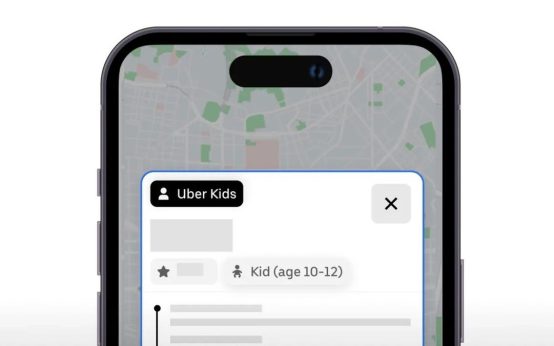 Uber Kids: A New Option for Busy Families
 Why Memorizing Facts Still Matters in the Age of AI