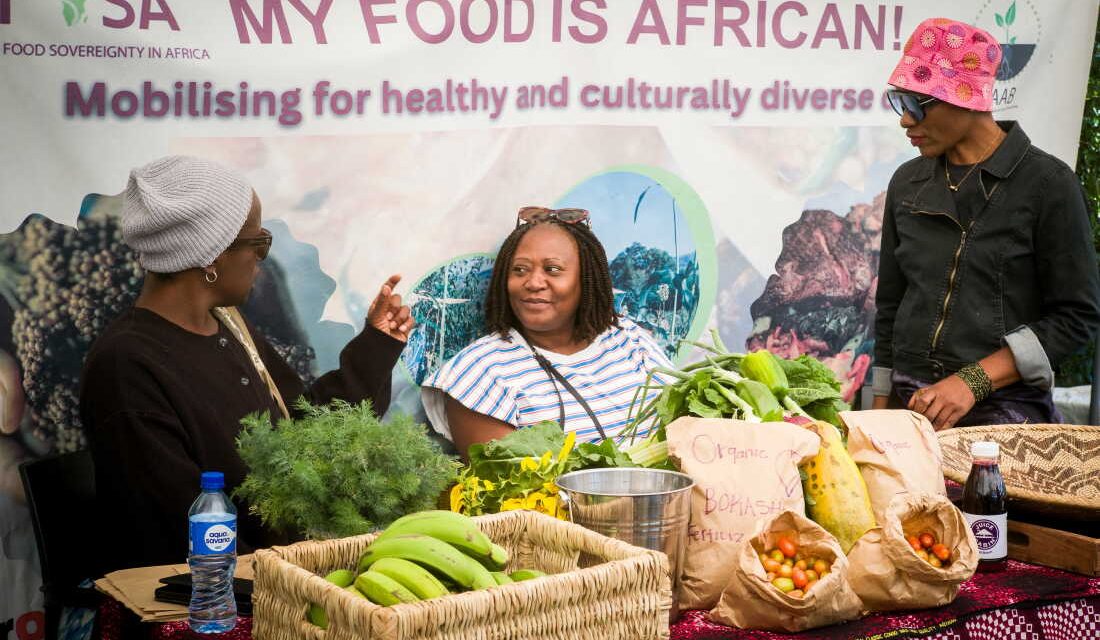
In Zambia’s markets, organic vegetables are sold alongside homemade bokashi fertilizer, priced at roughly $2.50 per bag. On the outskirts of Lusaka, Kanangwa Newlove has transformed 12 acres into a thriving agricultural site. Her fields are scattered with fruit trees, yielding long rows of tomatoes, corn, pumpkins, and blackjack greens. She cultivates eleven types of lettuce. “I began sharing vegetables with colleagues, and soon supermarkets started ordering,” Newlove recalls.
Challenges in 2026
The year 2026 posed significant obstacles for farmers. The conflict in Iran disrupted the Strait of Hormuz, severely affecting global trade, including fertilizers. This disruption prompted a spike in fertilizer costs worldwide, impacting many, especially smallholder farmers in Africa. Newlove, however, felt minimal impact due to her reliance on bokashi, a fermented compost she prepares herself.
Bokashi: An Ancient Fertilization Method
Originating from ancient Korean farming and popularized in Japan, bokashi is simple to produce and highly effective, according to Newlove. “It provided us with a robust, organic fertilizer ready in weeks. It was transformative,” she shares. The practice has gained popularity in Zambia, with farmers selling homemade bokashi and exchanging tips online. The Kasisi Agricultural Training Centre facilitates bokashi training and frequently brings students to observe Newlove’s methods.
“Zambian farmers are searching for cost-efficient and effective farming methods,” says Rabecca Mwila from the Knowledge Platform for Organic Agriculture and Agroecology in Africa. “Bokashi offers a supportive solution.”
Making Bokashi Fertilizer
Bokashi involves fermenting food scraps without oxygen. Farmers typically create an outdoor version using readily available materials such as leaves, crop residues, animal dung, charcoal, and ash. By adding yeast and a sugar source like molasses or bananas, fermentation is activated. Once mixed, the concoction ferments over weeks and is then buried near crops for complete decomposition.
“Farmers are excited as bokashi proves cheaper, and soil health improves with earthworms,” Mwila notes. Amid erratic rainfall and prolonged dry spells, many seek sustainable solutions, concerned about synthetic fertilizers’ long-term effects.
Addressing Fertilizer Dependence
Zambia historically imported most of its fertilizers. Price surges post-COVID-19 and the Russia-Ukraine conflict pushed Zambia to evaluate alternatives for food security. Besides bokashi, efforts to foster local fertilizer production emerged. Recently, a Chinese-Zambian conglomerate declared plans for a $1.5 billion fertilizer facility in Zambia. While global costs have reduced, fertilizer remains costly in several southern African nations.
Donald Zulu, from Copperbelt University, highlights, “Without subsidies, the cost of fertilizer is prohibitive for many small-scale farmers.” A farmer might spend close to $400 for enough fertilizer to cultivate 2.5 acres of corn.
Evaluating Bokashi’s Efficiency on Crops
Seeking cost-effective alternatives, Zulu joined WeForest and local farmers to examine bokashi’s effectiveness on corn and cabbage in 2024. “The findings were promising,” he remarks, noting bokashi matched mineral fertilizer yields. Combining bokashi and mineral fertilizers boosted crop results, offering a sustainable farming approach.
“Bokashi’s nontoxic nature means no mask is needed during preparation,” Newlove comments. “It embodies a labor of love.”
 Understanding the Rise in Stroke Risk Among Young Americans
  A Headache Leads to a Life-Threatening Discovery for Julie Nashawaty
  Architects Spotlight Housing Challenges in Light of Climate Change and AI Concerns
  How Health Leaders Can Prepare for Unpredictable Crises
  Public Health Concerns After Death of Russian Researcher
  Keys to a Longer, Healthier Life According to Dr. Michael Hall