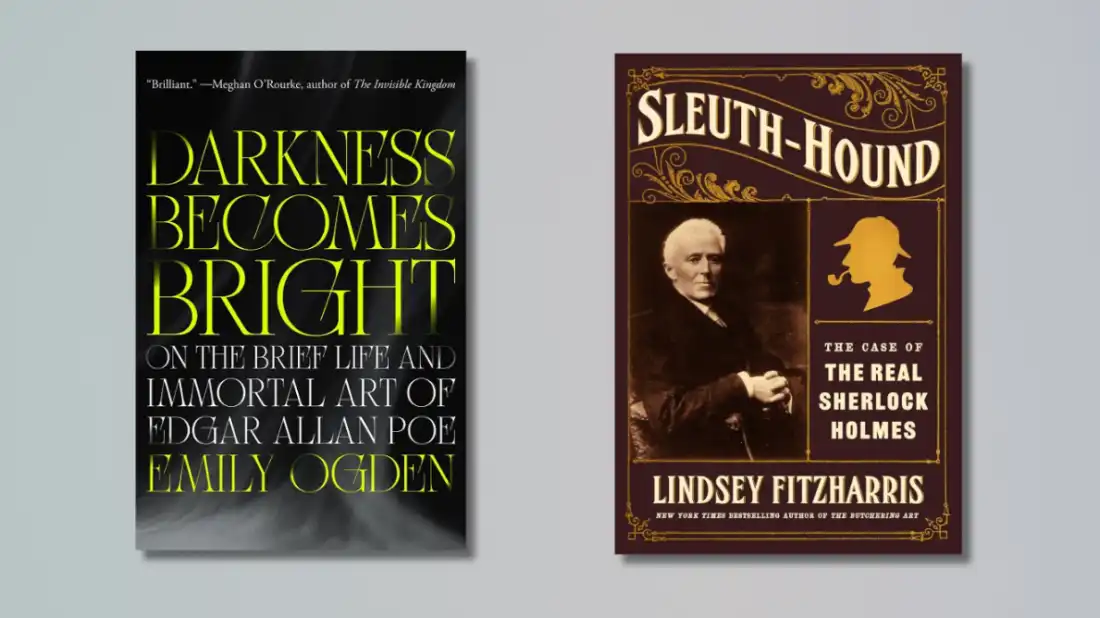
Edgar Allan Poe remains an enigma in the literary world. Born in Boston in 1809 to actor parents, he faced orphanhood and was later raised by the affluent Allan family in Virginia. His life was brief and troubled. Poe passed away mysteriously at 40, leaving a legacy of haunting poems, essays, and stories. Notably, Poe is credited with inventing the detective story. The source of Poe’s exceptional talent, and its lasting impact, continues to intrigue biographers and critics.
Emily Ogden, in her book Darkness Becomes Bright: On the Brief Life and Immortal Art of Edgar Allan Poe, explores Poe’s influence. Ogden, a professor at the University of Virginia, became captivated by Poe’s work while teaching it. Her book delves into Poe’s life, his followers, and those influenced by him. She suggests that to truly understand Poe, one must be willing to explore the darker aspects of human experience.
The book combines biography with analysis of the obsessions Poe inspired in figures like Charles Baudelaire. Ogden begins with an incident from 1849 involving Poe and his friend John Sartain. During a late-night walk, Sartain prevented Poe from jumping off a platform above the Schuylkill River. Ogden examines how Poe’s personal struggles fueled, and at times hindered, his literary output.
Sir Arthur Conan Doyle hailed Poe as the master of detective fiction. Doyle acknowledged Poe’s comprehensive exploration of the genre, yet he ventured into mystery writing, producing 60 stories featuring Sherlock Holmes. Holmes became so beloved that letters still arrive at his fictional residence, 221B Baker Street.
Lindsay Fitzharris, a medical historian, provides new insights into Doyle’s inspirations in her book Sleuth-Hound: The Case of the Real Sherlock Holmes. Fitzharris explores the influence of two doctors: Joseph Bell, known for his diagnostic skills, and Henry Duncan Littlejohn, a forensics expert. Bell’s methods and collaborations with Littlejohn, even on Jack the Ripper cases, shaped Doyle’s creation of Holmes and Watson. Fitzharris also presents brief histories of toxicology, anesthesiology, and public health advancements.
Both Ogden’s and Fitzharris’s works reveal fresh perspectives on often-retold stories. As Poe’s tale “The Purloined Letter” suggests, new insights can lie hidden in plain view, waiting to be unearthed.
 Jordan McClanahan on Her Unique Mormon Experience
 Chicago Area Celebrates Diwali and Hanukkah
 The Emergence of The Reader: Reviving Book Reviews
 Understanding the Superstition of Friday the 13th
 Brie Bella: From WWE Fame to Business Success
 The Evolution of Graffiti Culture in Los Angeles