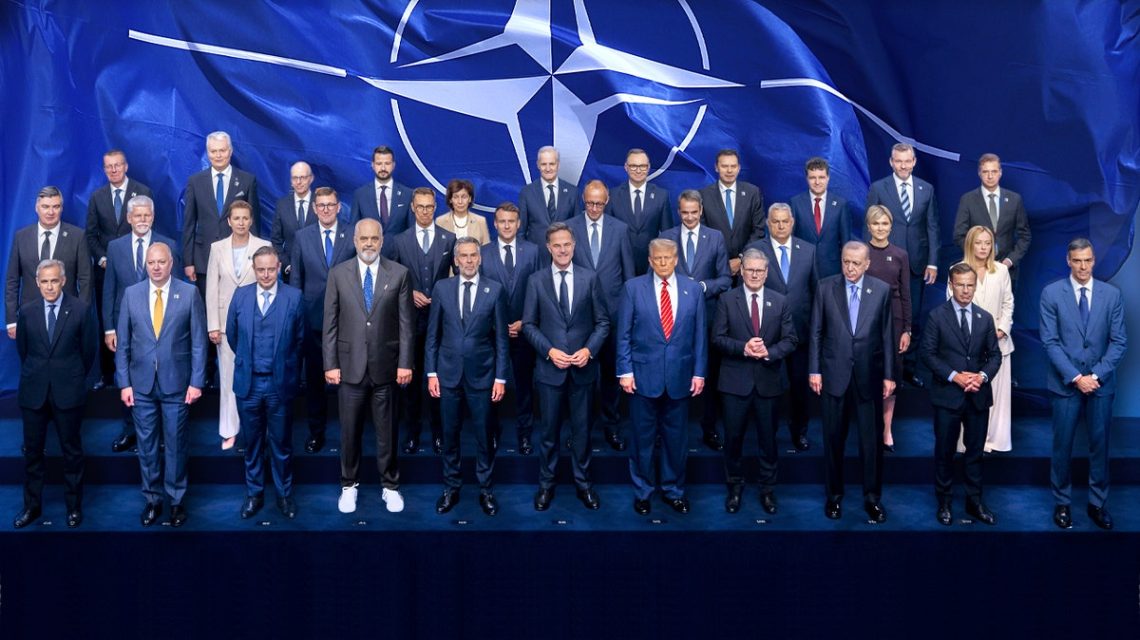
NATO has seen significant changes in its defense strategies in recent years. After sustained pressures from former President Donald Trump and concerns over Russia’s military actions in Ukraine, member countries are now investing more in defense than they have since the Cold War era.
NATO leaders have agreed to transition towards a new fiscal framework, aiming for defense spending approaching 5% of GDP by the year 2035. Trump’s criticisms of NATO allies for leaning on U.S. military support while underfunding their own defense capabilities led to the prioritization of spending targets. This once obscure benchmark has become central to NATO’s political priorities.
Jim Townsend, a previous deputy assistant secretary of defense for Europe and NATO policy, explained to Fox News Digital, ‘The invasion by Putin in 2022 and Trump’s influence undeniably contributed significantly to the rise in defense spending by alliance members.’
On June 25, 2025, NATO leaders gathered for a summit in The Hague, Netherlands, where they pledged to meet the defense spending goal set by Trump. Nations nearest to Russia acted swiftly to bolster their defense budgets.
Poland has become the top defense spender relative to GDP among NATO members. Since 2022, Estonia, Latvia, and Lithuania have markedly increased their military expenditures. Germany, which has long been seen as a symbol of military regression post-Cold War, has launched a comprehensive rearmament initiative backed by a 100 billion euro fund to rejuvenate its armed forces.
NATO’s latest annual report reveals that in 2025, defense spending by European allies and Canada grew by 20% compared to the previous year. Additionally, hundreds of billions have been added to defense budgets since 2014.
Across Europe, governments are acquiring tanks, fighter jets, air defenses, and artillery systems. They are also striving to replenish stockpiles diminished by the Ukraine conflict. However, this rapid spending has exposed certain limitations.
Townsend remarked, ‘Increased spending is necessary, but transformation into tangible defense capabilities will take time.’
The Ukraine conflict illustrated the rapid depletion of ammunition reserves, the strain on production lines, and the pressure on defense industries intended for peacetime operations. According to Townsend, a defense budget reflects political intent, but does not necessarily indicate readiness for deployment or endurance for sustained combat.
For years, the alliance relied heavily on the 2% GDP spending benchmark for burden-sharing assessments. Countries adhering to this could claim fulfillment of alliance obligations, while those falling short faced U.S. scrutiny. However, as shown by the situation in Ukraine, merely increasing budgets does not immediately translate to enhanced military capabilities.
NATO Secretary-General Mark Rutte has emphasized that defense spending growth must be accompanied by strategic investments in critical capabilities. Increasing defense budgets should go hand-in-hand with expanding production capacity.
Townsend noted how defense industries in both Europe and the US shrank post-Cold War due to reduced military spending. As he pointed out, defense industrial capabilities have deteriorated, impacting surge production capabilities.
With financial commitments in place and orders growing, manufacturers are struggling to meet these demands. The war in Ukraine demonstrated that modern industrial warfare can overwhelm production systems designed for peacetime.
Many procurement plans made after 2022 face delivery delays, supply chain issues, and shortages in crucial areas such as artillery ammunition and air defense interceptors. Structural constraints like fragmented procurement processes and industrial bottlenecks have been recognized as potential obstacles to quick capability improvements.
Europe’s dependence on American technology and military production capabilities remains significant. Townsend explained that Europe needs systems like air defense and long-range strike capabilities. Poland’s move to procure weapons from South Korea exemplifies a shift driven by the need for faster deliveries.
European governments are simultaneously working to boost domestic production to lessen reliance on U.S. suppliers. Germany has increased ammunition manufacturing, and some civilian industries are shifting part of their operations to defense production.
Despite these efforts, Townsend emphasized that rebuilding Europe’s military capacity is a long-term endeavor. He posed the question of whether NATO will bridge the capability gap swiftly enough to prevent Russia from exploiting this shortfall.
 British Police Arrest Man Suspected of Terror Plot
  Activists Push for Nationwide Ban on Child Marriage in the U.S.
  Investigation into Alleged Incident at Cornell University
  Rising Drone Threats Highlight Vulnerabilities in Moldova’s Airspace Defense
  Bolivia Faces Security Test Amid Unrest
  Incident on FlyDubai Flight Raises Security Concerns