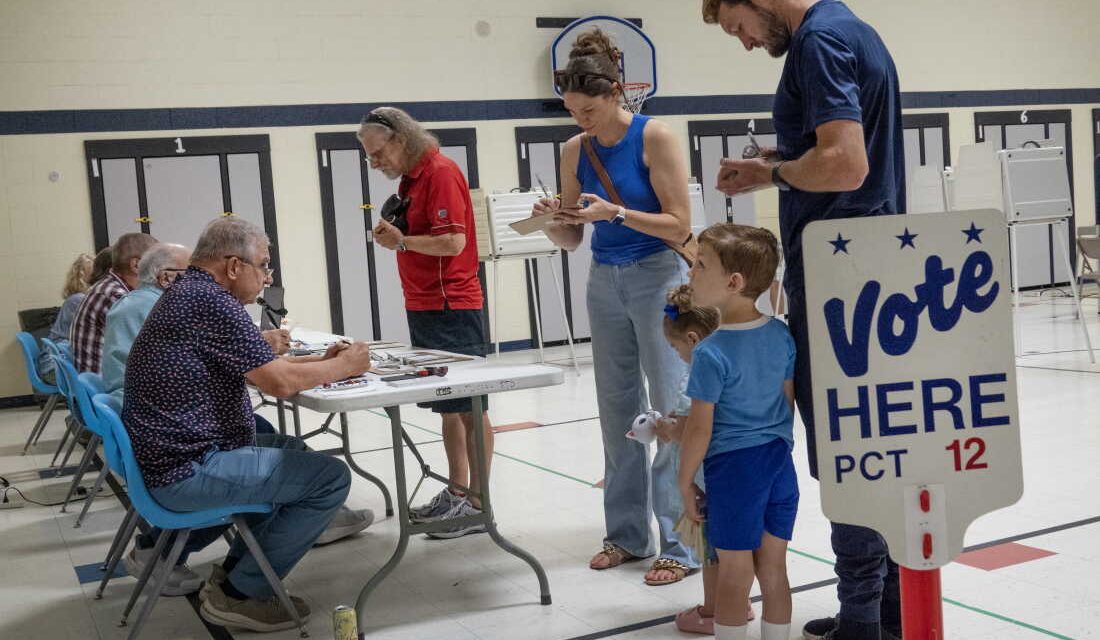
Last month, voters in Shelby, Michigan participated in polling activities. Historically, the United States has not attempted to create a comprehensive list of American citizens. This task typically falls to individual states, as states are responsible for maintaining voter lists under the U.S. Constitution. Scott Olson from Getty Images provided a visual of the event.
The Trump administration is pursuing a new initiative to create detailed lists of eligible citizens over 18 years of age, who can vote in the upcoming midterm election. However, the administration missed its deadline to present this information on a portal, planned for 60 days before Election Day. According to court records, Department of Justice attorneys informed opposing counsel in two lawsuits that they would give a 48-hour notice before launching the state citizenship portal.
Traditionally, the federal government has not created such comprehensive citizenship lists. States control their own electoral processes, as mandated by the Constitution. However, President Trump has taken actions to influence elections. A key premise for the government’s initiative is an executive order Trump signed on March 31. Although a lower court blocked parts of this order in 23 states and Washington, D.C., the Supreme Court lifted the injunction, allowing the plan to move forward.
States have a strong incentive to use these lists to avoid federal investigation,” said Jules Torti, an attorney with Protect Democracy. “We know these lists will rely on inaccurate data, risking significant disenfranchisement.
The executive order tasks U.S. Citizenship and Immigration Services (USCIS) and the Social Security Administration with creating “State Citizenship Lists” to be shared with state officials before each federal election. It also prioritizes investigating and prosecuting officials who issue federal ballots to ineligible voters. Organizations like Protect Democracy and the Electronic Privacy Information Center (EPIC) challenge the order, expressing concerns over data accuracy and breach of federal laws like the Privacy Act.
EPIC, alongside individual voters, filed a motion with a Maryland federal judge to prevent the administration from creating and publicizing these lists. They argue this activity would breach multiple federal laws, including the Privacy Act and the Social Security Act. The lawsuit highlights inaccuracies in current citizenship data and processing delays in naturalization updates.
Despite missing the deadline, the administration plans to proceed with the citizenship lists, heightening concerns about the impact on election day. “This approach creates chaos and confusion for voters and election officials alike,” said Torti.
Neither the Department of Justice nor the Department of Homeland Security responded to queries from NPR regarding the stalled citizenship lists. The government briefly put up a webpage indicating the citizenship lists portal would be “Coming Soon,” but provided no updates following the missed June 30 deadline.
Lawyers representing Democratic groups challenged the March 31 executive order in April and urged the court to require immediate updates about the portal’s progress. Meanwhile, the Department of Homeland Security is intensifying efforts to scan voter rolls for registered noncitizens, despite rare instances of noncitizen voting.
Recently, ICE released a request on a federal procurement site for vendors who can assemble voter rolls and history from all states and U.S. territories to support fraud detection. NPR’s Hansi Lo Wang contributed to this report.
 Maryland First State to Restrict Electronic Pricing in Grocery Stores
  Activists Push for Nationwide Ban on Child Marriage in the U.S.
  Democratic Hopes and Historical Warnings in 2026 Senate Race
  Republicans Face Challenges Amidst Cost of Living Concerns
  A Different Kind of Fall for Congress This Year
  Cornel West and Sean Hannity Discuss Differences on Podcast