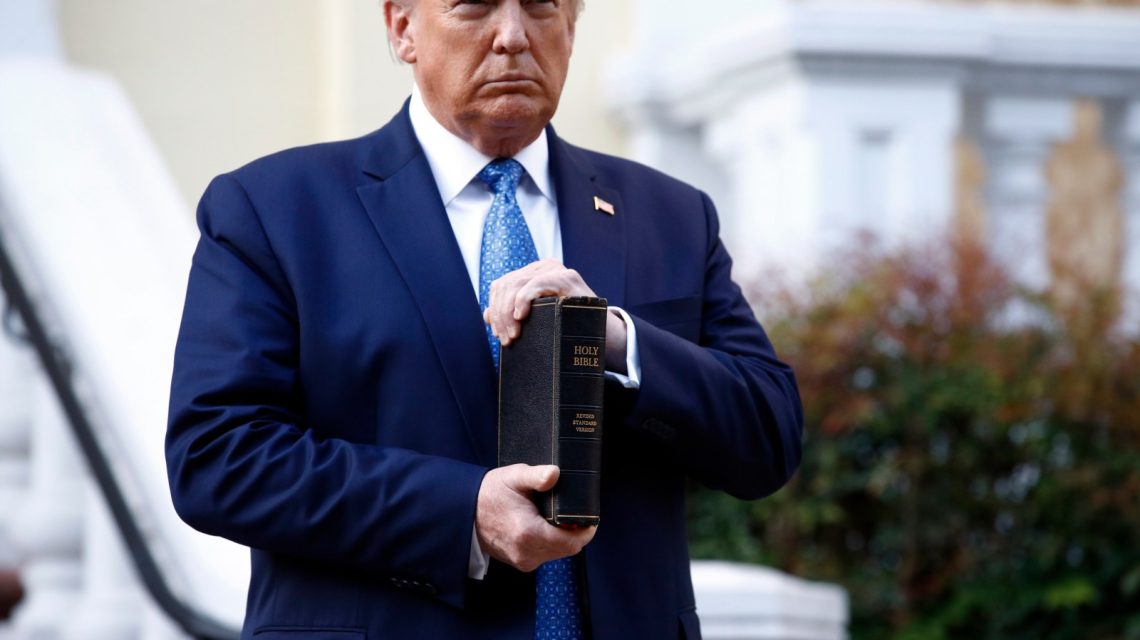
President Donald Trump has issued a striking threat towards Iran. He declared that for every missile, rocket, or drone fired at a U.S. ship in the Strait of Hormuz, the United States will respond by bombing an Iranian bridge or power plant. This assertion echoes an eye-for-an-eye foreign policy.
On Wednesday, Trump utilized Truth Social to proclaim the U.S. will “bomb and destroy ONE BRIDGE OR POWER PLANT” for each attack on a ship, with potential targets even “next to, or in” Tehran. This statement leaves a clear message, catering to his supporters and aligning with his straightforward policy style.
This retaliatory approach, emphasizing a tit-for-tat strategy, parallels Trump’s previous policies. His trade initiatives, for instance, promoted a “Fair and Reciprocal Plan” to counter what his administration labeled as unfair trade practices. This strategy was apparent in 2020 after the U.S. eliminated Iranian General Qassem Soleimani, when Trump threatened 52 Iranian targets as a retaliation reflecting the 52 American hostages held in 1979.
However, the real-world implications of such threats present challenges. The Strait of Hormuz holds strategic significance, with the U.S. Energy Information Administration noting that about 20 million barrels of oil pass through daily, representing roughly one-fifth of global petroleum liquids consumption. Disruptions here could have severe consequences.
The U.S. Central Command recently reported over 30 attacks on commercial vessels by Iran in the past three months, endangering maritime safety and navigation. A clear deterrent is logical, yet several conditions must hold for effectiveness. Tehran must believe Trump will enforce his threats, that Washington can manage potential escalation, and that the risks to Iran are greater than any propaganda benefits.
This simplistic one-for-one threat might serve more as a negotiation tactic intended to dominate media attention and lead Tehran to weigh potential costs. Iran faces decisions: cease maritime attacks, test the response to a limited strike, or escalate by targeting U.S. infrastructure, turning deterrence into a cycle of escalating conflict.
The biblical reference of an eye for an eye makes for a memorable doctrine, yet applying it in geopolitical contexts like the Strait of Hormuz introduces complex challenges beyond the realm of ancient texts.
 Push for Reparations Faces Challenges and Calls for Strict Eligibility
  Rabbi and Jewish Leaders Criticize Adam Brody for ‘Genocide’ Comment
 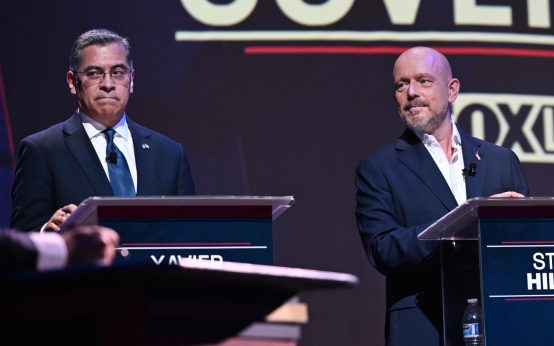 Xavier Becerra and Steve Hilton Debate on California’s Future
  Wisconsin Gubernatorial Race: Tiffany vs. Crowley in a Tight Contest
 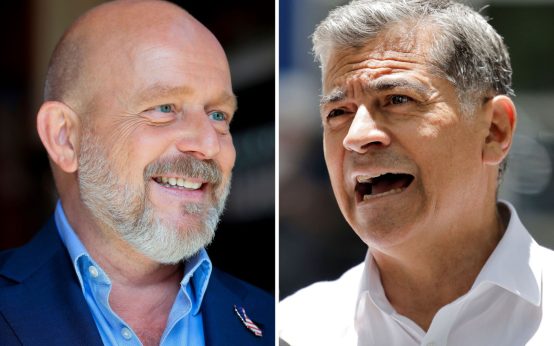 California Gubernatorial Debate: Becerra vs Hilton
  Gavin Newsom Seeks Inspiration from Bill Clinton for Potential Presidential Run