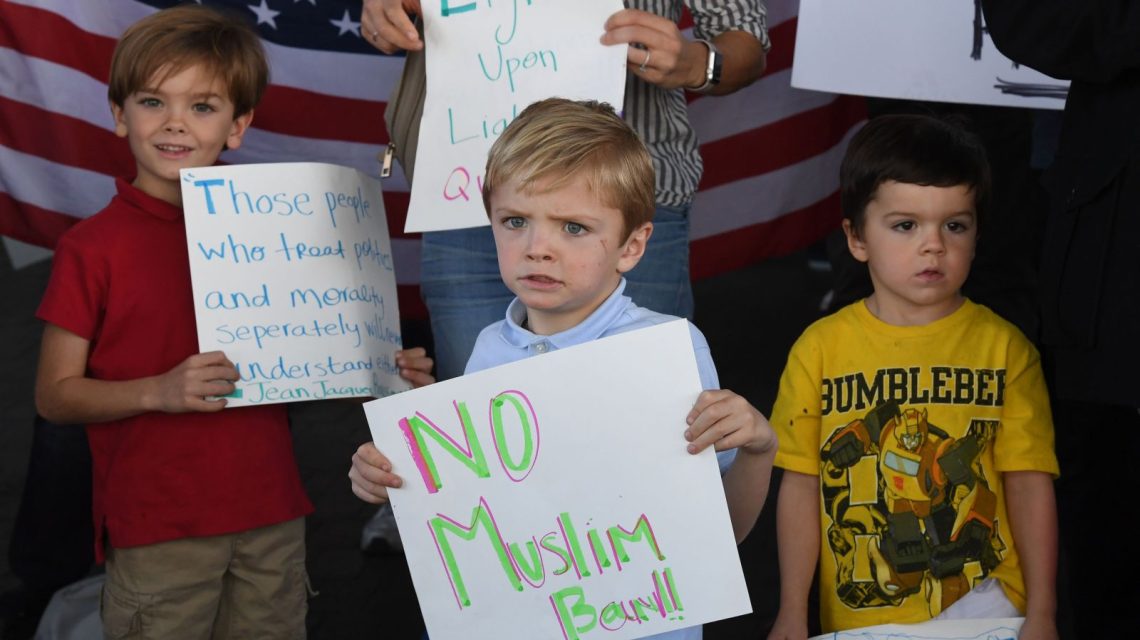
Trump’s Rhetoric and Policies Towards Muslims
During his second term, President Donald Trump continued actions that previously depicted him as hostile to Muslims. Despite using inflammatory rhetoric and implementing restrictive immigration measures, the political narrative has shifted. His interactions with Muslim-majority nations and the increased support from Muslim voters challenge his earlier portrayal.
Trump previously called for a ‘total and complete shutdown of Muslims entering the United States.’
Back in 2017, his entry restrictions brought a sense of hostility, leading Pew to report that 74% of Muslim Americans felt unfriendly sentiments from Trump, with only 8% voting for him.
Recent Developments and On-Going Criticism
Even now, Trump provides ample fodder for critics. Following a shooting incident in 2025, allegedly by an Afghan, the administration tightened immigration and restricted entry from several Muslim-majority countries. Trump’s rhetoric remained controversial, evidenced by comments towards Representative Ilhan Omar and posts mocking Muslim traditions.
The American-Israeli assault on Iran in 2026 added complexity, with significant casualties and focused debates over constitutional powers, leaving Democrats engaged in criticism based more on legality than religion.
Changing Political and Social Dynamics
Muslim advocacy organizations continue to combat anti-Muslim sentiment, with rising discrimination complaints. Curiously, public endorsement of negative stereotypes, measured by the Islamophobia Index, has increased.
Legislative efforts reflect evolving terminology. Democrats have shifted language, focusing on broader concerns like racial discrimination.
Muslim voters are no longer an anti-Trump bloc. In 2024, 42% of Muslim men voted for Trump, illustrating a complex electoral picture.
Regional sentiment changes, particularly regarding Israel, influenced voting patterns, highlighting areas like Dearborn where Democratic support dipped substantially.
International Relations and Their Impact
In Trump’s term, his foreign policy blurred perspectives. Significant economic exchanges with Saudi Arabia, the UAE, and Qatar contrasted with military actions against Iran. These relationships present a multifaceted scenario challenging a simplistic religious motive.
Public Perception and Political Language
Exhaustion might explain reduced criticisms. Google Trends suggests a shift from labeling entry policies as religious bans to broader terms like ‘travel ban.’
Though accusations and sentiment around Islamophobia can persist, discussions involve broader political dynamics. Democrats and Muslim organizations continue to voice concerns, albeit with adapted rhetoric.
Implications for Future Elections
Upcoming elections could reveal shifts. If Muslims who leaned towards Trump in 2024 shift their stance, it might revive political repercussions akin to his earlier term.
Islamophobia may remain a pressing issue within specific policies, but its previous political potency could be less evident.
 New Jersey Voter Fraud Prompts Renewed Push for SAVE Act
  Concerns Over Changes to Voter-Registration Form for Americans Abroad
  Trump’s 2024 Campaign Targets Young Men Through Cryptocurrency
  Trump’s White House Visitor Center Proposal Gains Bipartisan Support
  State Department Simplifies Passport Process with Online Applications
  Becerra and Hilton Clash in California Gubernatorial Debate