The ongoing conflict involving Iran has taken unexpected turns. A recent development garnered international attention: President Trump announced a 20 percent toll for ships passing safely through the Strait of Hormuz. He later reversed this decision. Secretary of State Marco Rubio noted that enforcing such a toll breaches international law.
President Trump’s alternative plan raises concerns. Accepting financial contributions from Gulf States instead of tolls could be lawful. However, it challenges a principle integral to American values since the nation’s founding. This shift contradicts the origins of two military branches, negates America’s efforts in both World Wars, and reverses a stance maintained during the Middle East engagements of the Cold War. Such actions would undermine America’s 250-year legacy as a champion of trade freedom.
From Trump’s view, these unspecified investments would offset military expenses in the region. His approach reflects a transactional policy style. Yet, this perspective overlooks a core American ideal. The U.S. Navy’s mission includes ensuring open and free seas, a mission rooted in its inception.
Although the U.S. had a Continental Navy during the American Revolution, it was dissolved by 1785. The need for a naval force emerged again due to the Barbary Coast states’ extortion. These states, known as Barbary pirates, extorted payments for safe passage and ransomed U.S. sailors near North Africa and the Mediterranean Sea. In response, President George Washington established the U.S. Navy in 1794, promoting navigation freedom. Naval forces take time to develop, so Washington and his successor, John Adams, initially pursued diplomacy while paying tributes.
President Thomas Jefferson ended tribute payments in 1801 by deploying a naval fleet. This led to an escalating conflict, culminating in the Marine Corps’ first significant battle in 1805, commemorated in their anthem referencing “the shores of Tripoli.” By 1815, American and European pressure ended the Barbary Pirates’ practices.
Now, over two centuries later, Trump’s successor shifts the U.S.’s role in protecting maritime commerce. Though the Navy won’t implement a toll system, Gulf States’ pledged investments still reflect tribute-like practices, reminiscent of those that made the Barbary pirates adversaries.
The Barbary Wars were only the beginning. Ensuring navigation freedom is central to America’s global power role. In 1918, during World War I, President Woodrow Wilson outlined his 14 points. The second point called for “absolute freedom of navigation upon the seas.” President Franklin Roosevelt and British Prime Minister Winston Churchill reinforced this principle in the Atlantic Charter. It stated that post-World War II peace should ensure unhindered passage through oceans.
This principle guided President Dwight Eisenhower during the 1956 Suez Canal Crisis. After Egypt nationalized the canal, the Eisenhower administration supported legal nationalization, provided compensated ownership and free passage ensued. This stance risked U.S. relationships with allies but upheld maritime freedom.
Irrespective of political views, Americans must consider if Trump’s policy aligns with national values. America’s history emphasizes the protection of navigation freedom and rejects tribute payments, in any form.
Michael Szalma is a retired U.S. Army officer with service in Bosnia, Iraq, and Afghanistan, and now teaches history in Central Florida.
Copyright 2026 Nexstar Media Inc. All rights reserved. This material may not be published, broadcast, rewritten, or redistributed.
 State Department Simplifies Passport Process with Online Applications
 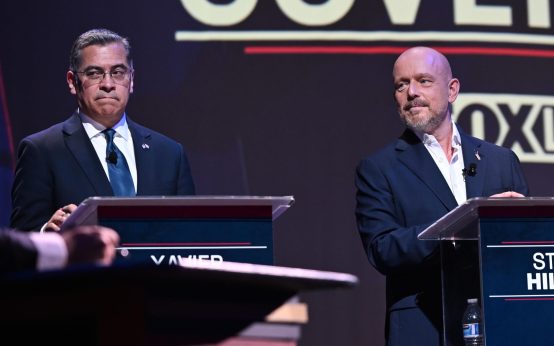 Becerra and Hilton Clash in California Gubernatorial Debate
  California Voters to Decide on $7.5 Billion State Research Fund
 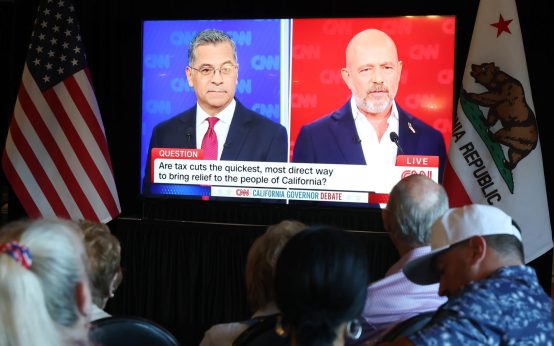 Highlights from the California Gubernatorial Debate: Becerra vs. Hilton
 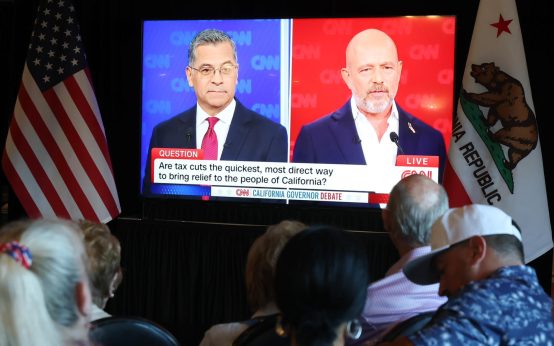 Becerra vs. Hilton: The Debate and Key Issues in the California Governor Race
  Senate Confirms New Labor Secretary