The American military has historically focused on combating enemy forces overseas to prevent conflicts from reaching U.S. soil. However, with the rise of threats from drones, cyberattacks, and long-range weapons, Army leaders are preparing for scenarios where American forces face attacks before deploying abroad.
Gen. Christopher LaNeve, the Army’s acting chief of staff, noted that traditional assumptions held during past conflicts in Iraq and Afghanistan are being reassessed. Previously, U.S. forces relied on secure bases and supply lines. New threats have prompted a focus on defending military installations and critical infrastructure at home.
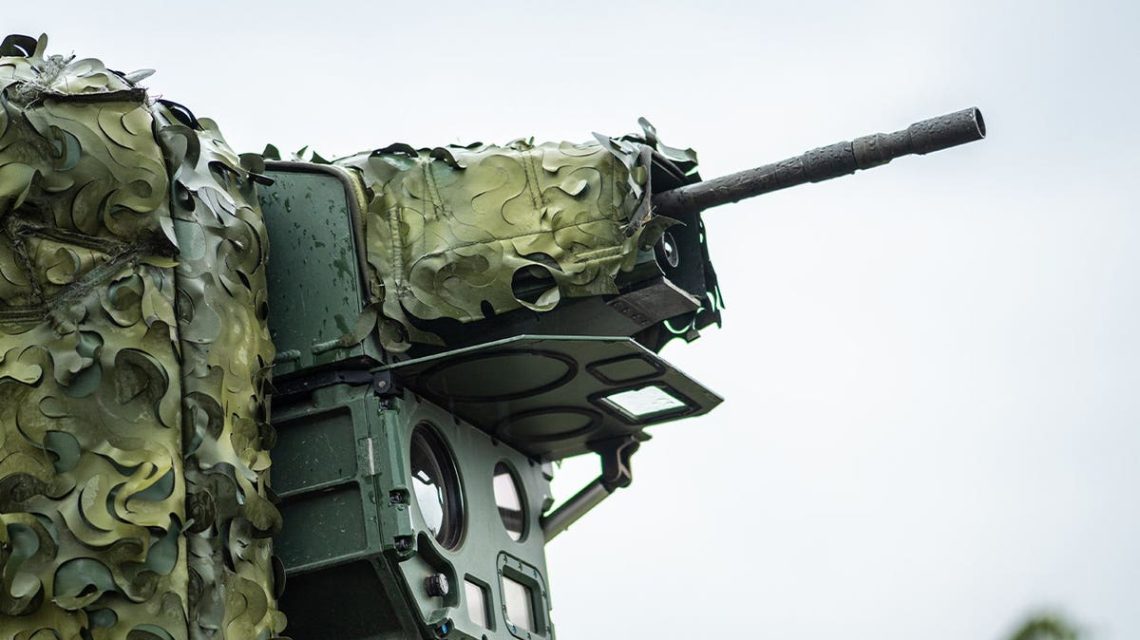
Anti-drone systems are being tested, exemplified by trials on a Stryker combat vehicle in Ukraine.
The Pentagon’s latest report highlights China’s ability to pose significant challenges, including cyber capabilities within U.S. networks that may disrupt military mobilization. Recent drone incursions over American bases have raised concerns, although no direct links to China have been publicly confirmed.
The Army has introduced the “How the Army Fights” framework to emphasize deployment and sustained operations, even when bases and communication networks are compromised. This strategy highlights training priorities and the incorporation of new technologies.
LaNeve elaborated on measures to ensure the Army’s operational readiness despite potential communication disruptions. He stressed the importance of adapting to disconnected operations when necessary.
Efforts to fortify military installations are underway, with the Joint Interagency Task Force 401 collaborating with federal and local law enforcement to enhance counter-drone measures. The southern border serves as a field where soldiers encounter and address drone threats.
The Army is also expanding its defense strategies to include biological threats. Training now incorporates simulations of disease outbreaks and biological attacks to ensure readiness in such scenarios.
On a related front, Air Force Secretary Troy Meink warned about advancements in surveillance, predicting adversaries could soon track military assets globally. As a countermeasure, the Pentagon is developing autonomous systems capable of operating in high-risk environments.
War Secretary Pete Hegseth criticized perceived technological advancements delays, notably under the Biden administration. Despite increasing reliance on technology, LaNeve underscored the enduring importance of soldier skills, maintaining that troops remain the Army’s cornerstone.
 Trump Accuses Abdul El-Sayed of Muslim Brotherhood Ties
  Historic Preservation Faces Challenges Amid Proposed Regulatory Changes
  Congressional AI Investments Raise Concerns
  The Fallibility of Opinion Polls in Politics
  Research Reveals Diverse Reactions to Mass Shooting Fears
  Minnesota Somali Community Reacts to Raid on Rep. Ilhan Omar’s Home