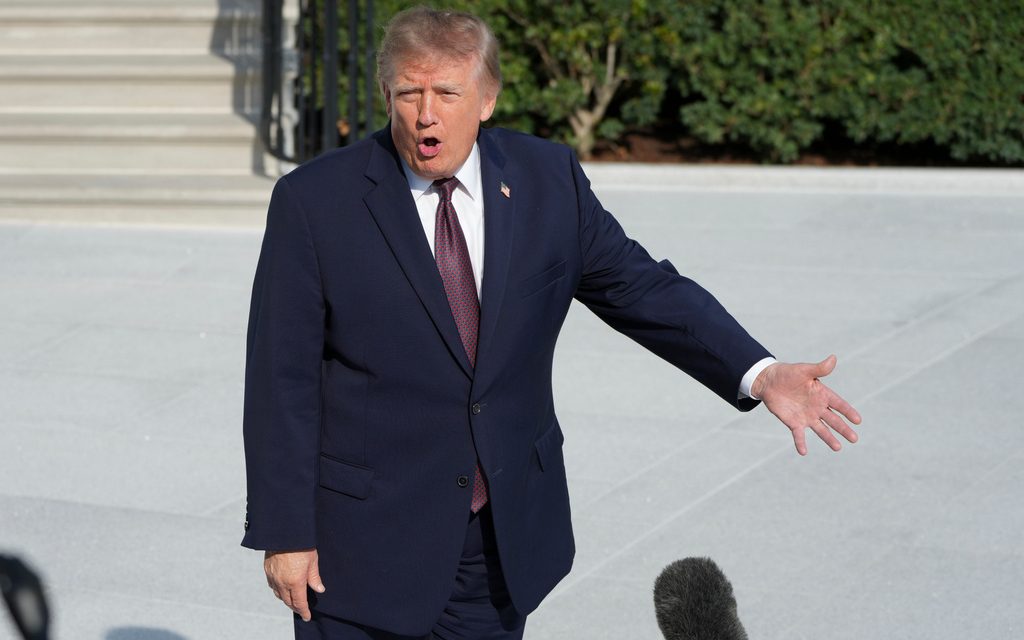
President Donald Trump addressed reporters on the South Lawn of the White House before departing on Marine One in Washington. Despite having amassed substantial PAC funds, Trump utilizes taxpayer resources for political advertising, seemingly aimed at aiding Republicans impacted by his low approval ratings. Observers describe Trump’s frustration as he seeks ways to persuade Americans of his alignment with their interests, despite criticism of his focus on personal gain.
A former Bush administration official labeled the administration’s ads as “sheer propaganda.” One contentious ad replicates a 2024 campaign message but funded by taxpayers. Reports suggest the administration reallocates $20 million intended for border security, anti-drug efforts, and officer memorials for ad payments, raising legal concerns.
This period is marked by Trump pressuring associates to endorse misleading statements to curry favor. A White House representative maintains the ads aren’t political, instead “reminding Americans to love their country,” a claim met with skepticism as the ads appear to support Trump’s electoral prospects. With disapproval ratings exceeding 60%, upgrading ad effectiveness might be essential.
Recycling a 2024 campaign ad without updating content reflects a neglect of public sentiment. Trump’s team reuses rhetoric promising to “expel the warmongers,” a stance contradicted by his Pentagon appointment. Meanwhile, Americans confront challenges like high gas prices and military expenditures due to his approach to Iran.
Political ads are not Trump’s sole use of government funds for propaganda. The White House launched “Trump TV,” a taxpayer-funded channel promoting Trump’s image. The Trump family later pursued trademarking the channel, suggesting a financial motivation. Concurrently, the administration restricts press freedom, notably barring CNN, MS NOW, and Politico from events, while permitting Chinese media access.
Following a federal judge’s order, the White House temporarily allowed restricted media access. The Associated Press remains under limitations due to refusal to adopt Trump’s geographic renaming. Congressional Republicans largely refrain from addressing Trump’s actions. However, the stark use of taxpayer money and media bans managed to provoke a modest reaction.
For Republican officials contemplating distancing themselves from Trump, prospects of securing substantial financial support during elections pose a challenge. Yet, the upcoming months present voters with the opportunity to counteract financial influence through mobilization.
 Dennis Hastert’s Legacy: From Political Leader to Controversy
  Tensions Within the Trump Administration Highlighted by Policy Reversals
  Democrats Hold Advantage Before Midterms, But Voter Sentiment Is Complex
  Democrats Strategize As Midterm Elections Approach
  Mary Peltola Emerges as Leading Candidate in Alaska Senate Race
  Beni Rae Harmony Joins Trump’s Communications Team Amid Controversy