
President Donald Trump held a meeting in the White House Situation Room with advisers to discuss the Iran ceasefire and the potential reopening of the Strait of Hormuz. As of now, no decision has been made. Iran has stated that the agreement is still not finalized.
Following the meeting, Trump mentioned he was seeking a ‘final determination.’ A senior official noted the meeting lasted around two hours but concluded without a decision. The official stated that Trump would only sign a deal if it aligns with his conditions and addresses Iran’s nuclear ambitions.
Trump acknowledged these significant discussions following reports from The Associated Press and other outlets about a tentative agreement. This deal might extend the current ceasefire by 60 days to allow fresh discussions on Iran’s nuclear program.
On social media, Trump emphasized that Iran must ensure it never acquires a nuclear weapon. Moreover, he insisted that the strait be reopened for international passage and that all sea mines should be removed.
President Trump stated, ‘Iran must agree that they will never have a Nuclear Weapon or Bomb.’ He emphasized the importance of reopening the strait and clearing sea mines.
Meanwhile, Iran’s chief negotiator expressed distrust in verbal assurances, highlighting that Iran seeks actions over promises. He stated that negotiations require tangible results.
Before Trump’s meeting ended, Iran’s Foreign Ministry spokesperson confirmed that no final agreement had been reached. U.S. Vice President JD Vance suggested negotiators aimed for broad terms on Iran’s program, while Iran is primarily concerned with ending the conflict.
Iran demands any agreement includes a truce involving Israel and Hezbollah in Lebanon. They also seek access to billions in frozen funds. An Iranian security official insisted that negotiations must involve fair exchanges.
Iran holds a significant amount of enriched uranium, nearing weapons-grade levels. They maintain their nuclear program is for peaceful purposes yet remain unwilling to part with the stockpile.
Trump reiterated his demand for the removal and destruction of Iran’s uranium cache as part of any deal. This action would be coordinated with Iran and the International Atomic Energy Agency (IAEA).
The memorandum proposes that Iran cannot levy tolls on the Strait of Hormuz and must clear all mines within 30 days. The U.S. would ease restrictions on Iranian ports gradually and allow more Iranian oil sales.
The management of the strait would involve coordination between Iran and Oman, reflecting their national interests and broader community needs. Despite discussions, Trump warned Oman against any cooperative agreements with Iran regarding the strait.
Iran has controlled the strait since a U.S. and Israel attack on February 28, which resulted in significant Iranian casualties. Prior to the closure, the strait was a crucial international passage for oil and gas.
With the blockade in place, fuel prices have surged globally. Though Iran allows some commercial passage, restrictions remain, leading to new U.S. sanctions. The Persian Gulf Strait Authority criticized these sanctions but also viewed them as validation of its efforts.
While both nations have exchanged accusations and intermittent strikes since the ceasefire began, they have yet to resume full hostilities and continue negotiations to find a peaceful resolution.
 British Police Arrest Man Suspected of Terror Plot
  Activists Push for Nationwide Ban on Child Marriage in the U.S.
  Investigation into Alleged Incident at Cornell University
  Rising Drone Threats Highlight Vulnerabilities in Moldova’s Airspace Defense
  Bolivia Faces Security Test Amid Unrest
 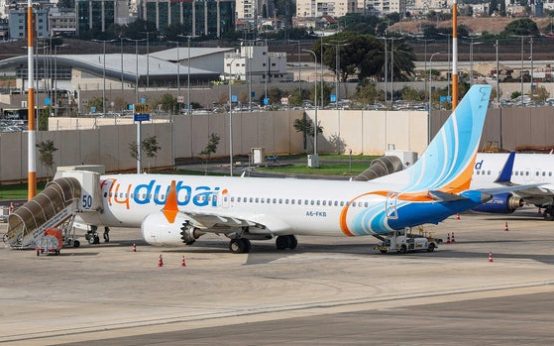 Incident on FlyDubai Flight Raises Security Concerns