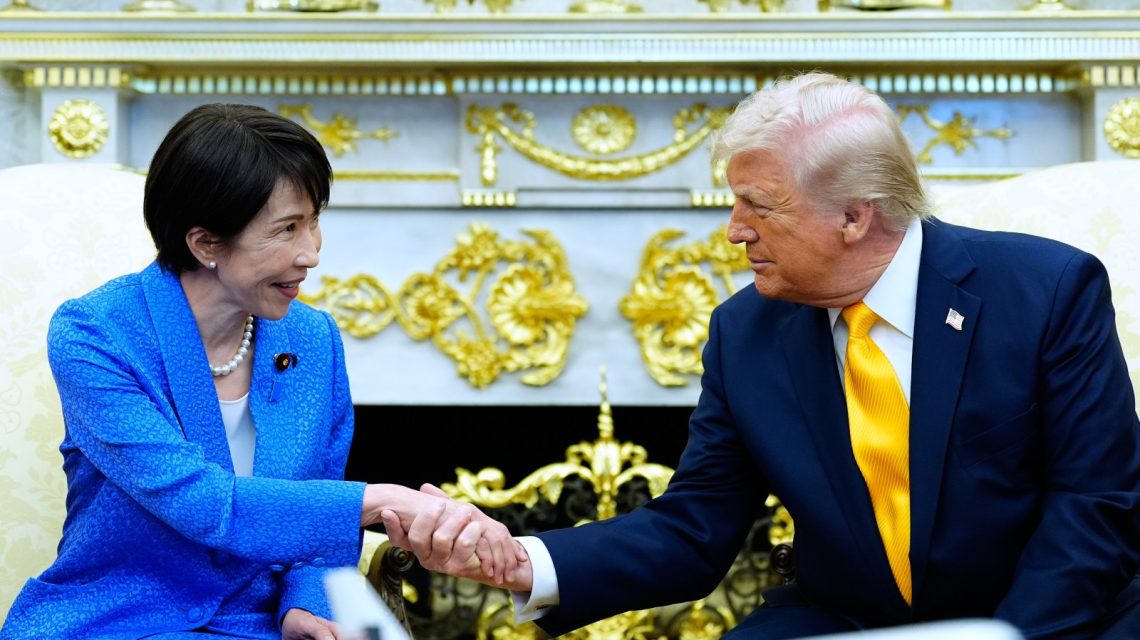
The United States has partnered with Japan to intervene in strengthening the yen, marking the first collective effort in nearly three decades. This move temporarily bolstered the currency but experts remain skeptical about long-term prospects.
Impact on Currency
Following the announcement by U.S. President Donald Trump and Japanese Finance Minister Satsuki Katayama, the dollar weakened against the yen. The currency closed at nearly 156 yen, a significant drop from recent highs above 163 yen in July. This intervention is reminiscent of the last joint effort during the 1998 Asian Financial Crisis.
Scott Bessent, U.S. Treasury Secretary, emphasized the importance of continued coordination, stating that the U.S. would not hesitate to join in future interventions.
Yen’s Struggle
The yen has lagged due to the substantial interest rate difference between the United States and Japan. Higher U.S. rates make the dollar more appealing, weakening the yen. This has led to increased import costs for Japan, driving inflation and raising household expenses, although tourism has flourished due to the weaker currency.
The U.S.’s conflict with Iran poses additional challenges, as Japan relies heavily on oil imported through the Strait of Hormuz. Measures to cap fuel prices at about 170 yen per liter are in place, but further increases may be considered.
Benefits for Japan
President Trump highlighted the strong U.S.-Japan relationship, describing the intervention as a gesture of friendship benefiting both nations. Ken Moriyasu from the Hudson Institute noted that Trump views Japan as a key ally not just for matters involving China, but also in driving economic objectives like reducing the U.S. trade deficit.
Japan committed to a strategic trade framework with up to $550 billion investments in the U.S. Supporting the yen reduces the cost of fulfilling these financial commitments.
Japanese politics also plays a role, as low approval ratings for Takaichi are compounded by tensions with China over military policies. Stabilizing the yen might be seen as a strategic move within this context.
U.S. Financial Interests
American involvement aligns with protecting the U.S. Treasury market. With Japan as the largest foreign holder of U.S. Treasuries, any major sell-off could drive up bond yields, complicating borrowing for the U.S. government and economy.
Nic Puckrin, previously with Goldman Sachs, explained that this intervention provides temporary relief but cannot correct systemic issues. Interest rate discrepancies keep the yen carry trade attractive.
Future Outlook for the Yen
Earlier yen support efforts in April and May yielded only brief effects. The U.S.-Japan collaboration may be more successful, easing sharp depreciation risks and giving the Bank of Japan time to evaluate broader economic impacts.
Shigeto Nagai from Oxford Economics projects a weak yen through the year with potential strengthening in 2027 as Japanese rates rise and U.S. rates fall.
 British Police Arrest Man Suspected of Terror Plot
  Activists Push for Nationwide Ban on Child Marriage in the U.S.
  Investigation into Alleged Incident at Cornell University
  Rising Drone Threats Highlight Vulnerabilities in Moldova’s Airspace Defense
  Bolivia Faces Security Test Amid Unrest
  Incident on FlyDubai Flight Raises Security Concerns