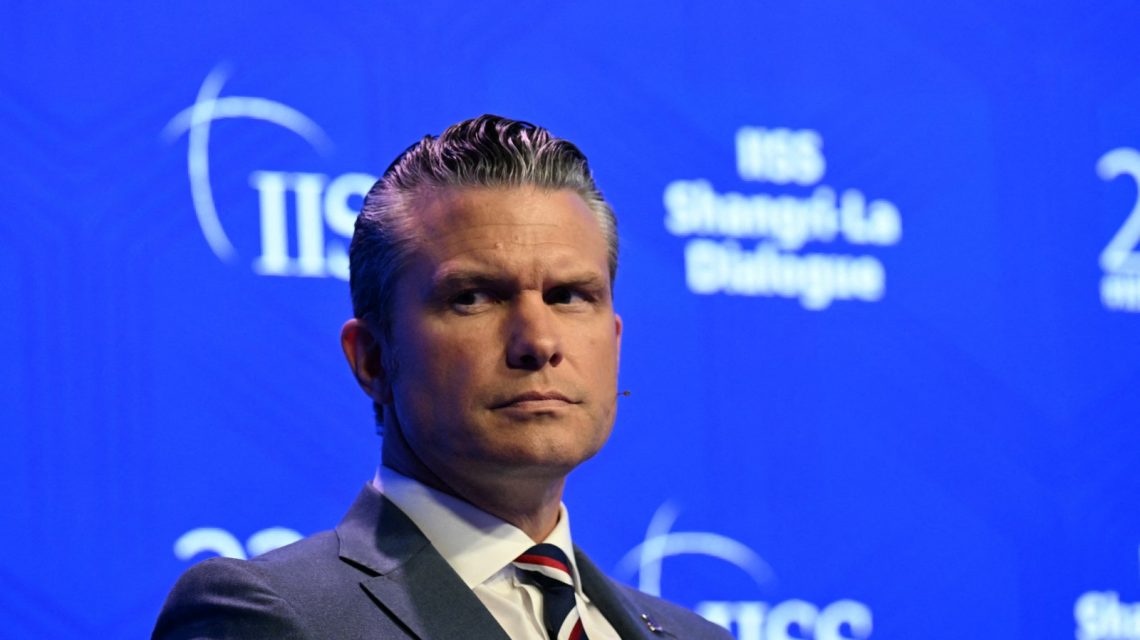
U.S. Conditional Support
Defense Secretary Pete Hegseth emphasized the importance of Asian allies increasing defense budgets. His call to action suggests that U.S. support is becoming more conditional, focusing on a region that has depended on America’s military strength for balance. At the Shangri-La Dialogue in Singapore, Hegseth urged U.S. allies in the Asia-Pacific to allocate 3.5 percent of GDP to security. He indicated that countries meeting these goals would enjoy benefits such as expedited arms sales and enhanced intelligence sharing.
“The benefits are many,” Hegseth stated. “Those that do not carry their own weight for our collective defense would be treated less favorably,” he warned.
Changing Dynamics and Tensions
Hegseth’s remarks highlight a shift in the U.S. commitment to regional security. Rising tensions in the Indo-Pacific, especially concerning China’s increased military spending and territorial pressures, underline the need for more robust defense strategies. China’s assertiveness in disputes with Japan and the Philippines raises concerns.
Alignment with Trump’s Approach
The demand echoes President Trump’s long-standing view that the U.S. carries too much of the defense burden. Trump has effectively urged NATO members to spend 5 percent of GDP on defense by 2027.
Hegseth’s 3.5 percent target represents a substantial increase for Asian allies, none of whom currently meet this benchmark. Singapore and South Korea are closest, spending about 2.8 to 3 percent of GDP, while Japan and Australia hover around 2 percent.
Philippines as an Example
The Philippines, a treaty ally of the U.S., was cited as an example of burden sharing. Despite increasing defense spending by 12 percent last year, Manila’s budget remains below the 3.5 percent mark. Philippine Defense Secretary Gilberto Teodoro highlighted challenges faced by agricultural economies compared to more industrialized nations.
“It is difficult for an archipelago of 7,600 islands…to hit the target,” Teodoro explained.
Economic Constraints in Malaysia
Malaysia also struggles to meet these expectations due to economic ties with Beijing. Malaysian Defense Minister Mohamed Khaled Nordin emphasized the U.S.’s strategic role but noted the diverse circumstances and priorities each country faces.
“Increasing defense spending could negatively impact development in other sectors,” Nordin pointed out.
 The Trump Team’s Challenge to the Military Leadership
  Maryland First State to Restrict Electronic Pricing in Grocery Stores
  British Police Arrest Man Suspected of Terror Plot
  Activists Push for Nationwide Ban on Child Marriage in the U.S.
  Democratic Hopes and Historical Warnings in 2026 Senate Race
  Republicans Face Challenges Amidst Cost of Living Concerns