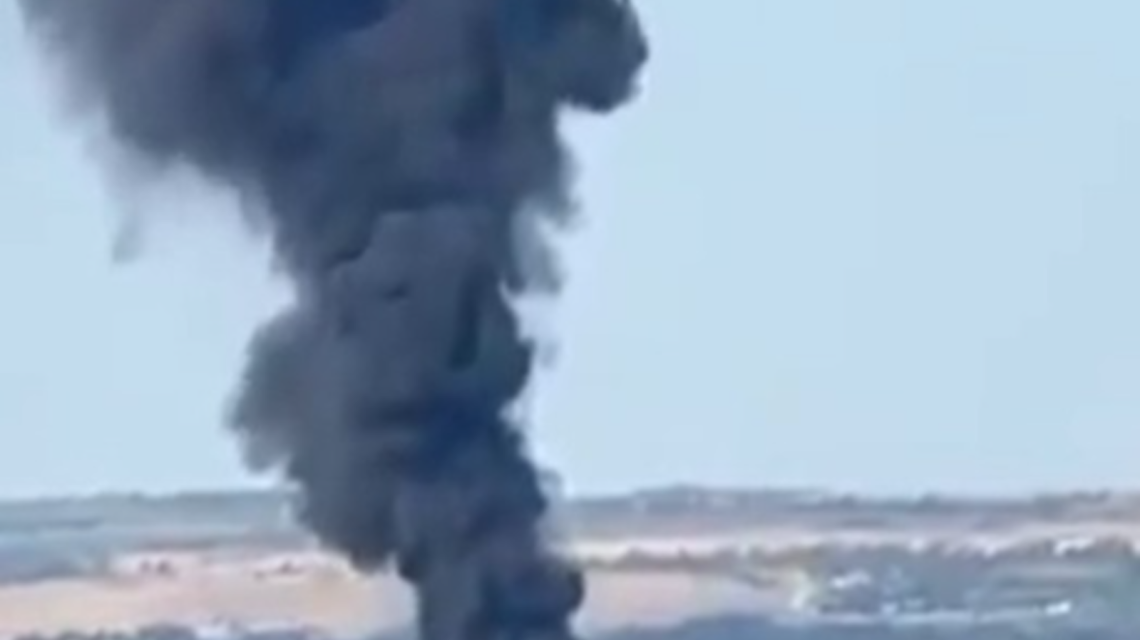
A commander of a Ukrainian drone unit has highlighted a significant shift in Kyiv’s maritime operations against Russia. Over recent weeks, strikes have severely reduced shipping activity in the Sea of Azov. Robert Brovdi, leader of Ukraine’s Unmanned Systems Forces, warned of this new phase after 20 Russian vessels were reportedly hit on a single night. This action brings the total number of Russia-linked ships targeted by Ukrainian drones to 136 during the period from July 6 to 15, according to Brovdi.
The Sea of Azov connects to the Black Sea via the Kerch Strait, linking the occupied Crimean Peninsula with Russia. It serves as an essential route for Russia’s crude oil exports. Brovdi explained the focus is on targeting vessels tied to Russia’s clandestine operations, which disguise connections to Moscow to circumvent international sanctions leveled due to President Vladimir Putin’s expansive invasion.
Following recent attacks, Moscow halted shipping through the Don-Azov Channel that connects to the Don River. This development is noteworthy considering the operation occurs in heavily fortified airspace along the Russian-controlled Black Sea coast. Retired Australian Army Major General Mick Ryan noted that aside from ships struck, Russian air defense installations in Crimea or southwestern Russia were also hit, indicating a meticulously planned and confidently executed operation.
Ukraine lacks a conventional naval fleet in the Black Sea. Instead, it has devised a strategy of sea control through unmanned systems. These efforts have paid off, as Ukraine continues to exert control in contested waters.
Further tactical advancements include strikes on 17 oil tankers, two gas tankers, and one tugboat overnight, occasions that coincided with the Day of Ukrainian Statehood, as shared by Brovdi, known by his call sign Magyar. He leads the “Magyar’s Birds” unit, specializing in drone warfare. Brovdi employed Telegram to disseminate the footage of nighttime assaults.
In further developments, a Ukrainian Navy operation resulted in the destruction of Russia’s FSB Izumrud border guard ship near Novorossiysk using a Sargan-3000 unmanned surface vehicle (USV). This tactical shift aims to isolate Crimea by disrupting logistical routes essential for Russian forces, without damaging the Kerch Bridge, thus maintaining an exit route from Crimea for Russian forces.
Ukraine’s ongoing strikes on Russian-affiliated vessels have caused a stark reduction in maritime movement across the Sea of Azov. Reports indicate a decline from 132 ships on July 6 to just 43 on July 12, as noted by Synthetic Aperture Radar (SAR) imagery referred by open-source channel Oko Gora. The remaining vessels are primarily smaller boats, like tugboats.
 British Police Arrest Man Suspected of Terror Plot
  Activists Push for Nationwide Ban on Child Marriage in the U.S.
  Investigation into Alleged Incident at Cornell University
  Rising Drone Threats Highlight Vulnerabilities in Moldova’s Airspace Defense
  Bolivia Faces Security Test Amid Unrest
  Incident on FlyDubai Flight Raises Security Concerns