
On August 24, 2026, political leaders from Ukraine’s international allies marked the 35th anniversary of Ukraine’s independence from the Soviet Union. European leaders, including Andy Burnham from the U.K., Emmanuel Macron from France, and Friedrich Merz from Germany, showed support for Kyiv by attending events. However, senior officials from the United States did not participate in the public celebrations.
U.S. senators and former officials visited Ukraine ahead of the anniversary. However, the absence of key figures from the Trump administration raised concerns about Washington’s current level of involvement with Ukraine. This situation appeared significant as it coincided with the 4.5-year mark since Russian President Vladimir Putin’s large-scale invasion of Ukraine.
Negotiations for a peace deal have stalled. Supplies of U.S. air defense missiles are decreasing, while Putin escalates threats to Ukraine’s allies. British Prime Minister Andy Burnham co-chaired a meeting of the “Coalition of the Willing,” a group supporting Ukraine. European Council President António Costa and heads of numerous European nations attended, despite Russian rocket and drone attacks.
The U.S. Department of State declared, “The United States is committed to Ukraine’s sovereignty and continues to work to support a negotiated settlement to the Russia-Ukraine war that establishes a lasting and durable peace.”
Over the weekend, U.S. Senators Richard Blumenthal and James Lankford had a meeting with Ukrainian President Volodymyr Zelenskyy. Additionally, former Vice President Mike Pence and former special envoy for Ukraine Keith Kellogg joined discussions in Kyiv.
During the Trump administration, the U.S. provided significant military aid and intelligence to Ukraine. However, following Trump’s return to office in 2025, new aid has ceased. Ukraine now receives U.S. weapons through its NATO partners.
An analysis from the Council on Foreign Relations highlighted that Congress allocated $195 billion for the Ukraine war by March this year, with $164 billion stemming from five legislative actions, the latest of which passed in April 2024.
Support from the U.K. and France
Recently, the U.K. and France announced plans to supply military technology to Ukraine. Britain agreed to allow European missile manufacturer MBDA to share details about British-made components used in the SCALP missile. With this information, Ukraine can set up local assembly lines for missile production involving both British and French technology.
Zelenskyy noted that Macron accelerated French missile deliveries, while the European Commission approved an additional $7.1 billion in financial aid for Ukraine. This funding aims to help procure defense systems such as air defense, missiles, ammunition, and radars.
Ukraine faces increasing Russian missile bombardments and is running low on interceptors capable of neutralizing Russian attacks. Zelenskyy pleaded with the U.S. to send additional interceptors needed for Patriot missile defense systems. However, U.S. supplies are limited due to ongoing conflicts, leaving Washington to conserve remaining stocks.
Concerns arise that without sufficient interceptors, Ukraine might face a difficult winter and pressure to negotiate under disadvantageous conditions. Yet, Zelenskyy’s message on Monday was clear:
“Ukraine absolutely wants peace, but it is not ready to simply surrender.”
 State Department Simplifies Passport Process with Online Applications
 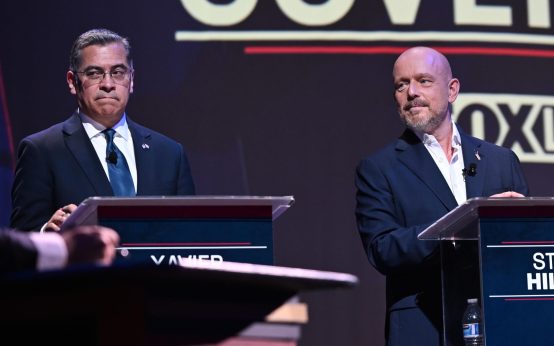 Becerra and Hilton Clash in California Gubernatorial Debate
  California Voters to Decide on $7.5 Billion State Research Fund
 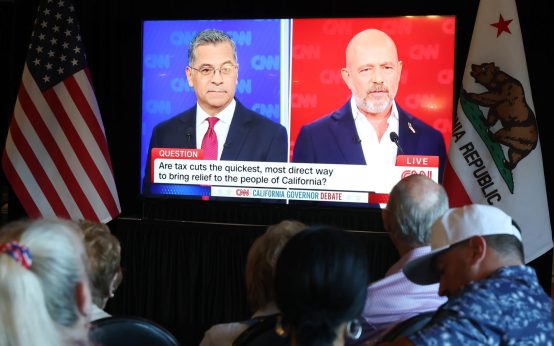 Highlights from the California Gubernatorial Debate: Becerra vs. Hilton
 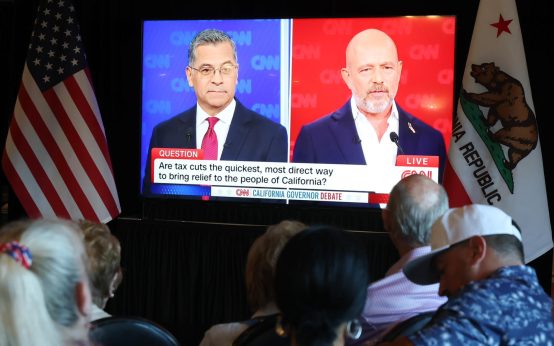 Becerra vs. Hilton: The Debate and Key Issues in the California Governor Race
  Senate Confirms New Labor Secretary