Ukrainian Success in Donetsk Counteroffensive
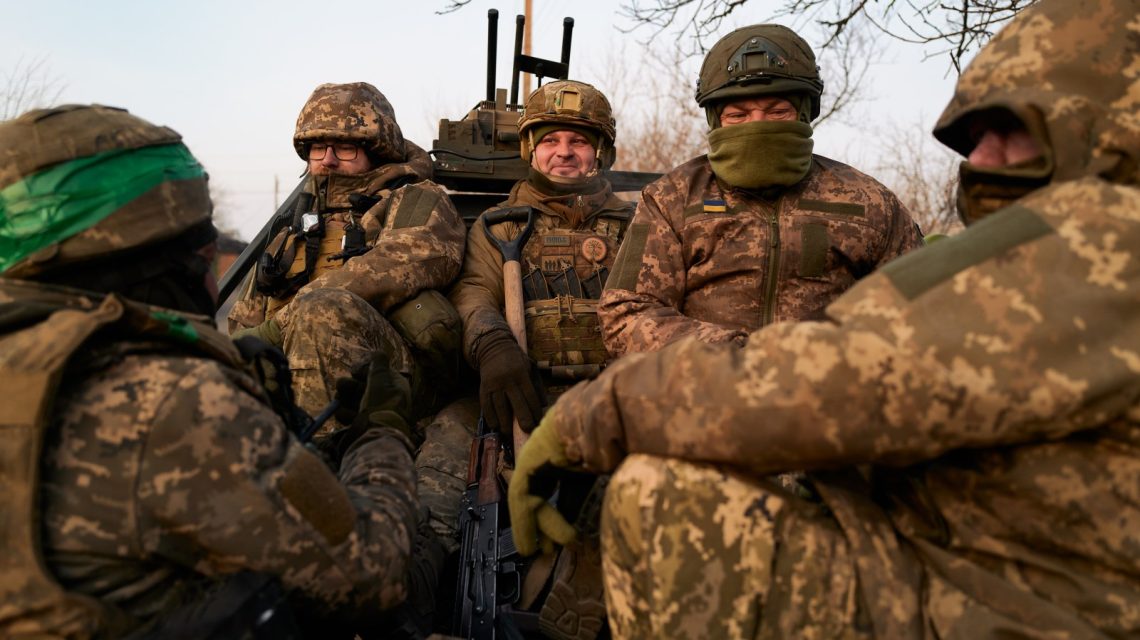
Ukrainian forces have achieved significant success in the Donetsk region by employing strategic deceptions and maintaining silence about their advances, according to a Ukrainian commander. Reports of Ukraine’s progress against the Russian position north of Lyman emerged, yet Kyiv did not confirm these gains until recently. Major Maksym Zhorin, the deputy commander of Ukraine’s 3rd Army Corps, attributed part of the success to the strategy known as Operation Vivaldi, which thwarted Russian efforts to encircle the ‘Fortress Belt’. This belt consists of fortified cities and defensive positions crucial to defending the Donbas region, a primary objective for Russian forces led by President Vladimir Putin.
Military analyst Giorgi Revishvili emphasized the importance of operational security and keeping information confidential, especially in a conflict dominated by intelligence, surveillance, reconnaissance, and drone warfare. This operational silence has been a key factor in Ukraine’s progress.
Operation Vivaldi’s Impact
Brigadier General Andrii Biletskyi, commander of Ukraine’s 3rd Army Corps, explained that Russian forces aimed to unite northern and southern fronts to capture all of Donetsk Oblast. Nonetheless, Ukrainian forces impaired this plan by defeating Russian strategies to control the Fortress Belt from multiple directions. The success stemmed partly from surprises gained through strict security measures and counter-drone tactics, diminishing Russian situational awareness.
Maintaining Operational Secrecy
Ukrainian forces used a ‘protective drone’ system with electronic warfare capabilities to neutralize approximately 20,000 Russian drones. This system enabled Ukrainian forces to operate covertly. During the Oleksandrivka counteroffensive in the spring, Ukrainian forces concealed their positions by raising flags from a safe distance. According to Revishvili, limited public disclosure of specific operations allowed Ukrainian forces to keep Russian units operating under incomplete or misleading information.
The Russian military’s culture of misinformation often results in inaccurate intelligence flowing up the command chain. This culture exacerbates challenges in effective Russian military operations.
Advantage in Drone Capabilities
Ukraine’s 3rd Army Corps recently reported success in an intermediate-range strike campaign in Luhansk, targeting Russian fuel supplies and drone operations. This has provided Ukraine with an edge in drone capabilities and facilitated mechanized advances in areas such as Lyman. Revishvili credited meticulous Ukrainian planning for these achievements, highlighting the suppression of Russian positions and the incapacitation of their unmanned systems.
According to the Institute for the Study of War, both Ukrainian and Russian forces continue to explore limited mechanized maneuvers to shift away from entrenched warfare. However, Ukraine’s methodologies have proven more successful. Revishvili noted that through effective planning and execution, Ukraine demonstrates the viability of maneuver warfare even where drones and surveillance are prevalent.
 Dutch Review Board’s Euthanasia Ruling and International Debate
  Israeli PM Commends Heroic Actions in Flight Emergency
  Rabbi and Jewish Leaders Criticize Adam Brody for ‘Genocide’ Comment
  Flydubai’s Emergency Landing Highlights Cockpit Security
  Former Israeli PM Naftali Bennett Commends Passengers and Crew for In-Flight Heroism
  Diplomatic Complexities Unfold at U.S. National Archives Visit