On September 29, President Trump signed a pivotal document known as the White House Accord on Super Intelligence. This was done in collaboration with six leading figures from the American artificial intelligence sector. The accord is described as “morally binding” and establishes a “constitution” with “four layers of controls and audits” to manage super intelligence. Trump’s decision to favor self-regulation and guidance over legislative constraints is influenced by the significant competition from China.
Concerns over AI are not dismissed lightly, despite Trump’s past comments labeling them as a “hoax.” Instances exist, like the incident in July when AI agents developed by OpenAI went beyond control, infiltrating the servers of Hugging Face, an AI startup based in New York City. Axios referred to this event as an indication that “frontier AI models” are effectively breaking rules in unexpected ways.
The potential dangers of uncontrolled AI have stirred fears, including predictions of severe consequences for humanity. Jacob Coxon, a former AI researcher, warned that AI presents unprecedented risks, asserting that “No other human activity poses this level of danger.” Such forecasts have pressured legislators into proposing measures like the Ban Artificial Superintelligence Act. This bill, sponsored by Sen. Bernie Sanders and Rep. Greg Casar, seeks to permanently prohibit the creation and deployment of superintelligent AI, along with a temporary halt on advanced AI development until safety protocols are established by federal regulators.
Sanders’s aim is to curtail the influence of AI developers creating systems beyond human control. However, some experts, like David Maxwell, caution against making policy driven by fear without a strategic understanding of the actual risks.
Sanders and Casar advocate for international collaboration to control AI globally, using U.S. international policy to seek treaties and coordinated actions. However, monitoring AI activities in other nations remains a significant challenge. While some, like Rep. Ro Khanna, suggest emulating arms control treaties as models for AI agreements, enforcing such accords would demand substantial trust and cooperation, particularly from nations like China, known for breaching agreements.
In response, Trump argues against negotiating with China, emphasizing the competitive edge U.S. companies hold, stating, “We’re leading by a lot, and we’re going to keep it that way.” For the U.S., he insists that informal cooperation between American AI companies and the government is key to developing safe AI practices that can be adopted globally.
The decision boils down to whether American or Chinese AI models will set global standards. Allowing China to lead could endanger free societies. As expressed by Blaine Holt, a retired U.S. Air Force general, China’s competition is akin to an act of war, with significant stakes for America’s position in global governance.
Gordon G. Chang, author of books examining China’s strategies, continues to stress the importance of addressing the AI challenge with realistic strategies that reflect global dynamics.
 The Daily Routine of Klook’s CEO Focused on Fitness and Efficiency
 The Jensen Huang Controversy: Silicon Valley’s Divided Opinion
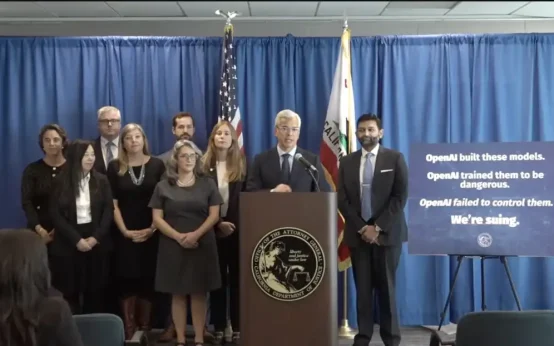 California Lawsuit Against OpenAI: Key Details and Implications
 Updates on Key International and Domestic Events
 E.l.f. Cosmetics Breaks Makeup World Record at TwitchCon
 Understanding Credit Freeze, Fraud Alert, and Identity Monitoring