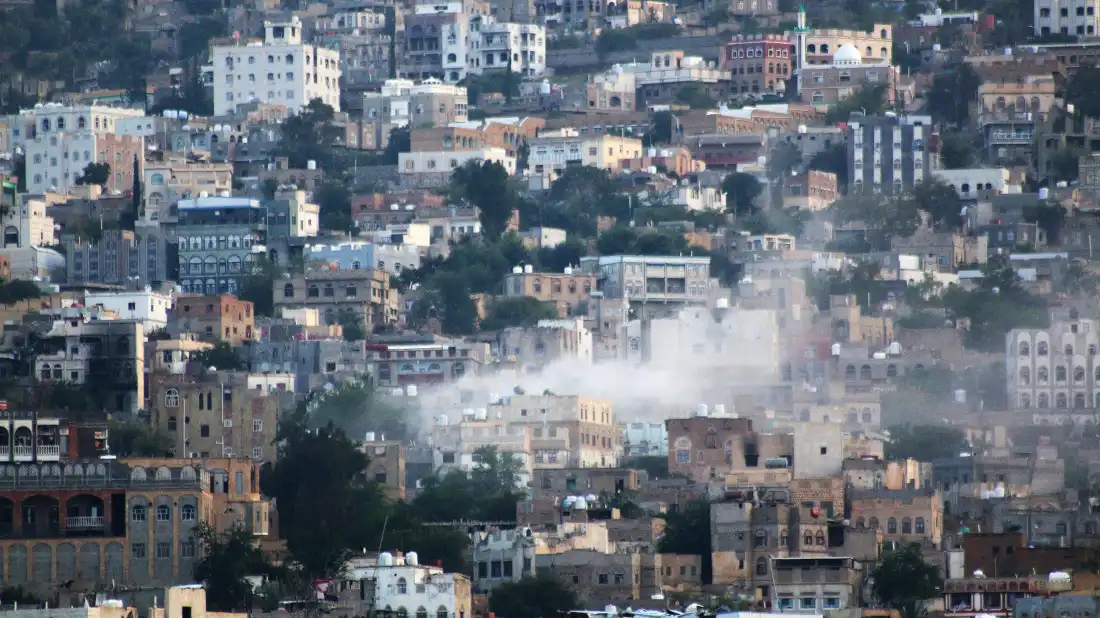
In Taiz, Yemen, the scarcity of drinking water has become severe due to the ongoing conflict between Houthi rebels and government forces. Residents, numbering over 1 million, face significant challenges as water access collapses amid the siege of Yemen’s third-largest city.
Humanitarian organizations report that wells and desalination plants are under strain. Fuel shortages impede water deliveries, leading families to ration every drop. Before the siege, Hadil al-Shahid’s family used 10 liters of water daily for drinking and cooking. Now, this must last them four days.
“We stopped drinking coffee and tea, which we used to drink daily,”
said al-Shahid, illustrating the desperate measures families take. Bottled water prices have risen by 75%, compelling families to purchase on credit.
The siege has also affected other essentials. Groceries are scarce, with food prices climbing sharply. Fuel shortages exacerbate the situation, impacting essential services like hospitals and sanitation systems. Amnesty International urges the Houthis to open roads to prevent a humanitarian disaster.
Conflict and Infrastructure Damage
The conflict dates back to 2014, with Houthis capturing northern Yemen, including Sanaa, leading to civil unrest. In Taiz, water infrastructure has suffered extensive damage. Population growth and drought have depleted groundwater resources. Truck-delivered water, once a reliable source, is now disrupted.
In August, as Houthis advanced on Taiz, seized the port of Mokha, they restricted access to nearby wells and road-based water deliveries. Some truckers tripled their rates to enter Taiz as fuel scarcity worsened.
Emerging as a battlefront in Iran’s war, the siege of Taiz amplifies water utility struggles. Desalination plants operate below capacity due to fuel constraints.
Displacement and Resource Strain
Since August, Taiz province has absorbed around 124,000 displaced individuals from other conflict zones, said the United Nations. Displaced families reside in makeshift shelters, often surviving on one meal per day. Cooking gas prices have quadrupled, forcing families to use firewood, charcoal, or cardboard for cooking.
Fuel scarcity impacts community kitchens, and affects waste collection services. These compounding shortages elevate disease risks such as cholera, due to contaminated water sources.
Flour and rice prices have surged by 50%, and fruits and vegetables are scarce. Ahmed Abdel Gaber and his family face financial difficulty, relying on donations for sustenance.
Laerke, a UN spokesperson, explained: “The shortages feed into each other. Without fuel, water pumps, hospital generators and solid-waste collection stop… [Increasing] the risk of disease.”
Strategic Importance of Taiz
Despite government control in central Taiz, the siege obstructs supply deliveries. Houthi forces hold about 80% of Taiz’s surrounding countryside and key neighborhoods, challenging government forces.
The Houthis aim to advance south, potentially toward Aden and Lahj. According to Ahmed Nagi from the International Crisis Group, seizing the city requires prolonged, costly battles with likely high casualties for Houthis.
Civilian populations complicate Houthi tactics. Recent shelling in Taiz killed two teenage girls, heightening awareness of civilian peril. Abdel Gaber hears explosions daily, nearly 5 kilometers away. Concerned for their safety, his family remains away from their mountain village home.
Al-Shahid cannot afford relocating. “Staying in our home is inevitable — whether it be a matter of life or death,” she stated.
 In-Flight Altercation on Qatar Airways Leads to Police and FBI Response
 Virginia Residents Sue Over Alleged Immigration Violations
 Updates on Key International and Domestic Events
 Pope Leo XIV Completes South American Tour with Farewell Mass in Peru
 President Trump’s Critical Asia Trip: Key Meetings and Implications
 U.S. Plans to Restrict AI Chip Exports Before Trump-Xi Meeting