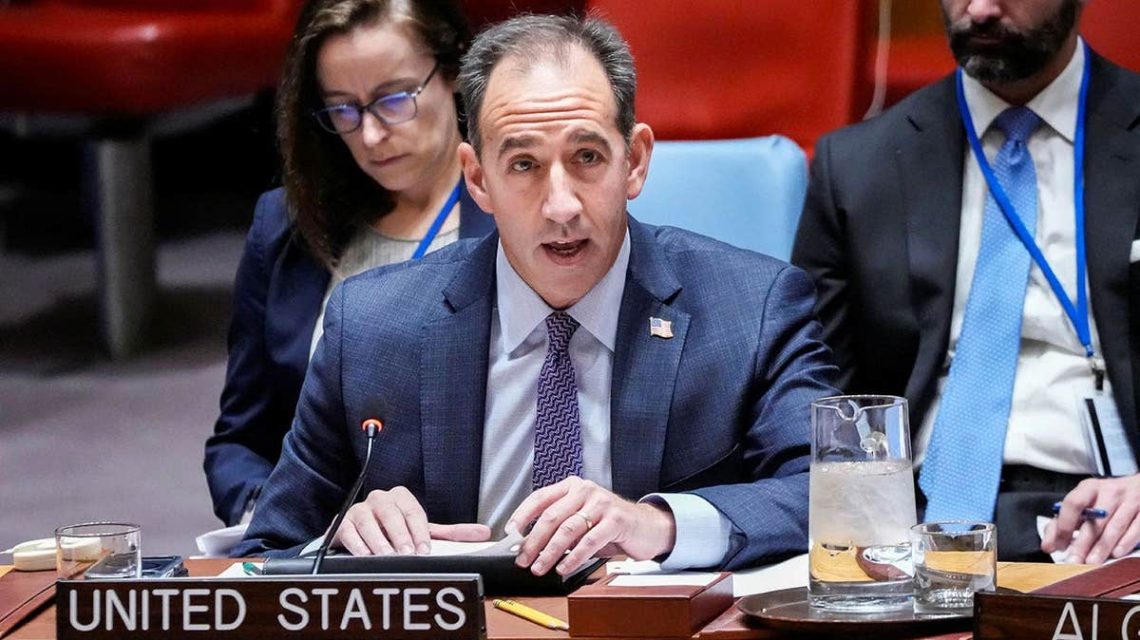
In 2025, Jeff Bartos appeared before the Senate Foreign Relations Committee for his confirmation hearing as U.S. ambassador for United Nations Management and Reform. He was forewarned that his prospective role might soon vanish. A Pennsylvania businessman with political aspirations, Bartos was nominated by President Donald Trump for the position, aiming to address issues of inefficiency at the UN.
Bartos’s nomination resonated with skepticism. Lawmakers remarked, “UN reform? That’s an oxymoron.” Despite this, Bartos now witnesses changes he once deemed impossible, following a meeting less than a year into his role.
In a conversation with Fox News Digital, Bartos revealed an ambitious plan to revamp the institution. His strategy addresses criticisms of the UN being oversized and straying from its original mission. The stakes are high for the UN, which grapples with financial issues, leadership changes, and scrutiny from the U.S. administration.
Secretary-General António Guterres has frequently cautioned about a liquidity crisis, exacerbated by delayed dues from member states, including substantial U.S. debts. The Trump administration conditions its financial support on significant reforms.
Bartos cites the elimination of about $570 million from the UN budget and the removal of 2,900 positions as major accomplishments achieved with the consensus of all 193 member states.
“Never happened before in 80 years,” Bartos remarked, emphasizing the novelty of these actions, which relied on universal agreement among member countries.
Bartos vowed consequential change in negotiations concerning peacekeeping budgets, advocating for reduced expenses, mission consolidation, and abolishment of obsolete programs. He noted efforts to modify reimbursement policies for nations that supply equipment to peacekeeping missions, transitioning payments from presence-based to performance-based criteria. This approach is expected to save approximately $30 million annually.
Beyond financial figures, Bartos sees this as a cultural shift toward efficient and responsible spending, considering the taxpayers funding the organization. Employee compensation and pensions, he argues, also necessitate reform, as they deplete resources that could aid humanitarian endeavors.
However, not everyone within the UN shares Bartos’s viewpoint. UN officials argue that many reforms were already underway under Guterres’s leadership, with projects like the UN80 initiative aiming to enhance efficiency by reducing redundancy and revisiting mandates.
Bartos acknowledges that U.S. financial pressure has expedited and intensified reform processes within the UN. As liquidity challenges mount due to unpaid member dues, including from the U.S., Guterres has implored members to honor their financial commitments or consider revising the UN’s financial regulations.
The upcoming expiration of Guterres’s term at the end of 2026 has made reform a central topic among candidates vying for the role. Bartos hopes the next leader will eliminate bureaucracy and focus on core responsibilities.
Bartos likens his efforts to his personal endurance challenges, like completing two Ironman triathlons. He emphasizes discipline and long-term planning, akin to budget negotiation strategies.
Recently, U.S. Ambassador to the UN Mike Waltz enlisted Bartos to address perceived entrenched anti-Israel sentiments within the UN structure. The discussion intensified after a UN report added Israeli forces to a blacklist regarding conflict-related sexual violence allegations, which Israel denies.
The administration endeavors to dismantle what Bartos perceives as an anti-Israel infrastructure, using diplomatic measures, financial decisions, and dialogue with incoming UN leadership to foster change.
The UN, however, disputes claims of ignoring antisemitism. Guterres launched a formal Action Plan to Combat Antisemitism, focusing on internal tracking and evaluating the organization’s approach to this issue. Dujarric clarified that while member states establish certain UN mechanisms, the Secretary-General doesn’t control them, urging state participation in addressing their concerns.
Bartos declares the UN is at a decisive moment. Whether the institution evolves sufficiently to satisfy the U.S. as its primary contributor remains critical, and Bartos asserts the UN’s transformation process is ongoing.
 British Police Arrest Man Suspected of Terror Plot
  Activists Push for Nationwide Ban on Child Marriage in the U.S.
  Investigation into Alleged Incident at Cornell University
  Rising Drone Threats Highlight Vulnerabilities in Moldova’s Airspace Defense
  Bolivia Faces Security Test Amid Unrest
  Incident on FlyDubai Flight Raises Security Concerns