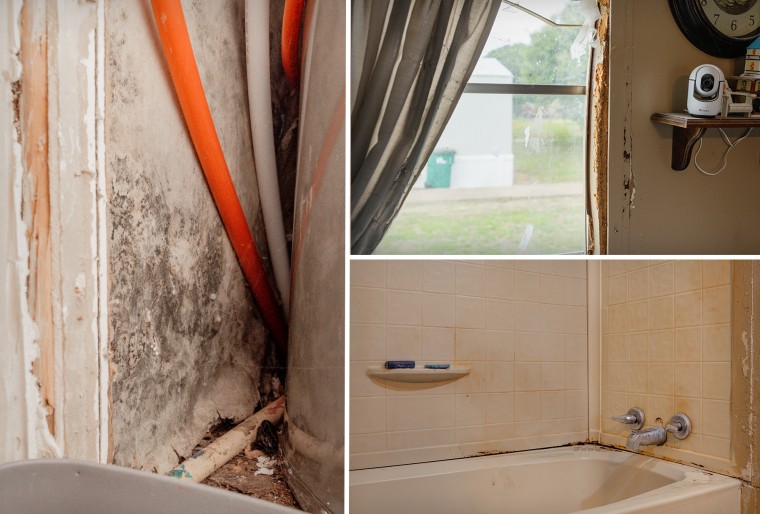
In 2023, Aliea Brown rented Unit 62 at Buck Island Manufactured Home Community in Mississippi. Soon, problems became evident. The front door was upside-down. Black mold was growing. Windows were poorly sealed. Termites and ladybugs invaded. The situation worsened when winter hit, a sewer pipe burst, and stinking wastewater collected under the unit.
Brown described the smell as resembling that of a dead body coming from under the bathroom floor. Despite paying $675 monthly, she and her partner, Mason Obradovich, faced harsh living conditions without funds to relocate.
When seeking repairs, Homes of America, the corporate owner, informed Brown that repair costs exceeded unit value. They offered to sell the unit for $1,000, using her security deposit. Told to leave by April 30, the couple had nowhere to go. Brown, having COPD, feels trapped due to poor credit.
About 22 million people reside in mobile home communities in the U.S., a refuge for those unable to afford pricier housing. But with corporate buyouts leading to rent hikes, these communities are becoming less affordable, exacerbating economic vulnerability amid rising inequality.
A special report revealed issues faced by mobile home residents in Florida, Illinois, Mississippi, and New Hampshire. Rent increases and service declines were widespread following community acquisitions by investment firms or large corporations.
John Calabrese, head of the Florida Federation of Manufactured Home Owners, noted that some new owners remain fair, yet others prioritize revenue at residents’ expense.
Buck Island is part of Homes of America, which runs 170 manufactured housing communities. These properties, under Alden Global Capital’s umbrella, have seen challenges for residents following corporate changes.
Rent increased 4.2% annually between 2017 and 2026, as reported by Equity LifeStyle Properties. They assert their housing remains competitively priced.
“They have no concern whatsoever for the people that live there. The main focus is generating revenues,” said Calabrese.
Manufactured homes make up 5.4% of U.S. housing according to census data. Many residing there are seniors, people with disabilities, and low-income families. Despite rising costs, these homes remain cheaper than single-family housing.
The mobile home communities trend mirrors broader shifts, such as President Trump’s call for a moratorium on institutional purchases of single-family homes, though lacking restrictions on mobile home acquisitions.
Maine and Michigan have enacted laws to safeguard mobile home residents, granting purchase rights and enhancing park regulation.
Challenges, such as those faced by Elvin Zapata, a former Homes of America regional manager, underscore systemic issues. His lawsuit alleges corporate practices concealed mold and targeted financially vulnerable renters for eviction.
Jim Hodgkins, a Greenmount Station Illinois resident, recounted a decline in property conditions post-Homes of America’s acquisition, citing neglected repairs and rental demands.
Faced with eviction, Brown and Obradovich sought help from HEED, a nonprofit exploring their unsustainable living conditions. Despite alternatives proposed, issues persisted.
Now working with Legal Aid, Brown reveals ongoing struggles with Buck Island management, which refuses rent payments. Financial constraints and poor credit hinder relocation options.
 The Quest for the Knuckleball Dream
  Navigating Grief After a Sibling’s Overdose
  Tragedy and Immigration: The Impact on a Family
  The Journey of a Fox News Correspondent: From Infectious Diseases to On-Air Reporting and Beyond
  Midwest Underground Railroad Network Gains National Recognition
  Journalist Jodie T. Allen Passes Away at 88