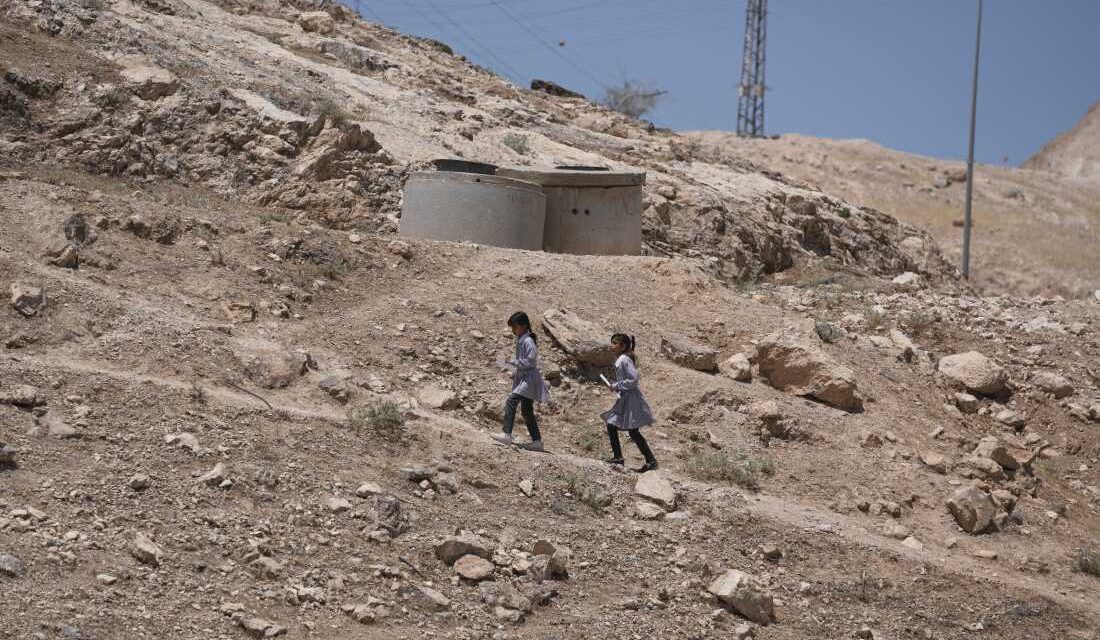
Amnesty International has accused Israel of conducting an “ethnic cleansing” campaign against Palestinians in the West Bank. The organization claims the Israeli government supports this effort with the intent to annex the territory. The accusation is detailed in a 149-page report stating that the displacement stems from a strategic state policy, not solely from settler actions.
While Israeli settlers contribute to the displacement by building outposts on Palestinian land, the report emphasizes the government’s critical role. Although the international community largely sees these settlements as illegal, Israel considers the West Bank disputed, with its status subject to negotiations. U.N. data reveals that over 100 villages in this area have been partially or fully emptied from January 2023 to April 2026. During this period, over 7,280 individual displacements occurred due to home demolitions by Israeli forces, some affecting people multiple times.
Israel has often dismissed such allegations of “ethnic cleansing” as biased. These claims refer to forced population expulsions through violence, a term Israel rejects. It did not provide immediate comment on the report.
Settler Violence and Government Support
Agnès Callamard, head of Amnesty, stated, “These abuses are not the result of a few ‘bad apples.’ Settler violence is a core component of a state-sanctioned campaign of ethnic cleansing.” Callamard described the situation as a state-led annexation, violating international law and occurring openly.
Israeli leaders often condemn severe violence by settlers but label these as isolated incidents. Prime Minister Benjamin Netanyahu’s coalition includes many settler leaders, some of whom advocate for formal annexation. This has led to increased settlement expansion, which Palestinians and rights groups see as a strategy to obstruct the formation of a Palestinian state.
Currently, over 700,000 Israelis reside in the West Bank and East Jerusalem, territories taken by Israel during the 1967 Mideast war. Palestinians claim these areas for a future state. Amnesty identified multiple bills in the Knesset to extend Israeli laws over settlements and court jurisdictions. This includes a recent default death penalty for West Bank Palestinians killing Israelis.
Previously, U.S. President Donald Trump opposed Israel’s annexation plans. A U.S.-mediated ceasefire in Gaza acknowledged Palestinian statehood aspirations.
Impact on Remote Villages
The displacement of Palestinian Bedouin communities is linked to settler violence, new settlements, and Israeli land appropriation. Rights groups note this intensified after the October 2023 Hamas attack on Israel, which led to warfare. Bedouin communities in remote West Bank areas are most affected, as they face pressure from armed settlers forming new outposts.
Peace Now, an anti-settlement group, reports that 212 out of more than 363 outposts were established post-2023. These outposts often arise without official approval, and although sometimes dismantled, they are frequently ignored or later legalized. Amnesty’s report examined 27 West Bank hamlets where displacements occurred from 2023 to 2025, involving interviews, video analyses, and discussions with witnesses and lawyers.
Rights groups argue that global entities have failed to stop this displacement. Dror Etkes from Kerem Navot noted that since the October 2023 attack, settlers have claimed about 12.5% of West Bank territory, restricting Palestinian access and safety.
 Current Developments in the Iran Conflict and the Impact on Oil Markets
  Tensions Within the Trump Administration Highlighted by Policy Reversals
  Defeat Threatens Sánchez and His Leadership
  Democrats Hold Advantage Before Midterms, But Voter Sentiment Is Complex
  Tensions Surround Prince William and Prince Harry Amid Diana Anniversary Projects
  Democrats Strategize As Midterm Elections Approach