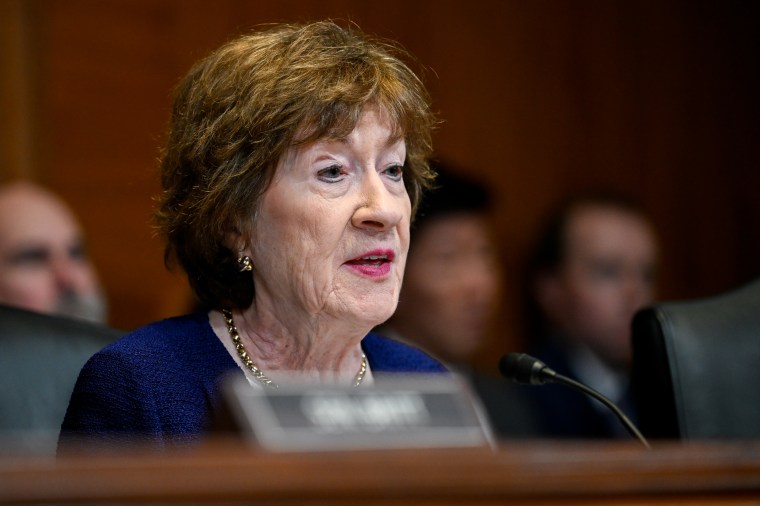
The political landscape in Maine is tense, with Democrats taking issue with past events impacting the upcoming Senate race. One key concern is Brett Kavanaugh’s confirmation to the Supreme Court, enabled by a critical vote from Republican Sen. Susan Collins in 2018. Her decision is now a focal point in the campaign.
The Impact of Kavanaugh’s Confirmation
In 2018, Sen. Susan Collins supported Kavanaugh, a move that many viewed as crucial to his eventual Supreme Court nomination success. At the time, Collins stated Kavanaugh saw Roe v. Wade as settled law. This statement was later proven inaccurate when Kavanaugh voted to overturn Roe in 2022.
Collins’ vote has galvanized Democrats in Maine, becoming a potent point of contention. Voters express dissatisfaction, with some feeling betrayed by her original promise to protect Roe v. Wade.
Past Support and Current Opponent
Collins faced criticism in 2018 for defending Kavanaugh despite sexual assault allegations against him. This defense draws parallels to current accusations against her Democratic opponent, Graham Platner, who has been accused of threatening behavior by an ex-girlfriend. Platner denies these claims, and his supporters counter that the accuser is politically motivated.
Abortion Rights as a Central Issue
The question of abortion rights remains pivotal in the Maine Senate race. Platner points to Collins’ vote for Kavanaugh as evidence of her unreliability on women’s reproductive issues. The Democratic campaign plans to highlight this in Maine, a state traditionally supporting reproductive rights.
According to internal polling by Senate Majority PAC, targeting Collins over abortion could resonate with voters, aligning closely with healthcare and Medicaid cuts as core issues.
Political Ad Strategy
The Democratic super PAC aims to run targeted ads focusing on Collins’ record related to abortion. Democrats view this as one of the most persuasive issues in their campaign toolkit against Collins.
Response to Allegations
Platner faces accusations from women describing his past behavior as unsettling, which he denies. Supporters highlight the accuser’s past defense of Kavanaugh, suggesting her claims against Platner are politically motivated. Outside progressives challenging Fifield’s credibility, link these allegations as part of a broader political narrative.
Susan Collins’ Record and Future
Sen. Collins defends her vote stating she engaged in thorough research before casting it. She highlights her bipartisan support for justices across the ideological spectrum. Collins’ noted that her alignment with Kavanaugh came at a time when Roe remained intact, whereas now its overturn has altered political dynamics.
Some strategists doubt the complexities of past allegations will influence voters significantly, but they agree that the importance of Supreme Court nominations, along with other pivotal issues like war, remains a central campaign focus.
The Maine Senate race is set against a backdrop of a state historically supporting a Republican senator while maintaining progressive stances on reproductive rights. As the election draws near, how Collins’ past decisions resonate with voters will significantly impact the outcome.
 Jeffries Distances from Medicare for All, Focuses on Democratic Centrist Policies
  Debate on DOJ Independence as New AG Steps In
  Rep. Ro Khanna Advocates for Data Center Regulation
  Democratic Activist Criticizes Hasan Piker over Past Comments
  DOJ’s Anti-Fraud Task Force Targets Medicaid Fraud in Pennsylvania
  Cuban American Advocates for Democratic Socialism in Miami