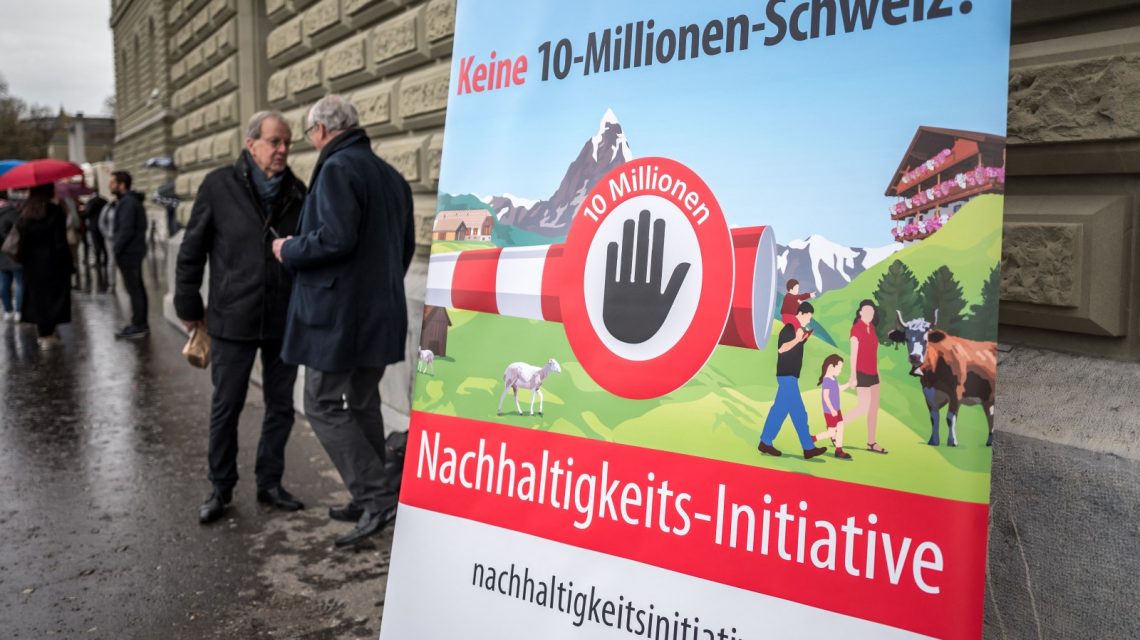
Swiss voters have turned down a proposal to limit the population to 10 million, focusing on economic stability and strong ties with Europe. The rejected initiative came from the right-wing Swiss People’s Party (SVP), which suggested measures like potentially ending key agreements with the European Union if the population surpassed 10 million by 2050.
The SVP argued that rapid population growth was putting pressure on housing, infrastructure, and public services, reflecting similar debates occurring across Western countries. Despite these concerns, 55 percent of voters opposed the measure, while 45 percent supported it, as reported by Reuters.
“While voters broadly share the underlying concerns about population growth, housing costs, and infrastructure strain—or even unconditional economic growth—a majority were not willing to accept the proposed solution,” said Cloé Jans, a senior project manager at gfs.bern.
Jans explained that the measure was seen as “too extreme,” and campaigners highlighted potential risks to the economy and Switzerland’s relationship with Europe.
The Political Impact of Ongoing Concerns
Although the proposal was defeated, nearly half of voters supporting it indicates that the driving concerns retain political significance. Since 2002, Switzerland’s population has grown from 7.3 million to over 9 million by 2025, largely due to freer movement between Switzerland and the EU, according to the Federal Statistics Office.
The SVP framed the initiative as a response to pressures on housing and public services, warning that continued growth could affect Switzerland’s cultural character. Immigration is a key concern for Swiss citizens, with UBS Worry Barometer placing it as a top worry after health issues and the environment.
“There is broad concern and even unease,” Jans noted. “But the proposed solution was viewed as too extreme and simply not feasible.”
EU Relations Influence the Debate
Jans pointed out that the ‘No’ campaign succeeded in shifting focus to the risks associated with accepting the proposal. It unified the Swiss government, major political parties, business groups, and unions who feared it could harm the economy and endanger EU ties.
Switzerland benefits from bilateral agreements granting access to the EU’s single market and allowing free movement. Opponents of the initiative feared the population cap could threaten these arrangements.
“The potential threat to the bilateral agreements with the EU, the impact on the labor market and healthcare system, and the rigidity of a hard population cap all moved to the center of the debate in the final weeks and proved more persuasive,” Jans stated.
Jans highlighted Switzerland’s dependence on foreign workers, particularly in healthcare, with 43 percent of doctors trained abroad. According to the Swiss State Secretariat for Migration, 165,386 foreign nationals moved to Switzerland last year, mostly for employment.
Swiss voters chose not to risk their relationship with the EU, emphasizing that a stable status quo was preferable to uncertain change.
“In an uncertain world, a small country at the heart of Europe was ultimately not prepared to risk a rupture with the EU, in many ways our closest and most reliable ally,” Jans said.
 U.S. Monitors Russian Plague Scare
  Trump’s Use of Public Funds for Political Ads Sparks Controversy
  Dennis Hastert’s Legacy: From Political Leader to Controversy
  Poland Prepares for Potential Conflict
  Current Developments in the Iran Conflict and the Impact on Oil Markets
  Tensions Within the Trump Administration Highlighted by Policy Reversals