Iconic buildings often capture public interest and define cities. Yet, architects sometimes find fault, questioning design choices, context, and functionality in ways that may not be obvious to the public. The architectural conversation has increasingly moved towards maintaining older buildings.
In the United States, adapting and repurposing historic structures has gained traction. Nearly half of America’s 125 million buildings are now over 50 years old, according to the American Institute of Architects. Adaptive reuse of buildings is on the rise. RentCafe reports that 25,000 apartments were created from converted buildings in 2024, reflecting a 50% increase from the previous year.
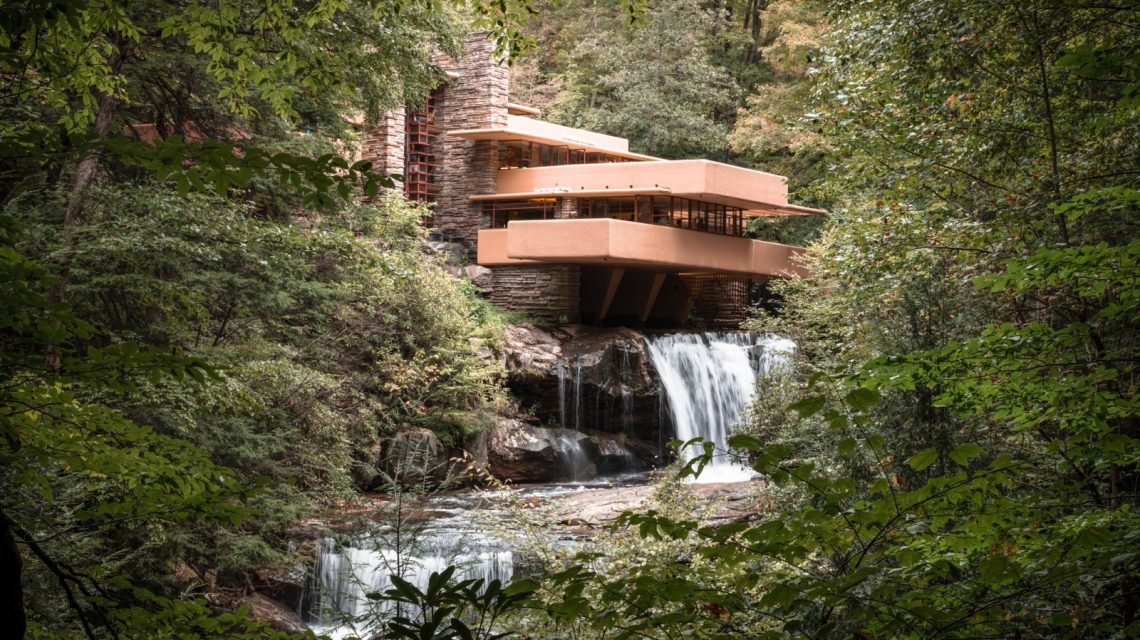
Fallingwater, Pennsylvania
Frank Lloyd Wright’s Fallingwater is considered a masterpiece. The house dramatically perches over a waterfall and is now a UNESCO-listed site. However, not all architects are fans.
I’m not a fan of Fallingwater… the home is iconic. But Wright chose the wrong location,stated Dan D’Agostino, founder of Plan Architecture.
Though the homeowners desired waterfall views, Wright placed the house atop the waterfall, obscuring it. D’Agostino also criticized the lack of additional steel reinforcement in the terrace, despite contractor suggestions. Miles Smith, an architect at Graphisoft, shared a similar stance. He commented that Fallingwater’s design is compelling, yet in person, it feels disappointing.
The Guggenheim Museum Bilbao, Spain
Renowned for its striking, sculptural form, Frank Gehry’s Guggenheim Museum in Bilbao is often credited with transforming the city. Yet some see design flaws.
Smith remarked that
the building’s curvilinear form can seem detached, lacking a solid foundation.However, with Gehry’s passing, many architects now acknowledge his significant influence on the architectural field.
The Glass House, Connecticut
Philip Johnson’s Glass House is celebrated for its minimalist transparency. However, architect Miles Smith believes it falls short when compared to Mies van der Rohe’s Farnsworth House.
Smith noted:
The main issue is that Johnson was aiming for total transparency but placed structural columns directly at the corners, creating a literal box.
In contrast, Farnsworth House positions columns to preserve a sense of openness.
McCormick Place, Illinois
Chicago’s McCormick Place is the largest convention center in North America. While it is an engineering marvel, it has drawn criticism.
Brian Turcza, an architectural design director, stated,
As a native Chicagoan and architect, the design does not serve the city or engage its environment.
Turcza praised the awe-inspiring main hall but criticized its lack of clear orientation and negative environmental impact, notably over 40,000 bird deaths from glass collisions. Though retrofits reduced strikes by 95%, Turcza believes the building lacks environmental awareness.
The Shard, United Kingdom
The Shard in London, designed by Renzo Piano, is the tallest building in Western Europe and often praised for its glass structure. Yet, Zaeem Chaudhary, director at AC Design Solutions, expressed reservations.
Chaudhary argued,
Structurally impressive? Yes. But it misses the mark in urban design.He felt the Shard’s form does not engage with surrounding streets.
Chaudhary emphasized that while the Shard appears distinct, it fails to enhance its urban context, merely tolerating its surroundings.
Do you have a story related to architecture or design? Share it at [email protected] for a chance to be featured by Newsweek.
 Troy Swanson: Award-Winning Librarian Transforming Academic Libraries
  Lisdoonvarna Matchmaking Festival: A Unique Tradition
  Midwest Underground Railroad Network Gains National Recognition
  Art Collective Critiques Administration with Mall Installation
  American Hagwon: A Tale of Family and the Korean Diaspora
  Volunteer Enthusiasm Shines at Frank Lloyd Wright Home and Studio