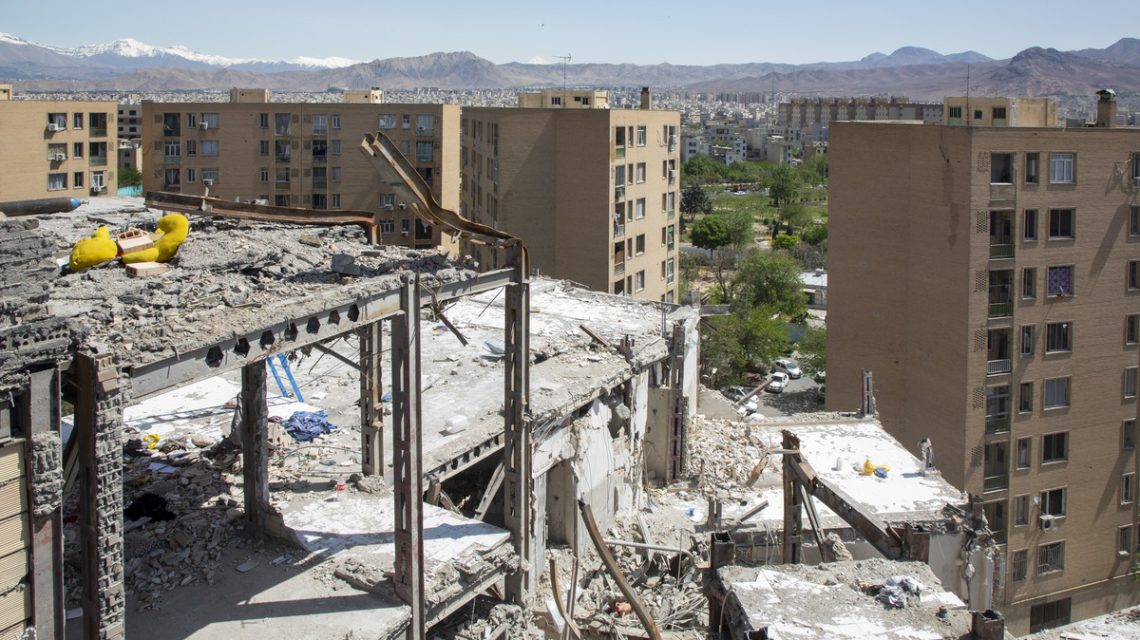
There is speculation about whether the United States will pay Iran $300 billion for reconstruction after damage caused by American and Israeli bombs. The Trump administration has clarified that there will be no American taxpayer money directed towards Iran. Vice President JD Vance stated that not a single U.S. dollar will reach Tehran.
The confusion arises from a deal President Donald Trump signed, which includes a $300 billion Reconstruction and Development Fund for Iran. This fund is designed to help Iran recover economically and from the damage caused. The memorandum of understanding outlines a plan that will be developed in 60 days as part of nuclear program negotiations with Iran.
U.S. Not Paying Directly
Officials have stressed that the funding will not come from American taxpayers, which is politically unpopular before the midterm elections. Instead, the investment will be private, with the U.S. having the final say on necessary waivers and permissions due to sanctions on Tehran.
The main financial support will come from Gulf Arab states, as the deal mentions “regional partners.” Companies from the U.S., Middle East, Asia, Africa, and South America are reported to have pledged more than half of the required funds, as noted by sources from Reuters.
Vance commented that Iran’s economic benefits would result only from investment by other countries, contingent on Iran undergoing substantial changes.
Potential Investment Scenarios
Vance mentioned one potential case where the U.S. might lift sanctions and permit the United Arab Emirates to invest in an Iranian power plant. This type of project is seen as benefiting Iran’s population rather than its regime, according to H. A. Hellyer from the Royal United Services Institute.
To facilitate such investments, the U.S. would need to remove some sanctions or risk penalizing Emirati companies under American law. Fawaz Gerges from the London School of Economics notes that the UAE has the resources and capability for large-scale projects if an agreement is reached.
Despite these possibilities, the full picture of the fund and investments remains complex. Gulf states and others view it as a chance for financial gains while stabilizing the region post-conflict.
In the short term, economic stability for Iran, including rejoining the SWIFT banking system, is critical. Currently, Iranian banks face partial SWIFT access bans due to existing sanctions.
Mystery of the $300 Billion Fund
It is uncertain if the $300 billion fund will be cemented in the final agreement. White House can revoke certain sanctions with ease, but those imposed by Congress can be challenging to navigate.
Sanctions from U.S. lawmakers impact foreign investments in Iran’s energy sector and pose risks to banks engaging with Iranian financial systems.
Hellyer points out that dismantling sanctions is troublesome since not all are under executive control; some require more complex procedures.
Frozen Assets and Economic Waivers
The deal suggests making Iran’s frozen assets accessible, a move that Trump has suggested might be necessary to encourage global confidence in investing with the U.S. dollar.
Iran claims $100 billion is frozen internationally, with funds held in China, Iraq, India, Qatar, and more. The release of an initial $12 billion tops Iran’s concerns.
The U.S. might approve waivers on Iranian oil sales, which critics believe could boost Iran’s economy before a conclusive agreement on contentious issues, like its nuclear program.
Iran relies heavily on oil exports, which the U.S. has targeted through its sanctions strategy involving port blockades.
Impact of $300 Billion Investment
Historically, the U.S. avoids giving reparation payments but sometimes supports post-conflict reconstruction. While Germany and Axis Powers faced reparations after the World Wars, the U.S. opted for broad programs instead of outright payments.
An example post-Gulf War was Iraq’s U.N.-led fund to compensate for its invasion of Kuwait, which Iraq only finished paying recently.
Iran asks for $270 billion as reparations for the damage from strikes. The proposed investment fund might serve as a way for the U.S. to recognize Iran’s claims while encouraging Iran’s cooperation in nuclear discussions, suggests Gerges.
Ultimately, while $300 billion could temporarily help Iran’s fragile economy, it is unlikely to completely mend the war-inflicted damage, adds Hellyer. “It’s not a quick-fix figure,” he concludes.
 The Trump Team’s Challenge to the Military Leadership
  Maryland First State to Restrict Electronic Pricing in Grocery Stores
  British Police Arrest Man Suspected of Terror Plot
  Activists Push for Nationwide Ban on Child Marriage in the U.S.
  Democratic Hopes and Historical Warnings in 2026 Senate Race
  Republicans Face Challenges Amidst Cost of Living Concerns