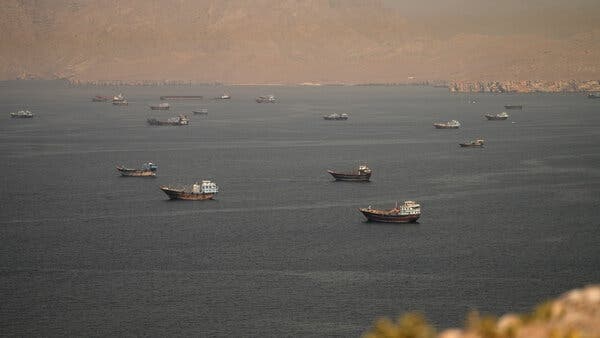
Conflicting reports continue to emerge from the United States and Iran regarding the status of the Strait of Hormuz. This critical maritime passage remains a focal point in negotiations aimed at resolving tensions between the two nations.
On Sunday, maritime analysts noted a decrease in the number of vessels passing through the strait, although the exact reason remains unclear due to limited data. The strait’s strategic importance for oil and gas shipping has made it a contentious element in ongoing U.S.-Iran discussions to conclude the war.
President Trump, in an interview with Fox News, indicated he had warned Iranian officials against closing the Strait of Hormuz. He stated, “You close it and you won’t have a country.” Meanwhile, Vice President JD Vance is leading an American delegation in Switzerland to engage in another round of talks with Iranian representatives.
The Iranian military announced on Saturday its intention to close the waterway, which previously facilitated transport for a significant portion of the world’s oil supply. The closure was prompted by accusations against the United States concerning a breach of a preliminary cease-fire agreement. This breach involved a failure to limit military actions by Israel against Hezbollah, a militant group backed by Iran.
The naval branch of Iran’s Islamic Revolutionary Guards Corps issued warnings to ships nearing the strait, citing security risks. However, U.S. Central Command countered with a statement that the strait remains open. Capt. Tim Hawkins emphasized, “Iran does not control the Strait of Hormuz. Traffic continues to flow, and U.S. forces are monitoring the situation to ensure this remains the case.”
Ship tracking data shows vessels have ceased attempts to navigate the strait’s northern route since Iran’s latest threats on Sunday. Daniel Mueller, a senior analyst at maritime intelligence firm Ambrey, noted, “The situation remains fraught. The Iranians are maintaining the strait is closed again, though there have been no attacks.”
Updates from maritime intelligence firm Windward indicate a decrease in transit numbers, with 12 crossings tracked on Sunday. This marks a decline compared to numbers from the previous day. Previously, U.S. Central Command reported 55 commercial ships passing through on Saturday—the highest single-day count since the war’s early days, but still below the prewar daily average of 130.
Energy Secretary Chris Wright provided a different account on Sunday, stating that 67 ships navigated the Strait of Hormuz in the past 24 hours. U.S. military assistance guided these ships through a southern shipping lane, bypassing the heavily mined main channel.
According to Windward, some vessels opted to keep their transponders off to avoid detection. As Windward updates note, “Hesitation is back in an already unpredictable corridor.”
Leo Sands covers breaking news for The New York Times in London.
 TikTok Couple Arrested for Alleged Arson in West Virginia
  21-Year-Old University of Georgia Student Survives Eight-Story Fall
  Texas Authorities Arrest Suspect Over Potential Capitol Attack
  Arizona State University Hockey Incident Leads to Coach’s Administrative Leave
  Senate Vote on Data Center Electricity Cost Legislation
  Fatal Hit-and-Run Leads to Additional Shooting Incident in Miami-Dade