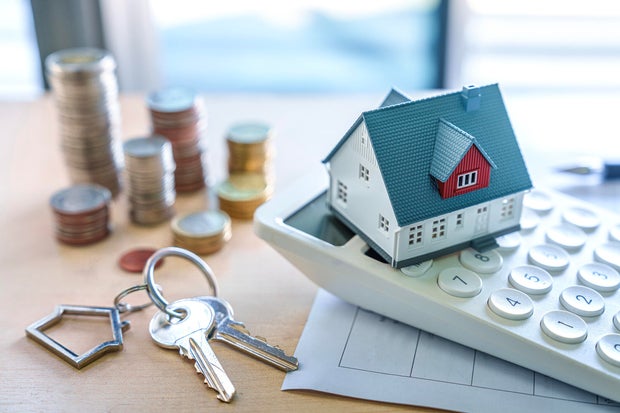
Purchasing a home now presents significant financial hurdles for many potential buyers. Mortgage rates hover near 6.5%, and home prices are high. Inflation, currently at 4.2%, further pressures household budgets. Questions about the economy and potential interest rate changes make homebuyers reconsider their timing.
Households earning around $75,000 annually face specific challenges in this environment. This middle-class income offered broad homebuying options a few years ago, but current conditions have altered the landscape. Higher financing and insurance costs, along with rising property taxes, limit how much home you can afford now.
Understanding Affordability
Affordability knowledge is vital when buying a house. Knowing your limits helps in finding a suitable home. So, what can you afford with a $75,000 income in today’s market? Can you extend your budget if necessary?
Home Affordability with a $75,000 Salary
The answer varies by factors, but many lenders use the 28/36 rule. This suggests spending no more than 28% of gross monthly income on housing and keeping debt under 36%. With $75,000 per year, or about $6,250 monthly, your housing budget should not exceed $1,750.
This amount covers more than the loan. Property taxes, homeowners insurance, and private mortgage insurance (PMI) (if the down payment is below 20%) are included. Typically, this leaves $1,300 per month for principal and interest on a $75,000 salary.
At a 6.5% interest rate over 30 years, that $1,300 supports a loan of about $205,000. Adding a down payment helps set the purchase price. A 10% down payment brings the price to around $225,000, while 20% increases it to $255,000 and removes PMI.
Many with $75,000 earnings usually aim between $215,000 and $270,000, based on their debt and available cash. Debts, like a $450 car payment or $200 student loans, impact your qualifying mortgage amount even if your income stays the same.
Stretching Your Homebuying Budget
If the numbers seem restrictive, several strategies can help expand your budget. Improving your credit score is key. The 6.5% rate is an average. Strong credit might secure a rate below this. Reducing debts and disputing report errors can boost approval power.
Paying off car loans or credit cards creates room under the 36% debt cap, enhancing borrowing power. A larger down payment also aids in reducing your needed loan. Once surpassing 20%, PMI is eliminated, allowing you to invest that money directly into your home.
Explore loan programs as well. Federally-backed loans may require only 3.5% down, and various state programs assist with down payments or offer favorable rates. Location affects costs too. Areas with lower taxes and insurance offer greater affordable budgets without income changes.
Conclusion
With a $75,000 salary, you can still purchase a home today, although not the same as years prior. Most will find suitable options in the low-to-mid $200,000s, influenced by down payment, debts, and local costs.
Before proceeding, check your numbers against the 28/36 rule, seek pre-approval to know what lenders will offer, and remember that the listing price is just one part of a complex financial picture.
 Vancouver’s First Supertall Development: Georgia + Abbott Project
 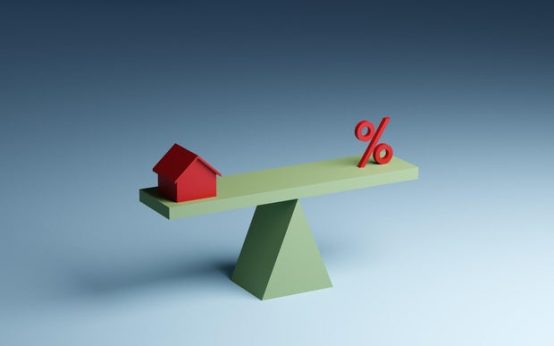 Impact of Cooling Inflation on Mortgage Rates
 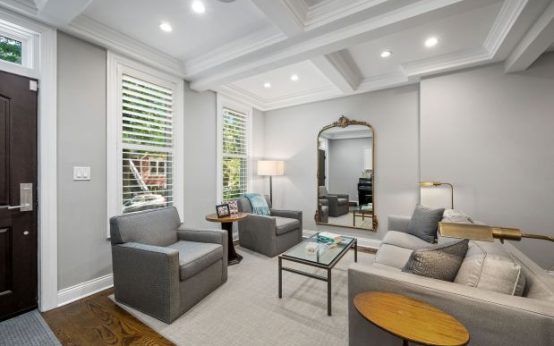 Luxury Home in Chicago’s Old Town Features Wine Cellar and Rooftop Deck
 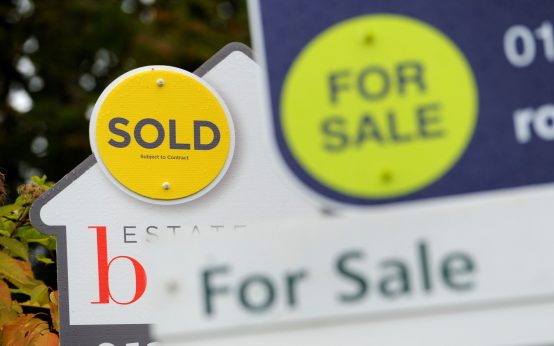 Current State of U.S. Housing Market Amid Rising Mortgage Rates
  Record-Breaking Tower Planned for Beverly Hills
  Building an Artful ADU in Los Angeles: A Couple’s Journey