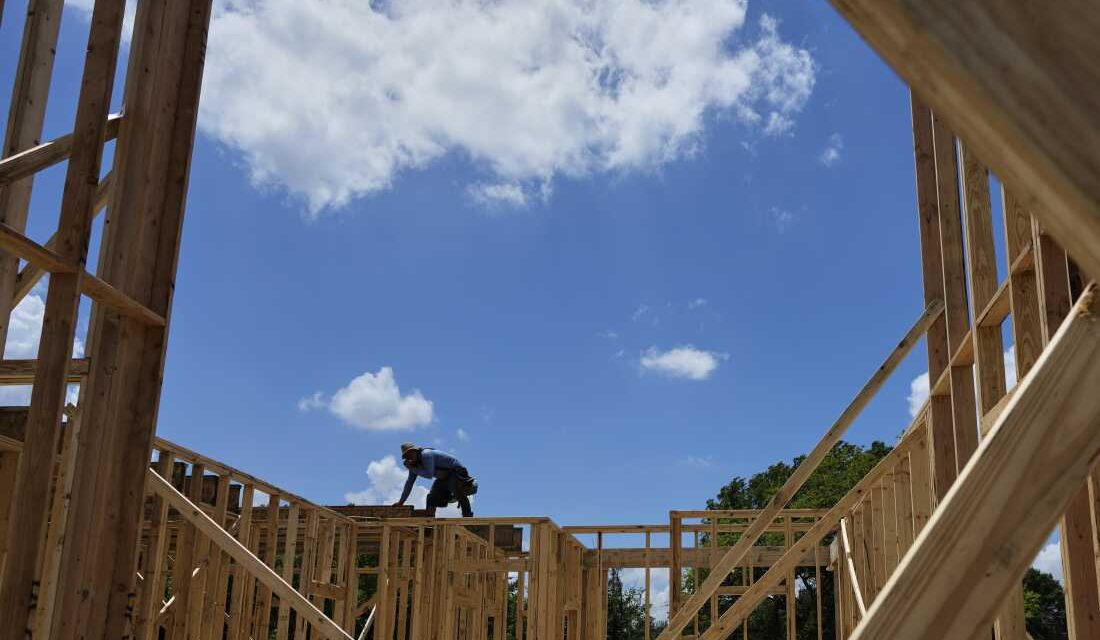
On Tuesday, workers labored on the roofing structure of a new home under construction in Richardson, Texas. This follows legislators in Washington who secured a crucial vote in the House, passing significant housing legislation aimed at making homeownership more affordable.
The 21st Century Road to Housing Act, one of the largest housing bills in decades, passed the House with strong bipartisan support at 358 to 32. The Senate approved the bill Monday, also with notable backing across party lines, and it now awaits President Trump’s signature.
“Lawmakers need to do something to make homeownership more affordable.”
Senator Elizabeth Warren, D-Mass., a co-sponsor, emphasized housing affordability as a priority for Congress. She noted the urgency members face in reducing home prices, citing conversations with constituents.
A variety of factors contribute to homes being out of reach for many U.S. buyers. Redfin data shows families need an income of approximately $117,000 annually to afford a typical home, a significant $30,000 above the average U.S. household income. Mortgage rates have climbed over recent years, increasing monthly ownership costs. While rates fell earlier this year, tensions in Iran spiked borrowing costs, pushing the average to roughly 6.5%. Inflation has further weakened purchasing power, surpassing wage growth.
The bill targets a critical issue: housing supply. Estimates from Realtor.com indicated a shortage of over 4 million housing units last year.
“Supply is the key problem here,” stated Jeanna Kenney, Villanova University.
The bill introduces various provisions to both stimulate construction and ease home buying. A notable provision bans corporate investors from acquiring additional single-family homes once they own 350. This aims to prevent corporate landlords from outbidding families, a move highly debated during legislative discussions.
Though corporate investors comprise just 3% of the single-family rental market, there are concerns the ban might reduce available homes since investors often refurbish neglected properties.
“It chills investment, we need more investment in housing stock,” argued Ross Marchand, Taxpayers Protection Alliance.
Warren supported the ban, highlighting its importance in regions like Atlanta, where investors compete for market share.
Regulation Adjustments for Builders
While federal funding for new homebuilding isn’t included in the legislation, it simplifies builders’ compliance with existing financing requirements. Builders can skip environmental reviews when constructing between two buildings with completed evaluations. A separate provision offers grants for communities to develop pre-approved housing designs, expediting code compliance.
Another key change removes the permanent chassis requirement for manufactured homes. By allowing installations on permanent foundations, cost savings estimated at $5,000 to $10,000 could be achieved. This enables design flexibility, including adding a second story.
“Not having that chassis immediately wipes several thousand dollars off that price,” stated Kate Wood from NerdWallet.
The bill encourages local governments to accelerate homebuilding efforts, offering federal incentives to communities that prioritize housing construction.
“If you don’t build more housing, you should lose those incentives,” remarked Senator Tim Scott.
Federal Limitations in Housing
Despite the bill’s significance, federal lawmakers have a limited influence on homebuilding, as local governance has a greater role in construction matters. Private builders also face challenges with labor and material costs, while Congress has no say over mortgage rates. However, with inflation on the rise, the Fed might adjust interest rates later this year.
The bill represents a substantial step toward addressing housing affordability, with industry experts optimistic about its potential impact.
“The dream of homeownership is simply a dream for many Americans,” said Amanda Crist, Greater Nashville Realtors.
Senator Warren highlighted the legislative progress, noting it marks the first major action by the federal government addressing housing pricing issues in over 30 years.
 Maryland First State to Restrict Electronic Pricing in Grocery Stores
  Activists Push for Nationwide Ban on Child Marriage in the U.S.
  Democratic Hopes and Historical Warnings in 2026 Senate Race
  Republicans Face Challenges Amidst Cost of Living Concerns
  A Different Kind of Fall for Congress This Year
  Cornel West and Sean Hannity Discuss Differences on Podcast