The Trump administration’s decision to build new border infrastructure in the Big Bend region of West Texas has met with strong opposition from various groups. Landowners, environmental organizations, and some local officials argue that the project may restrict access to the remote areas along the Rio Grande. Due to the Rio Grande’s role as both an international boundary and a dynamic river, infrastructure is typically placed inland rather than directly on the riverbank.
During an appearance on The Bulwark podcast with Tim Miller, Isaac Saul, founder of the political newsletter Tangle, claimed that the federal border wall construction would lead to significant land on the U.S. side effectively becoming less accessible to Americans, but not surrendered to Mexico. The Bulwark later shared a clip of this conversation that rapidly garnered over 375,000 views on X.
“According to DHS, of where the wall is going to be, the acreage that will now be on the Mexico side, it looks like they’re about to basically put Americans on the other side of 280,000 acres of Texas land,” Saul stated. “So Americans are going to be fenced out,” he added.
Miller then summed up the scenario, interpreting Saul’s comments as indicating potential “territorial concessions to Mexico.” Saul clarified in a later email to Newsweek that the term “territorial concession” was first introduced by Tim Miller and subsequently used by The Bulwark.
Saul explained his estimate of 280,000 acres was based on an analysis of Department of Homeland Security maps using AI. “The main point is that Americans are being cut off from their own land,” Saul emphasized. This layout might allow Mexican agricultural workers better access to the river than American landowners behind a 30-foot barrier.
The Facts
The construction of border barriers north of the Rio Grande does allocate thousands of acres of American soil south of physical barriers. However, it neither changes the international boundary nor gives legal ownership to Mexico. Under the Boundary Treaty of 1970, the official border remains set along the river’s normal channel, and contractors build away from the banks following guidelines by the International Boundary and Water Commission (IBWC).
Construction north of the river is not a territorial concession and does not yield sovereignty or jurisdiction to Mexico. The federal government may use negotiated purchases or eminent domain to acquire private property for infrastructure, with compensation guided by U.S. Department of Justice guidelines. Although owners face difficulties accessing their land or water rights, their title and territorial control remain unchanged. The U.S. retains access rights for land acquired through easements or titles.
The Ruling
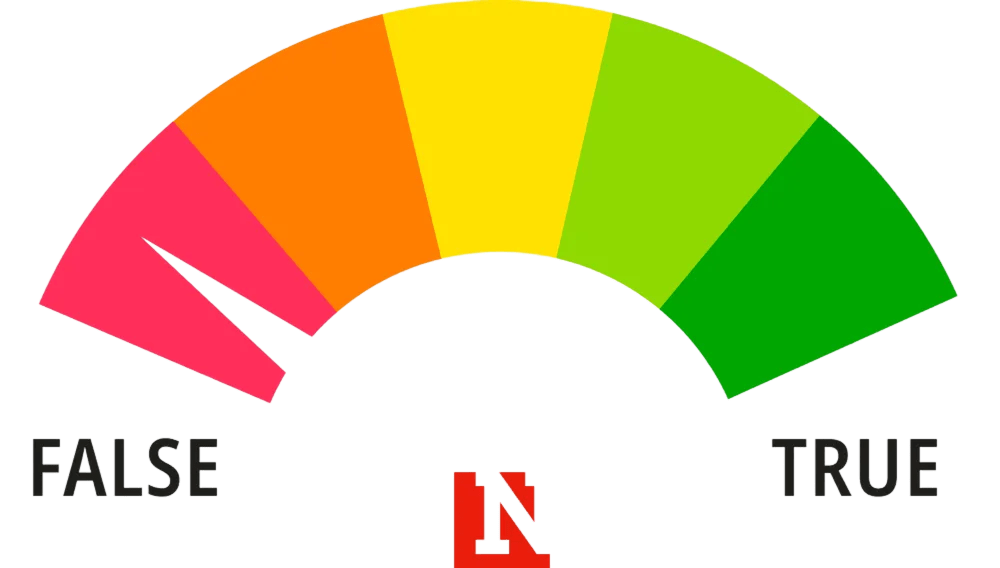
The claim is false. Although building walls north of the Rio Grande creates access challenges for Texas landowners and places American acres between the fence and the river, the U.S. is not handing over any land to Mexico. The international border is established by treaty at the Rio Grande, and all land north of the river remains U.S. territory. Mexico receives no legal rights or sovereignty over these areas.
Contact Newsweek editors on this story: John Fitzpatrick and Cristina Diciu.
 The Trump Team’s Challenge to the Military Leadership
  Maryland First State to Restrict Electronic Pricing in Grocery Stores
  Activists Push for Nationwide Ban on Child Marriage in the U.S.
  Democratic Hopes and Historical Warnings in 2026 Senate Race
  Republicans Face Challenges Amidst Cost of Living Concerns
  A Different Kind of Fall for Congress This Year