
Global ocean temperatures outside the polar regions reached unprecedented levels on June 21, according to the Copernicus Climate Change Service and the Copernicus Marine Service. The Copernicus Climate Change Service reported temperatures of 20.86 degrees Celsius (69.54 degrees Fahrenheit), exceeding past records for the date in 2023 and 2024. The Copernicus Marine Service noted temperatures at 21 degrees Celsius (69.8 degrees Fahrenheit), surpassing previous records by 0.1 degree Celsius.
Richard Allan, a climate science professor at the University of Reading in the U.K., discussed the broader context in a phone interview. He emphasized that the warming of the planet is linked to the emission of greenhouse gases, mainly from burning fossil fuels. These emissions hinder the planet’s ability to release excess heat into space.
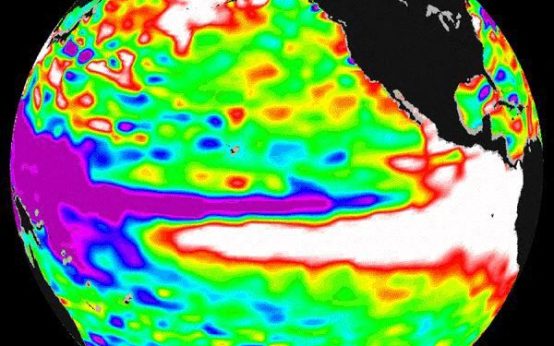
Oceans, absorbing more than 90% of this excess energy, underscore the serious impacts of climate change. Allan highlighted the “emerging influence of El Niño.” Concurrently, a severe heat wave threatened parts of the United States, particularly before the July Fourth weekend. The National Weather Service reported over 46 million people under extreme heat alerts as of Wednesday. Dangerous temperatures were predicted to sweep across the central and eastern regions, with some areas forecasting highs above 100 degrees, particularly in the Ohio Valley, Mid-Atlantic, and Northeast, extending to parts of Canada.
Europe also faced record-breaking heat last week. WHO chief Tedros Adhanom Ghebreyesus revealed that over 1,300 excess deaths since June 21 were linked to high temperatures in Europe. France’s national health ministry reported around 1,000 unexpected deaths during a particularly severe heat wave.
Tedros communicated on social media that climate change and global warming are making “once-in-a-generation” heat waves almost yearly occurrences. He pointed out that Europe is the “fastest-warming continent on Earth,” heating at twice the global average. The continent’s infrastructure, including homes, workplaces, and schools, is generally unprepared for such temperatures.
 Atlantic Ends September Without a Hurricane for First Time Since 1994
  Bobcat Sightings and Conservation Efforts in Illinois
  2026 El Niño: A Historical Comparison and Future Projections
  U.S. Records Warmest September in History
  Swiss Glaciers Show Effects of Ice Loss Amid Global Warming
  Climate-Resistant Rock Glaciers: Hidden Water Resources