The German software company SAP is placing a bet on the potential for employees to transform their roles, rather than seeing them eliminated through advancements in artificial intelligence (AI). Opinions among experts are divided about the effectiveness of this strategy.
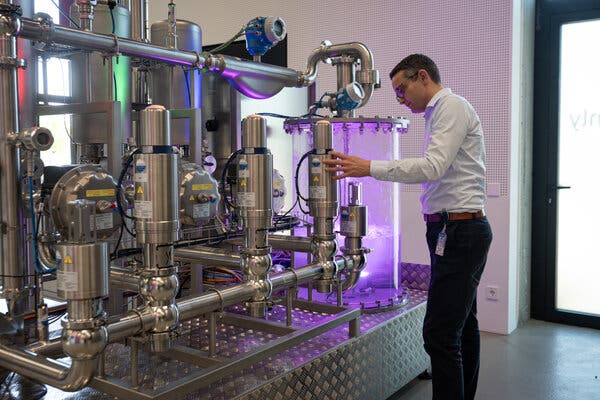
Matthias Deindl, a product management executive at SAP, was observed at an AI-enhanced production line in Walldorf, Germany. This initiative is part of SAP’s approach, which aims to integrate AI into its operations without reducing its workforce.
AI has taken over significant portions of work traditionally done by software engineers like Fabrizio Primerano. AI now collaborates with colleagues, conducts research, and handles coding and testing tasks. Despite these changes, Primerano remains employed at SAP. His job now involves fewer mundane tasks and more responsibilities in managing and mentoring AI agents or bots. These bots act increasingly like personal assistants and can emulate human employee tasks.
“It’s freeing me up to do more of this creative work,” Primerano remarked, reflecting on his evolving role.
SAP, recognized as the largest software company in Europe by market value, continues to reposition itself. Rather than just providing back-office products, SAP embraces emerging technology that could threaten its current business structure and the positions of its coders.
The company acknowledges that AI reduces the need for human input in many routine software engineering tasks. In their effort to adapt, SAP underwent restructuring two years ago that led to the elimination of nearly 10,000 jobs, partly due to AI integration. While SAP did not disclose the exact number of AI-related layoffs, the company continues to adapt its workforce.
To prevent further staff reductions, SAP encourages employees to brainstorm and develop new, more valuable roles with the help of rapidly advancing technologies. Despite previous job cuts, SAP has added over 3,500 new positions since 2023. Some of these new job positions include titles such as “forward-deployed engineers,” who collaborate with clients to create AI-driven solutions.
According to Christian Klein, SAP’s Chief Executive, coding tasks might change considerably in the near future. He stated, “I’m not sure if here someone in two or three years will still code software.” However, he emphasized that he does not foresee operating with a reduced workforce. Instead, the workforce will evolve significantly, focusing on new capabilities and roles brought by AI integration.
 Trump Unveils AI-Powered America.gov Platform
  Trump’s 2024 Campaign Targets Young Men Through Cryptocurrency
  How Modern Windows Improve Home Insulation
  State Department Simplifies Passport Process with Online Applications
  Senate Democrats Block Data Center Bill Over Efficiency Concerns
  Future Cities: Ambitious Projects Aiming for Innovation and Sustainability