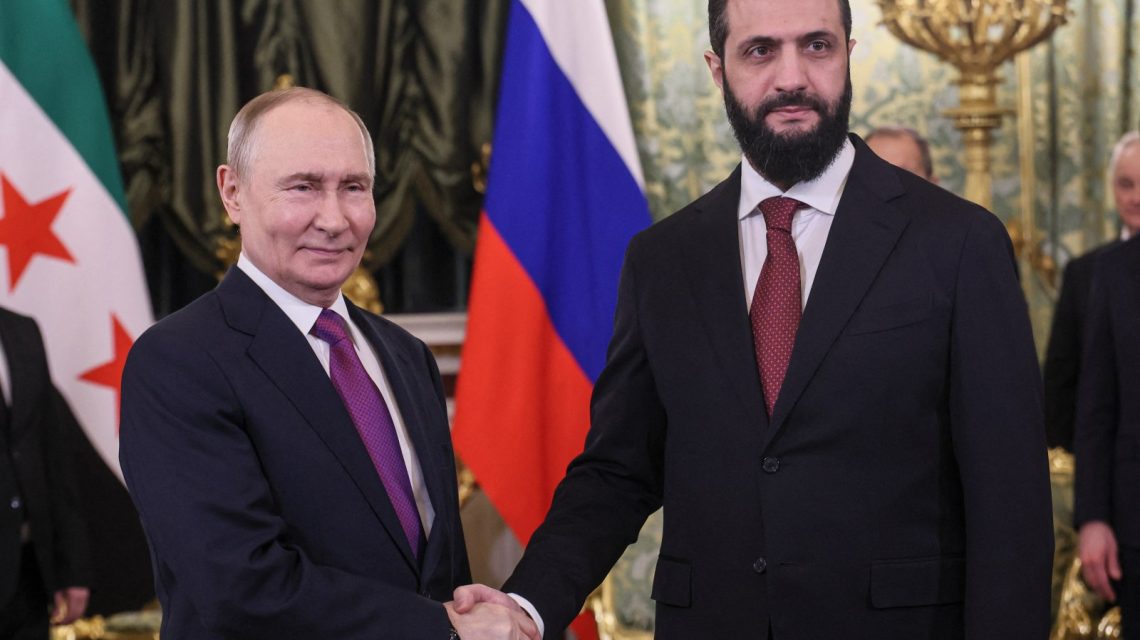
For the past two years, many believed Russia would suffer from the collapse of Bashar al-Assad’s regime in Syria. Moscow had invested heavily over decades to support Assad’s power. When Hayat Tahrir al-Sham took control in Damascus in December 2024, it seemed Russia’s influence would decline. Western leaders thought Russia would lose its strategic position in the Levant.
This assumption looks increasingly incorrect. A study from Israel’s Institute for National Security Studies shows Russia is strengthening ties with Damascus, achieving some notable successes. This new relationship results from effective Russian diplomacy. Confidence-building measures began early in Ahmed al-Sharaa’s rule. Russia sent wheat and fuel, engaged in diplomatic outreach, and offered economic cooperation proposals.
“Confidence-building steps were taken, including shipments of wheat and fuel,” the study by INSS noted.
Significantly, Moscow offers solutions to Syria’s military issues. This includes training and arms procurement, with potential for limited military deployments to support Syrian forces, similar to Russia’s previous role during Assad’s time.
Russia’s ambitions are expanding. Reports say the Kremlin plans to create a major commercial logistics hub at the Tartus port, leased by Russia. This facility will handle about 250,000 tons of Russian goods monthly, starting with grain shipments. Eventually, Tartus will link directly to Novorossiysk, a Russian Black Sea port. This ambitious plan suggests Russia is creating a long-term commercial pathway to integrate Syria’s economy with its own.
Russia’s strategy in the region is evolving. Previously, its influence in Syria was primarily military. Russian airpower supported Assad in 2015. Naval and air facilities in Tartus and Khmeimim provided a steady military presence in the Mediterranean. However, these assets depended on Assad’s regime’s survival.
The current strategy differs by focusing on economic recovery. Russia is forming durable relationships beyond any specific regime. This plan brings benefits. Syria now imports 85 percent of its wheat from Russia. Damascus is increasingly reliant on Russian crude oil, with Russia providing about 60,000 barrels daily, half of Syria’s total consumption.
The logistics hub would cement these dependencies, making Russian goods vital for Syria’s reconstruction.
For the US and its allies, the situation holds significant implications. The Trump administration has worked to integrate Syria’s new leader, Ahmed al-Sharaa, into diplomatic relations. Congress has removed some sanctions to support Sharaa’s stabilization efforts. These moves aim to steer Syria toward a Western-aligned direction.
Russia, however, aims to shape Syria’s future according to its own interests by becoming integral to its reconstruction, food security, energy, and commerce. Historical context suggests these goals will likely differ from Washington’s plans.
Ilan Berman, senior vice president of the American Foreign Policy Council in Washington, DC, expresses his views in this article.
 Israeli Prime Minister Calls for Comprehensive Security Review of Civil Flights
 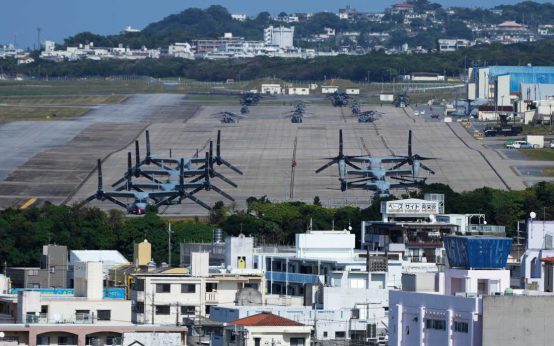 U.S. Marine Arrested in Okinawa for Alleged Murder and Robbery
 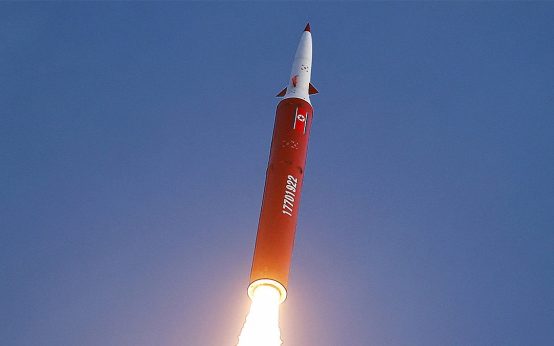 North Korea’s Missile Test and Its Implications
  Israel and Ireland Soccer Teams Display Tension in Nations League Match
  Fox News Report on FlyDubai In-Flight Incident
  Brazilians Vote in Crucial Presidential Election