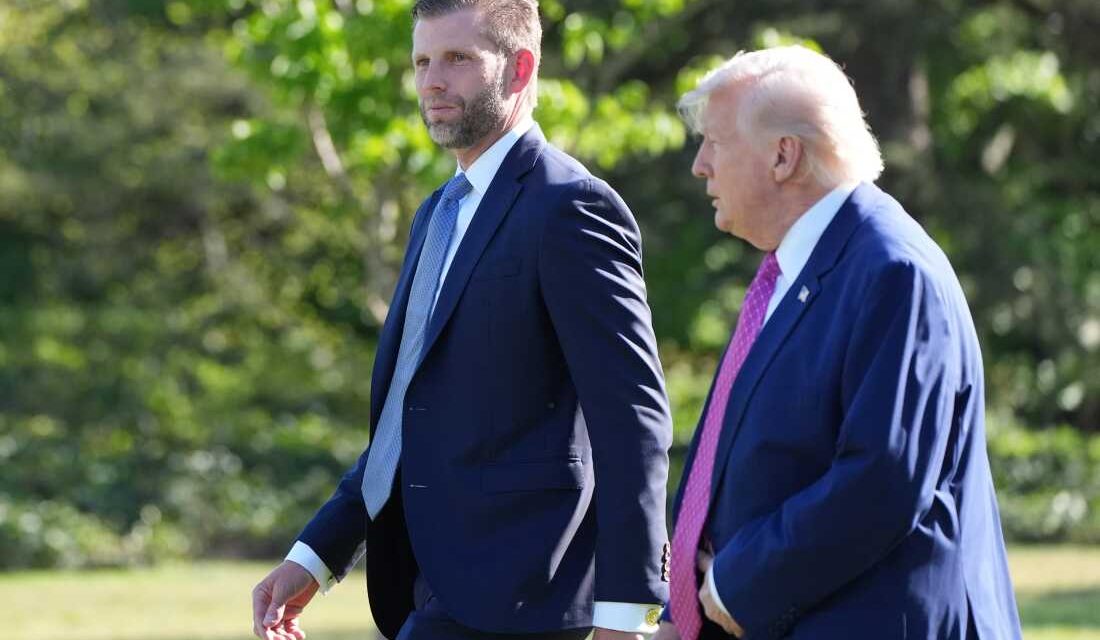
President Donald Trump and Eric Trump prepared to leave the White House on April 10, 2026, as Capital One moved to dismiss a lawsuit filed by the Trump Organization. The suit challenges the bank’s closure of numerous accounts in 2021, which occurred following a lengthy anti-money-laundering review. Trump businesses argue the closures were retaliation for the January 6 Capitol riot, a claim Capital One denies.
Capital One’s Defense
In a motion filed in Florida’s federal court, Capital One’s attorneys pointed to documents and allegations indicating the closures were due to anti-money-laundering reasons. The bank’s decision stemmed from months of analysis by a skilled financial-crimes team. Capital One insists the Trump businesses had ample time to move their funds, but did not provide opportunities to address money-laundering concerns before closing the accounts.
Impact on Trump Organization
The dispute involves around 385 accounts linked to the Trump Organization and associated entities. These businesses had maintained accounts with Capital One for over a decade before closures in 2021. The Trump-affiliated companies argue the closures were motivated by political reasons, not financial crime. Capital One firmly counters these claims, asserting the closures were related to compliance and not political bias.
Contractual Rights and Court Proceedings
Capital One maintains its contract permitted account closures at any time without notice. The Trump companies do not dispute this contract language. Judge Roy Altman had previously dismissed an earlier version of the lawsuit, underscoring a bank’s broad discretion in account closures. Capital One now seeks a permanent dismissal of the new complaint.
Secrecy and Transparency
A separate court filing focuses on the sealing of certain documents related to the case. Capital One invokes the Bank Secrecy Act to justify maintaining confidentiality around specific details. The Trump companies agree on some redactions but contest others sought by Capital One.
Broader Context
President Trump, seeking to address concerns over politically motivated ‘debanking,’ signed an order last August to increase regulatory oversight. The Capital One case is not the lone legal challenge involving financial institutions. A similar lawsuit against JPMorgan Chase over account closures remains active. Previously, Trump had sued Capital One and Deutsche Bank in 2019 to prevent them from providing financial records to a congressional inquiry.