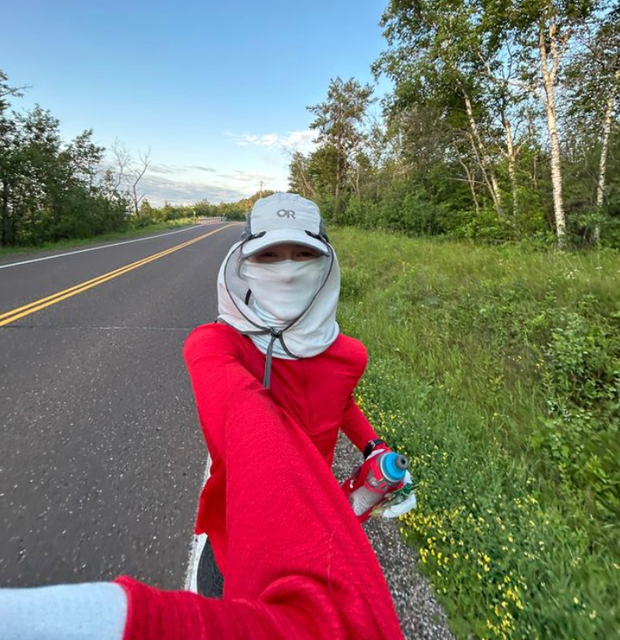
Emily Pearson, a woman from Minneapolis, experienced an unusual and painful reaction to sunlight from the age of eight. Spending time outdoors resulted in her extremities feeling like they were being burnt and pricked simultaneously. This bewildering condition plagued her throughout childhood, with no solutions in sight.
Pearson’s family endeavored to identify the root cause. Protective clothing and minimizing outdoor exposure became her norm. Despite such precautions, outings like family vacations turned into a painful endurance test. By the time she reached 17, doctors at the Mayo Clinic diagnosed her with erythropoietic protoporphyria (EPP), a rare disorder making her essentially allergic to the sun.
Finding a diagnosis offered some relief but also introduced new challenges. The condition had no simple cures. Despite these obstacles, Pearson found comfort in activities like running. She shifted from competitive swimming to participating in half-marathons, scheduling her runs during times when sunlight exposure was minimal.
Despite a desire to run a full marathon, the significant risk of exposure to sunlight during daytime races seemed to make this dream impossible. College life further highlighted the difficulties, with normal activities like grocery shopping leading to ‘severe pain’.
In 2025, a volunteering stint at Sun Escape camp introduced Pearson to a potential game-changer: a clinical trial for a drug called bitopertin. This drug targets protoporphyrin IX, a substance in the skin that’s overly produced in EPP patients when exposed to sunlight.
Dr. Sioban Keel from the University of Washington explained that bitopertin reduces the levels of this molecule. In the trial’s second phase, Pearson began taking this medication, which showed promising results almost immediately. Within weeks, she noticed a marked improvement in her sunlight tolerance.
Clinical trial data confirmed that bitopertin significantly reduces protoporphyrin-IX levels and improves sunlight tolerance in EPP patients with no notable safety concerns. Pearson, participating through an open-label extension, still uses the medication.
In October 2025, she fulfilled her dream of running a marathon. Successfully completing the race without protective gear marked a significant milestone for her. This success spurred her to pursue another marathon and even envision participating in a triathlon.
The potential of bitopertin has rejuvenated her quality of life, allowing her to enjoy outdoor activities without constant worry. Though occasional minor reactions occur, the severity is far lower, offering Pearson newfound freedom.
Pearson plans to run another marathon in June 2027 and dreams of newer adventures like triathlons. Her ability to engage in activities without fear of pain or anxiety has transformed her outlook, making her future bright.
 Facing Terminal Illness: Embracing Life’s Moments
  Eating with Partners May Impact Blood Sugar Regulation
  Foods Linked to Longevity and Healthier Aging
  Rethinking Youth Sports: Balancing Opportunity and Health
  Journey Through Love and Health Challenges
  Florida Woman Discovers Brain Tumor After Mysterious Symptoms