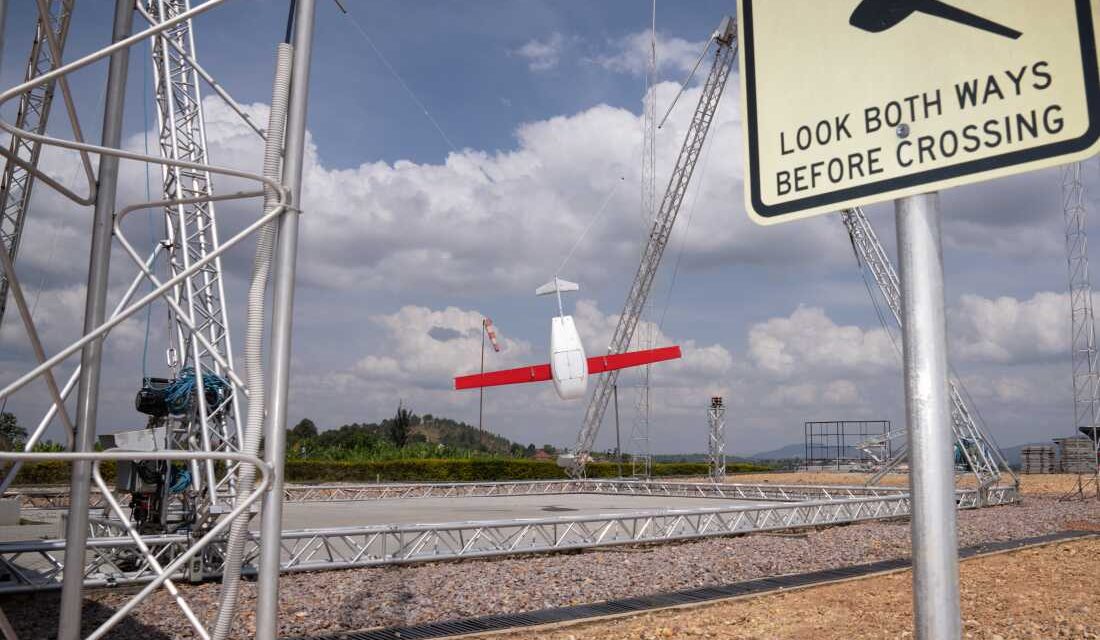
A drone returned from a delivery, deftly stepping into its landing mechanism in Muhanga, Rwanda. Since 2016, the Rwandan government has collaborated with American robotics company Zipline to deliver emergency blood through drones.
The Urgency of Life-Saving Deliveries
Noella Mukanoheli was nine months pregnant, facing a critical situation as she bled heavily. Her journey to receive medical care took an arduous three hours. Initially, she took a 50-minute motorbike ride to a clinic, only to find no doctor available. An ambulance transported her to the nearest hospital, a mere 10 miles away, yet the trip took two agonizing hours due to Rwanda’s challenging roads. En route, Mukanoheli lost consciousness. Upon arrival, doctors identified her need for 5 liters of blood, a massive transfusion. Yet, the hospital lacked her blood type. Fortunately, drones quickly delivered the required blood to ensure her recovery.
Drones Revolutionizing Healthcare in Rwanda
This story showcases the potential of drones in Rwanda, a country nicknamed the ‘land of a thousand hills.’ Slow-moving trucks on narrow roads hinder ground transportation. In response, the Rwandan government partnered with Zipline in 2016 to expedite emergency medical deliveries using drones. Currently, these drones fulfill a critical role by transporting diverse medical supplies across the country.
Home to a population nearing 15 million, Rwanda has pursued technological solutions to enhance healthcare. The modernization effort is embedded within broader national goals to alleviate poverty and elevate the country to upper-middle-income status. Nonetheless, this mission involves complex and costly tasks, like enhancing electricity access and road infrastructure on rough terrain.
Scaling Up Drone Technology
In 2025, the Trump administration granted $150 million to expand Zipline’s reach in Rwanda and other African countries. However, other U.S. funding, crucial for food and health aid, faced cuts. Despite changes in aid strategies, other countries, like Zimbabwe, are observing Rwanda’s drone program with interest.
Zipline drones are a fixture in Rwanda, constantly crossing skies with life-saving missions. The drones resemble small airplanes with a Styrofoam body and red wings. Piercing the sky every 50 seconds on average, these drones carry essential medical supplies, diagnosing and treating both human and animal health concerns.
Impact of Zipline Operations on Rwanda’s Healthcare
Zipline operates pivotal distribution centers in Rwanda, with the Muhanga center being its inaugural one worldwide. This facility not only serves the country but also marks Rwanda’s intent to be the first nation comprehensively serviced by drone technology. Orders are placed by medical professionals through diverse communication methods and managed from a standard-compliant medical warehouse.
Technicians prepare orders with a minimum weight requirement to ensure flight stability. They launch drones into flight using AI-embedded technology, which adapts navigation strategies to current conditions like wind. These drones can achieve speeds of 64 miles per hour and reach heights of 400 feet, delivering cargo swiftly compared to vehicles.
Drone deliveries are especially crucial for hospitals like Kabgayi, where life-saving blood can reach them in mere minutes. The technology saves valuable time that can mean the difference between life and death.
Rwanda’s Drive for Better Healthcare
Drones play a strategic role in Rwanda’s drive to improve healthcare outcomes. The multipronged approach includes universal healthcare policies and the promotion of midwives. These efforts have significantly reduced maternal mortality from 1,000 maternal deaths per 100,000 births to 87.
Drones save lives by delivering supplies for managing chronic diseases and potential outbreaks. Yet, challenges remain, along with hopes that drones might eventually tackle challenges like urban traffic snarls, swiftly delivering urgent medical needs.
The Complexity of Aid and Infrastructure
Despite Zipline’s successes, recent U.S. aid cuts present significant challenges. These cuts forced the government to reallocate resources, impacting collaboration between private sectors and NGOs. To maximize the benefits of high-tech solutions like drones, fundamental infrastructure needs must also be addressed.
Limitations and Ongoing Needs
Health clinics, especially in rural areas, continue to struggle with fundamental equipment shortages. For instance, clinics receiving drone-delivered vaccines continually lack critical supplies like oxygen and ultrasound machines.
Noella Mukanoheli’s experience, two months post-birth, underscores these broader challenges. Despite life-saving drone delivery, she contends with ongoing health care accessibility issues for her child amidst food scarcity. Drones, while transformative, can’t resolve all systemic issues.
 Early Detection of Atherosclerosis and Heart Disease Prevention
  Church Attendance Linked to Increased Sexual Satisfaction for Married Couples
  Dining with Loved Ones May Benefit Blood Sugar Levels
  Urgent Need for Action in East Africa’s Food Crisis
  Facing Terminal Illness: Embracing Life’s Moments
  Eating with Partners May Impact Blood Sugar Regulation