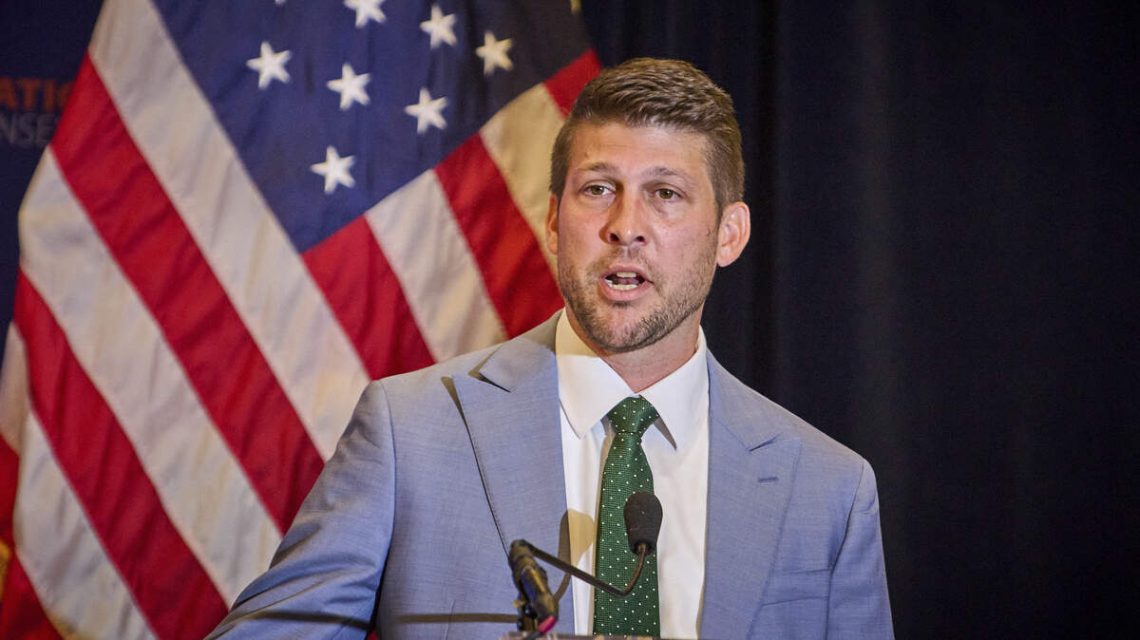
On September 3, 2025, James Uthmeier addressed the National Conservatism Conference in Washington D.C. amid discussions about Florida’s Amendment 3—a proposal aimed at reducing property taxes. A Tallahassee judge highlighted the biased nature of the ballot language for the amendment, necessitating a rewrite to ensure voters can make informed decisions.
Leon County Circuit Judge David Frank deemed the ballot language “clearly and conclusively defective.” In his 18-page ruling, he described the wording as “political rhetoric” rather than neutral explanation. He criticized both the title, “Save Our Homes From Excessive Property Taxes,” and the summary language presented to voters.
Judge Frank emphasized that voters deserve clear, accurate, and unbiased information when making critical decisions. He noted that the current ballot language prevents voters from making meaningful choices.
The title of the amendment resembles a political slogan rather than a fair, neutral statement. The judge’s message to Florida lawmakers is straightforward: Stop influencing the decision-making process with biased language.
Amendment 3, initially promoted by Governor Ron DeSantis, proposes an increase in the homestead exemption to $150,000 in 2027 and $250,000 in 2028. It also aims to reduce the annual cap on assessment increases for non-homestead properties from 10% to 5%. Despite changes by the Republican Legislature to preserve school funding from property taxes, DeSantis withdrew his support, expressing discontent with the legislative changes.
A bipartisan group called Save Our Voters From Misleading Ballot Language, including former lawmakers Sen. Jeff Brandes, U.S. Rep. Al Lawson, former Stuart Mayor Thomas Campenni, and former Key Biscayne Mayor Michael Davey, legally challenged the amendment. Attorney General James Uthmeier, appointed by DeSantis and running for election, has 10 days to revise the ballot language, with subsequent legal challenges required shortly after.
Judge Frank articulated multiple fairness concerns relating to the ballot. He identified misleading subheads like “ensuring funding for core services,” which inaccurately suggest that local government revenue for essential services would increase under the amendment. Frank pointed out that the amendment might lead to a decrease in funding for services such as police and fire.
The amendment claims to deliver “fairness for Florida residents,” yet imposes a disadvantage on renters and individuals becoming residents post-2026, who may face increased costs or delayed benefits.
Importantly, the amendment fails to disclose its potential impact on Florida’s principle of “home rule,” risking a fundamental shift whereby Tallahassee politicians might control local spending of property tax revenues.
If voters can access a revised and transparent proposal, they might have the opportunity to fully understand the transformative changes being voted upon, ensuring a fair electoral process.
 Upcoming Congressional Elections: Key Districts to Watch
  President Trump’s Pre-Midterm Interview on Key Issues
  Trump’s 2024 Reelection and Evolving Voter Dynamics
  Defense Secretary Emerges as Key Player in the Trump Administration
  Hegseth’s Vision for the Military: Balancing Tradition and Innovation
  Significant Funding Boosts Ken Paxton’s Texas Senate Campaign Amid Tight Race