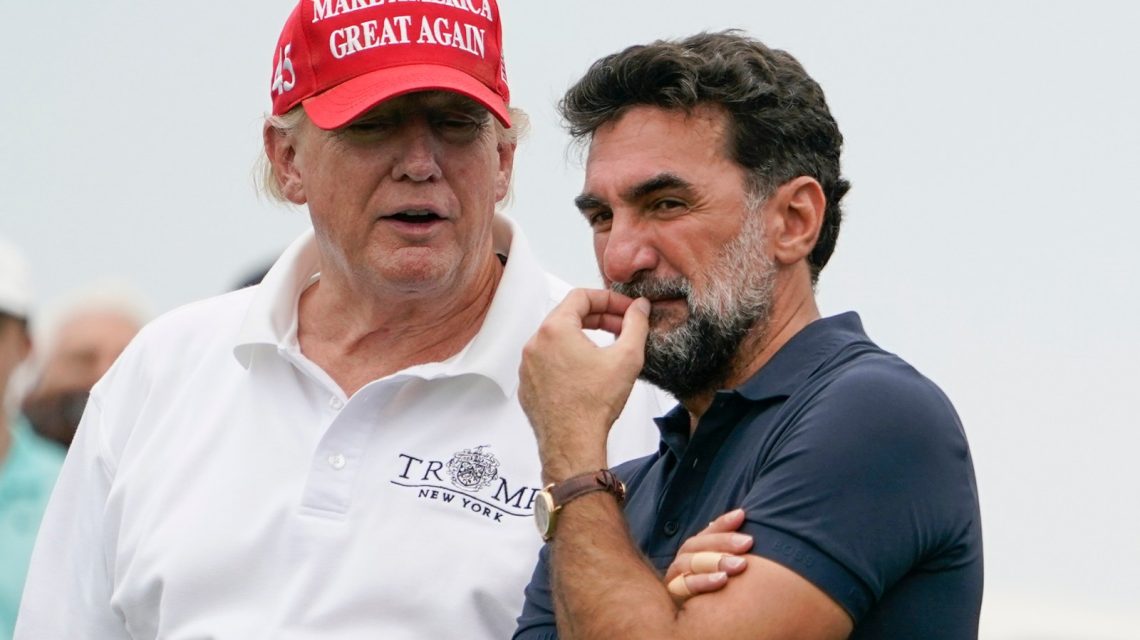
Saudi Arabia’s Public Investment Fund (PIF) has pursued a focused investment strategy. The Kingdom aimed to become a global sports powerhouse by acquiring teams, launching leagues, and hosting high-profile events. However, recent developments, such as the Iran war, revealed the risks associated with investments in stadiums, race tracks, and sports teams, leading to a strategic pivot.
Strategic Withdrawal and New Ventures
Earlier this year, PIF decided to withdraw funding from LIV Golf, a multi-billion-dollar initiative designed to attract top golfers from the PGA Tour. In addition, it sold a 70 percent stake in Al-Hilal, Saudi’s leading football club. Plans to host the Asian Winter Games and the Rugby World Cup were also shelved. Despite these changes, PIF has not retreated entirely. Instead, a PIF-led consortium, which includes Jared Kushner’s Affinity Partners, completed a $55 billion acquisition of Electronic Arts (EA). EA is a key player in the video game industry, known for producing leading sports games like Madden NFL.
PIF’s Entry into American Sports through EA
Despite significant influence over sports such as soccer, golf, boxing, and Formula One, PIF had not owned an NFL franchise. With the acquisition of EA, PIF gains entry into American sports. EA holds the exclusive rights to produce the NFL simulation game, Madden. This game reaches millions of homes as it includes all 32 NFL teams along with their uniforms and players. The game effectively connects PIF to America’s favorite sport.
Vision 2030 and ‘Sportswashing’
This strategic movement aligns with Saudi Arabia’s Vision 2030, which aims to diversify its economy away from oil revenues and gain new geopolitical leverage. Critics refer to this approach as ‘sportswashing,’ aimed at diverting attention from the country’s human rights record. The strategy has succeeded in grabbing global attention, with Saudi Arabia hosting the 2034 FIFA World Cup and participating in various sports like boxing and motorsport.
Limitations of Traditional Sports Investments
Traditional sports investments bring quick but temporary attention and revenue. Events such as heavyweight fights or weekend races generate substantial sums but have limited long-term impact. Team ownership can capture fan loyalty, merchandise, and ticket sales, yet these are confined to the team’s achievements. Through EA, PIF surpasses these limitations and enters the American market.
Opportunities with EA
EA holds a multiyear agreement with the NFL, securing Madden as the only authentic NFL simulation game. Millions play Madden games annually, with fans completing the equivalent of 23,000 NFL seasons daily. EA also holds rights for College Football, reaches NHL, and UFC fan bases, resulting in $7.5 billion revenue last year. Gaming creates repeat engagement, unlike short-lived sports events.
An Empire without Physical Assets
PIF’s interest in EA extends beyond financial gains. EA’s data collection includes account details, purchase histories, gameplay statistics, and more. This data helps understand consumer behavior. Recently, EA launched an advertising service, giving brands access to games reaching over 120 million players each month. This strategy turns sports fandom into scalable, monetizable ventures.
Adaptation to Changing Geopolitical Landscape
Middle East vulnerabilities, exposed by the US-Israeli conflict with Iran, disrupted major Gulf sports events, causing significant financial losses. Still, Madden players continued gaming, illustrating the robustness of digital investments versus physical assets.
PIF’s updated strategy for 2026-30 highlights a transition to sustained value creation focusing on investment efficiency.
Challenges Ahead for PIF and EA
Before the Saudi-led takeover, EA traded publicly for over three decades with shares valued above $200. The $55 billion acquisition presents challenges. Approximately $20 billion of the purchase is debt, requiring servicing by EA. Cost-cutting measures include slashing $700 million in annual costs, raising concerns about potential layoffs and product quality impact. Gamers might stop buying new games and extras, affecting EA’s value if monetization tactics become overwhelming.
PIF circumvents the need to buy an NFL franchise by engaging directly with fans through games. However, sustaining these relationships depends on maintaining quality and fan satisfaction.
 Trump’s 2024 Campaign Targets Young Men Through Cryptocurrency
  How Modern Windows Improve Home Insulation
  State Department Simplifies Passport Process with Online Applications
  Senate Democrats Block Data Center Bill Over Efficiency Concerns
  Future Cities: Ambitious Projects Aiming for Innovation and Sustainability
  High-Profile Hearing and AI Developments: Key Political Moves