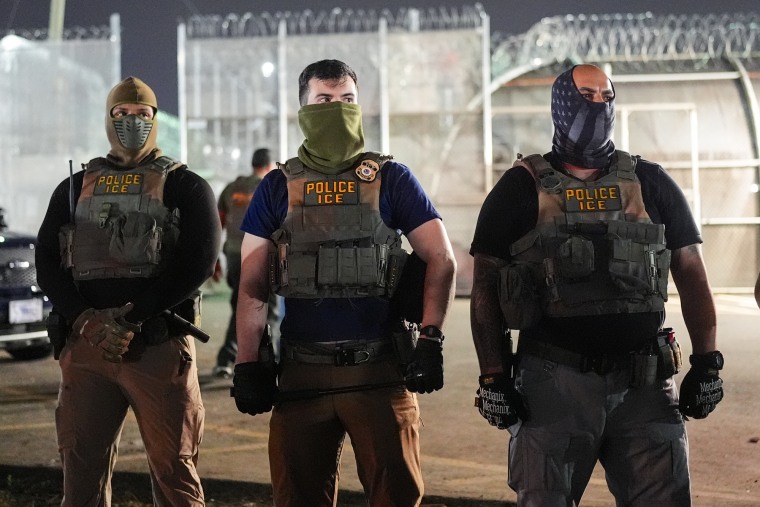
In the upcoming months, Immigration and Customs Enforcement (ICE) plans to equip their officers with body cameras. The agency’s policy allows significant control over what footage will be made public. It states that any releases must be in the agency’s “best interests.” After years of delays, ICE announced that field officers across the nation would have body-worn cameras by the end of September.
This decision follows recent fatal shootings by officers enforcing immigration policies, increasing pressure for accountability that the cameras could deliver. However, the policy means the public might not see certain confrontations immediately, despite taxpayers contributing tens of millions of dollars for the camera initiative.
ICE’s policy mentions that videos will be promptly released following shootings or incidents resulting in death or serious injury, provided it meets the agency’s best interest. This grants the director the discretion to release footage that benefits the agency’s image while withholding others. According to experts, such selective releases are common but rarely so explicitly stated in policies. Professor Christopher Schneider from Brandon University noted, “Body-worn cameras are being used as contemporary image-work tools to present the police to the public in the most favorable way possible.”
Body Camera Policy Details
The body camera policy mandates that officers activate cameras during standard enforcement activities like arrests, search warrants, and emergencies. When shootings or serious confrontations occur, a committee of top ICE officials and lawyers reviews the footage and recommends whether to release it quickly. If approved, the video could be released within 72 hours. However, the ICE director can block or delay the release if they determine there are ‘specific and compelling circumstances’ for doing so, although these circumstances aren’t detailed. ICE didn’t clarify how decisions would be made regarding these situations.
Practices differ across the U.S. In some agencies, body camera footage is routinely released, while others seldom practice discretion. In Chicago, body camera videos of shootings are released within 60 days, while Philadelphia rarely releases footage and lacks a clear policy. Even when videos are released, ICE’s policy demands redaction of officers’ identifying features to protect their privacy.
ICE’s Implementation of Body Cameras
ICE allocated $30.9 million in July to procure body camera equipment from Axon, the manufacturer also known for Tasers. The funding followed the deadly shooting of a motorist in Maine by an ICE officer. Days earlier, another officer shot a homebuilder in Houston. Neither incident was recorded since the officers lacked body cameras, prompting anger from Congress. ICE had received $20 million to purchase body cameras after the partial government shutdown in April.
Despite being behind schedule, ICE stated that more than half its field officers have received cameras and the rest will have them by September’s end. Field officers in Houston, where over 800 cameras have been deployed, are among those already undergoing training. ICE requires at least one camera-equipped member on every arrest team.
Tom Homan, the White House border czar, expressed the importance of public access to these videos on CBS News, “…body cameras actually exonerate agents more than they…provide evidence of wrongdoing.” Schneider anticipates that ICE might release recordings that favorably portray the agency’s deportation operations, showing officers as courageous.
Delayed Adoption of Body Cameras
ICE initially tested body cameras in 2021 under President Joe Biden’s administration, deploying 1,400 devices over the following years as funding permitted. Upon returning to office in 2025, President Donald Trump removed Biden’s directive mandating body camera use by federal law enforcement agencies.
Despite a significant financial boost in Trump’s policy bill in 2025, ICE postponed equipping officers with cameras. Two purchases made from Axon in July utilized an existing government contract dating back to 2023. Jason Houser, former ICE chief of staff under Biden, criticized the delay, stating, “This doesn’t fix the problem of putting officers in a place where they’re not trained or equipped to carry out the style of operations…” Houser believes it is a political response rather than a genuine safety measure for officers or the public.
 Trump’s Use of Public Funds for Political Ads Sparks Controversy
  Dennis Hastert’s Legacy: From Political Leader to Controversy
  Tensions Within the Trump Administration Highlighted by Policy Reversals
  Democrats Hold Advantage Before Midterms, But Voter Sentiment Is Complex
  Democrats Strategize As Midterm Elections Approach
  Mary Peltola Emerges as Leading Candidate in Alaska Senate Race