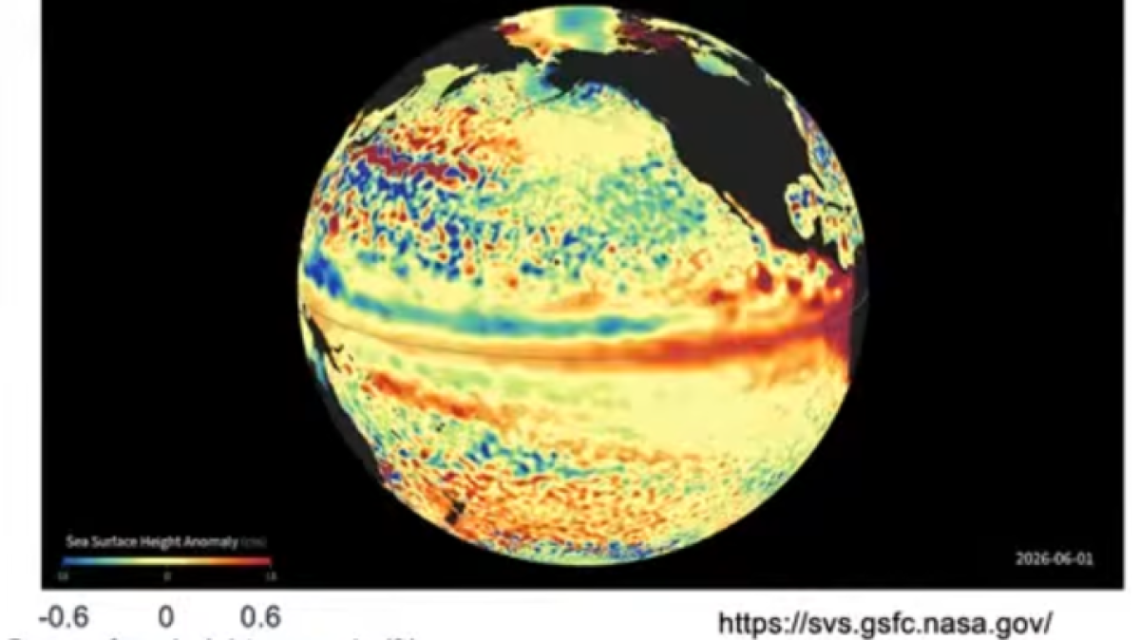
This year’s El Niño could bring unprecedented sea levels to California’s coast, posing a significant flooding risk. Forecasters anticipate one of the most potent El Niños to date, which can induce severe rain in Southern California and intense heat waves across the region.
Rising Sea Levels
Mark Merrifield, director of the UC San Diego Scripps Institution of Oceanography’s Center for Climate Change Impacts and Adaptation, highlighted that the event might lead to the highest recorded sea levels along the California coast. An image presented in a recent town hall showed that sea levels in the eastern Pacific Ocean are already over half a foot higher than usual. By fall and winter, levels may exceed the average seasonal cycle.
NASA Insights
NASA explains that El Niño’s warmer ocean water displaces colder surface water. This leads to a rise in sea surface height, as warmer water expands. Current data already indicate a rise in sea levels in the eastern Pacific.
El Niño events lead to strong waves that damage beaches by causing erosion and narrowing,
Merrifield stated. During such events, beaches move landward by about 30 meters. This loss of coastal buffer heightens the impact of large waves, increasing the likelihood of shoreline flooding and cliff erosion.
Flooding Risks
Merrifield noted that high waves, rising sea levels, tides, and rainfall create a mix that can cause significant coastal flooding, increase saltwater intrusion into groundwater, and lead to coastal erosion. He expects severe flooding to be a major concern for Southern California this winter.
Previous Climate Patterns
In prior El Niño cycles, such as in 2023-24, substantial flooding affected Ventura, Los Angeles, and San Diego counties. High waves from perturbed storm tracks by El Niño affected the entire California coast. In fact, massive waves in Ventura recently injured eight people when they crashed over a sea wall.
Long-Term Changes
Californians have observed rising sea levels for over a century, with notable peaks during significant El Niño seasons like 1982-83, 1997-98, and 2023-24, according to Merrifield. The average sea level at La Jolla Pier was markedly above normal during strong El Niño events. This year’s El Niño might rival those in intensity soon.
Zoning trends expect sea levels to rise further in areas from the San Francisco Bay to San Diego, impacting the Sacramento-San Joaquin Delta. Historically, such events have led to anomalous sea levels in San Francisco peaking in November and December.
El Niño Explained
El Niño is marked by warmer ocean waters in the central and eastern tropical Pacific Ocean, with shifting atmospheric conditions. The usual east-to-west trade winds may weaken or reverse, directing tropical moisture toward Southern California and leading to heavy rainfall.
This El Niño could be exceptionally powerful, potentially among the strongest recorded. Climate scientist Daniel Swain mentioned that current ocean temperatures in the eastern tropical Pacific exceed those of previous record years, outpacing events in ‘82-’83 and ‘97-’98. Swain noted, We have not seen an El Niño on this trajectory before.
Further Projections
The World Meteorological Organization confirmed that a strong El Niño is forming, expected to intensify through early autumn. United Nations Secretary-General António Guterres noted, El Niño is inside the house and turning up the heat.
El Niño’s typical association with Southern California rainfall isn’t absolute, even in very strong episodes. While the 2015-16 El Niño did not result in above-average Southern California rain, experts believe El Niño can indicate a wetter-than-average winter in Southern California, prompting preparation for potential storms.
The strength of this El Niño might significantly increase the odds of wet conditions in Southern and Northern California. Swain suggested that the peak rainy season is likely to occur between late December and March.
In preparation for a possibly active winter storm period, Swain plans to remain available during January through March. El Niño is also predicted to extend the coastal marine heat wave, which could affect the local marine ecosystem.
Warming seas may lead to increased levels of domoic acid, which previously delayed the Dungeness crab season due to health risks. State officials anticipate higher-than-average domoic acid blooms due to warmer ocean temperatures,
said state Senator Mike McGuire.
The California Department of Fish and Wildlife plans to test for domoic acid before crab season begins due to these concerns. The neurotoxin can cause health issues in humans and wildlife.
Marine Life and Ecosystem Impact
The higher ocean temperatures tied to El Niño could further stress California’s kelp forests. Prior marine heat waves have sharply reduced Northern California’s bull kelp habitats. Such changes affect the broader ecosystem, impacting species like the endangered white abalone.
Even without El Niño, ocean temperatures have already increased, contributing to muggy humidity in Southern California. Swain remarked that fog in the region felt more humid and warm recently, suggesting an altered coastal climate for the remainder of the fall.
 Atlantic Ends September Without a Hurricane for First Time Since 1994
  Bobcat Sightings and Conservation Efforts in Illinois
  2026 El Niño: A Historical Comparison and Future Projections
  U.S. Records Warmest September in History
  Swiss Glaciers Show Effects of Ice Loss Amid Global Warming
  Climate-Resistant Rock Glaciers: Hidden Water Resources