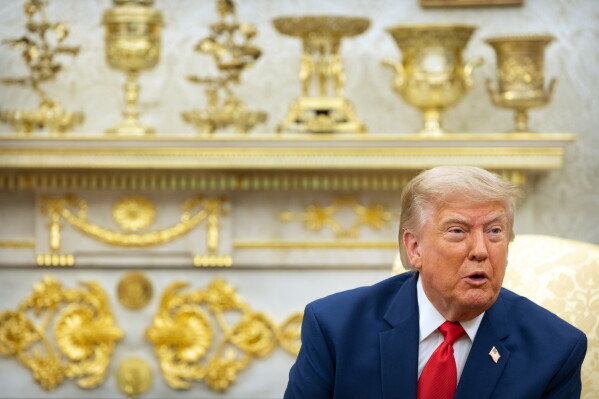
President Donald Trump’s choice to downsize joint military exercises with South Korea has sparked concerns regarding U.S. security interests in Asia and other regions. Trump justified this decision by pointing to South Korea’s hesitation to support his stance on Iran, emphasizing his personal rapport with North Korea’s leader, reflecting his transactional approach to foreign affairs.
Dan Fried, a former assistant secretary of state for European affairs under George W. Bush, criticized the decision, stating, “there is no American interest that I can see in this.” He noted that the move undermines relations with South Korea, Japan, and NATO allies, while encouraging China’s and North Korea’s agendas.
Former assistant secretary of state for East Asia, Danny Russel, echoed these sentiments. He argued that the decision undermines an ally while emboldening an adversary, sending negative signals to both U.S. and South Korean security establishments.
“He is protecting Kim Jong Un’s sensitive feelings from an unfriendly signal at the expense of U.S.-South Korean security,” Russel commented, highlighting the detrimental effects of Trump’s policy.
Trump instructed the U.S. military to scale back on the 11-day Ulchi Freedom Shield exercises, which have been a long-standing component of joint military operations between the two nations. South Korea, a vital U.S. ally due to threats from nuclear-armed North Korea, viewed the decision with confusion.
Democrats in Congress swiftly criticized the move. Rep. Greg Meeks, a leading Democrat, warned that treating South Korea as an adversary jeopardizes U.S. alliances and benefits China and North Korea.
Retired U.S. Ambassador Robert Wood emphasized the importance of the military exercises in deterring North Korea, which has refused negotiations on its nuclear program. There is concern that South Korea might feel compelled to develop its own nuclear arsenal for self-defense if confidence in U.S. protection wanes.
Matthew Kroenig of the Atlantic Council discussed how public opinion in South Korea increasingly favors nuclear weapon development. He underscored that reducing the exercises undermines the U.S. message of protection.
Before this decision, South Korean President Lee Jae Myung had attempted to gain favor with Trump by highlighting potential economic synergies, including the possibility of a Trump Tower in North Korea.
Charles Kupchan of the Council on Foreign Relations cautioned that such moves might prompt allies to reconsider their security strategies independently from the U.S. Yet, he noted that Trump’s policies have not yet fundamentally altered America’s standing alliances and overseas bases.
Kupchan remarked that though Trump’s actions might suggest a diminishing support for alliances, “the reality is that, at least as of today, Trump has left intact America’s forward bases and its core alliance relationships.”
Overall, whether Trump’s actions lead to substantive policy changes or remain transient pronouncements is uncertain. Matthew Kroenig pointed out Trump’s unpredictability, noting that the outcome of these exercises and future policy directions remain in flux.
Associated Press reporters Collin Binkley, Jesse Bedayn, Lisa Mascaro, and Seung Min Kim from Washington, along with Farnoush Amiri in New York, contributed to this report.
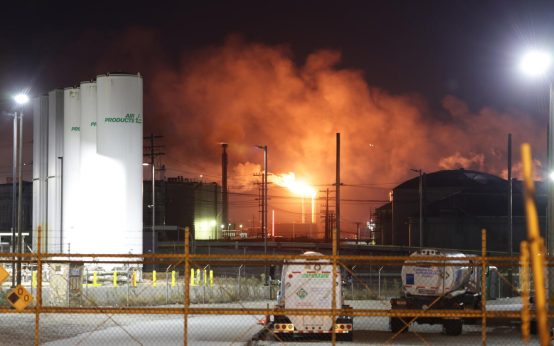 Supreme Court’s New Term Tackles Climate Liability and Key Legal Battles
 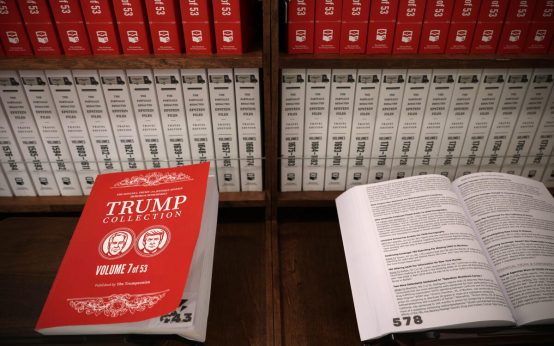 Midterm Elections: A Potential Turning Point
  Tensions Rise Between U.S. Ambassador and South African President
  Andy Burnham’s Approach to Address UK’s Economic Stagnation
 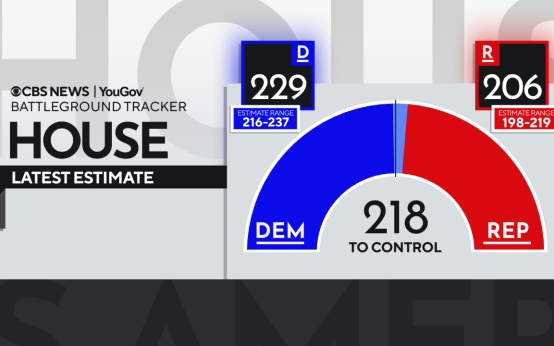 Midterms 2026: Key Insights and Voter Perspectives
  Trump’s Influence on Executive Power and the Response