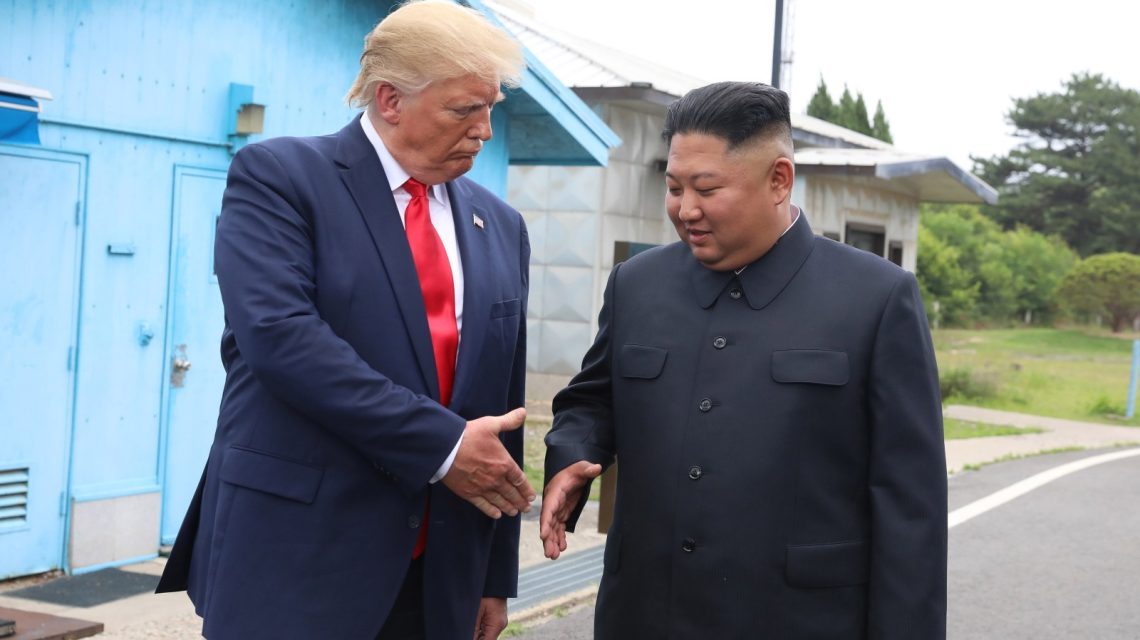
President Donald Trump’s threat to withdraw funding from joint military exercises with South Korea could undermine the United States’ credibility in the region while offering little benefit, according to South Korean analysts. In a recent Truth Social post, Trump expressed dissatisfaction with the cost of these exercises and instructed Secretary of War Pete Hegseth to significantly reduce them. Trump highlighted his positive relationship with North Korean leader Kim Jong Un and mentioned South Korea’s refusal to send military forces to support the U.S. in its efforts to denuclearize Iran.
During his first term, Trump met with Kim Jong Un three times, attempting unsuccessfully to curb North Korea’s nuclear and missile programs. Trump has stated he remains open to another meeting with Kim.
Ulchi Freedom Shield Exercise
The announcement coincided with the start of the 10-day Ulchi Freedom Shield exercise, a routine collaboration between U.S. and South Korean forces designed to prepare for potential conflicts with North Korea. North Korea’s Foreign Ministry criticized the exercise as preparation for aggression.
North Korea’s current position is stronger than during Trump’s previous meeting with Kim in 2019. The country continues to test advanced intercontinental ballistic missiles and expand its nuclear capabilities. Moreover, it has integrated nuclear capability into its constitution. Additionally, veterans from the Russia-Ukraine war have gained modern warfare experience that could be used if tensions resume on the Korean Peninsula.
International Reactions and Concerns
Trump’s decision to scale back the military exercises led to criticisms of U.S. reliability as a partner. Sean King, an Asia scholar and senior vice president at Park Strategies, told Newsweek that the move demonstrates how adversaries like Kim Jong Un and Chinese President Xi Jinping can isolate Trump from traditional U.S. allies with minimal effort.
“Kim Jong Un—and Xi Jinping for that matter—now have further evidence of Trump’s susceptibility to flattery over substance,” King stated. “And if Trump’s concerns include Iran, he should acknowledge the close relationship between Tehran and the Kim regime, marked by decades of cooperation on missile development.”
The shared missile technology and data exchange between North Korea and Iran has been extensive, with North Korean missiles serving as templates for Iran’s arsenal.
Mixed Signals to U.S. Allies
Critics have accused Trump of fostering relationships with authoritarian leaders, such as Kim, Russian President Vladimir Putin, and China’s Xi Jinping, while neglecting long-standing European allies. This post coincided with the deployment of the Japan-based USS George Washington to the Middle East, temporarily leaving the Western Pacific without an American aircraft carrier.
Elbridge Colby, a top policy official at the Pentagon, recently sought to reassure allies by reaffirming the U.S. commitment to regional security. However, the mixed signals from Washington may cause allies and adversaries to view the U.S. as inconsistent.
Kuyoun Chung, political science professor at Kangwon National University and non-resident fellow at the Asan Institute of Policy Studies, highlighted this concern. “This is especially troubling as U.S. military assets shift focus from the Indo-Pacific to the Middle East,” Chung told Newsweek. “Japan, South Korea, the Philippines, and Taiwan might question whether assurances from Pentagon officials can check presidential decisions.”
North Korea’s Perspective
In Pyongyang, the perception is clear: applying pressure on the Trump administration can yield results, say South Korean experts.
“Measures like reducing military exercises are seen as partial accommodation of North Korea’s demands without them needing to concede significantly first,” Chung explained. “This may lead Kim to postpone seeking additional concessions and resist negotiations.”
This could signal an opening for a potential fourth summit with Kim, likely achieving fewer nuclear concessions than before yet addressing Trump’s domestic interests without an evident victory over Iran.
Ban Kil Joo of the Institute of Foreign Affairs and National Security in South Korea noted the potential consequences. “Trump’s directive may encourage North Korea and its allies, such as Russia and China, to risk international security by miscalculating,” Ban warned.
 Byron Donalds Targets Black Voters in Florida Governor Race
  Heroic Passengers Prevent Catastrophe on Flight 1073
  Brazil’s Presidential Race Heads to Runoff
  Sen. Thom Tillis Criticizes Trump’s Administration in New Book
  Controversy Surrounds Steve Hilton’s Campaign Ad Amid Gubernatorial Race
  Trump Calls for Probe into Alleged ‘Paid Protesters’