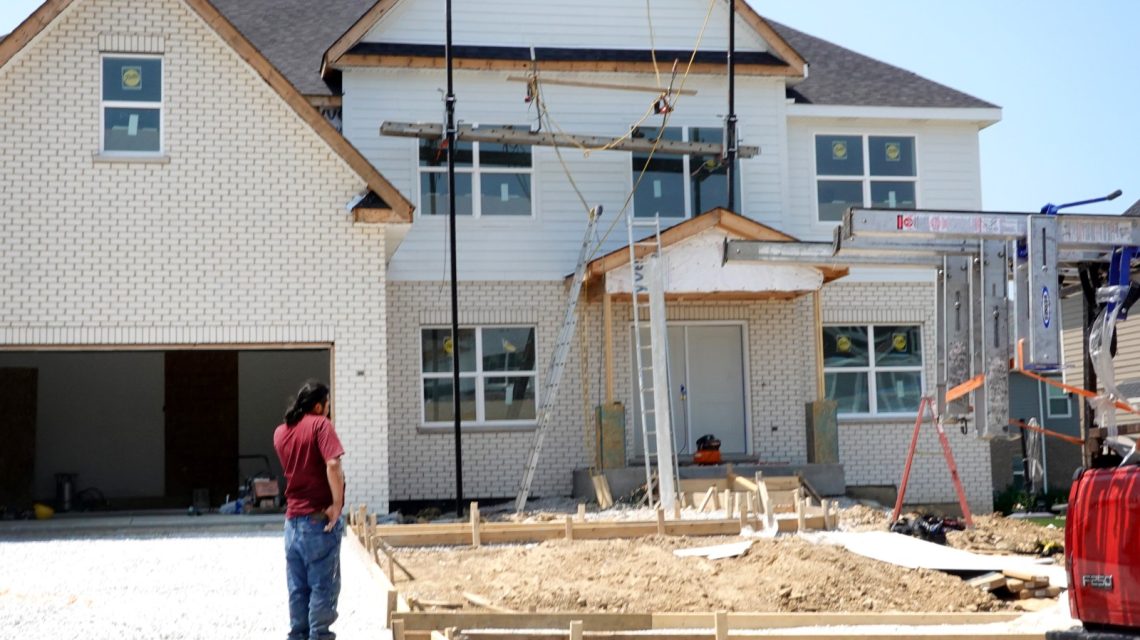
A new bill introduced in the House aims to address significant hurdles faced by younger Americans in buying homes: student loan debt and housing affordability. Representative Jeff Crank, a Republican from Colorado, put forward the First Time Homebuyer Debt Reduction Act on August 13. The bill currently sits with the House Financial Services Committee awaiting further action.
Key Provisions of the Bill
If the proposal becomes law, it would mandate that government-backed lenders, specifically Fannie Mae and Freddie Mac, regard payments made towards a homebuyer’s federal student loans as financial concessions. This would apply when purchasing a newly built home intended as a primary residence.
Builders, sellers, or other involved parties in a property sale could contribute up to $25,000 towards the buyer’s student loan debt. This assistance would be categorized as a financial concession rather than a sales concession. Contributions exceeding $25,000 would be considered sales concessions.
The intent is to allow these student loan payments to function similarly to other seller or builder incentives, facilitating a home purchase. Builders aiming to attract buyers could offer to clear portions of a buyer’s federal student loan debt. This could improve the buyer’s debt-to-income ratio, a key metric in mortgage approval. It might also reduce monthly debt obligations, potentially allowing borrowers to secure larger mortgages.
The bill specifies that it would be applicable only to purchases of newly constructed principal residences, aiming to assist younger Americans burdened with student loan debt. High house prices and rising mortgage rates have made home ownership harder to achieve for many.
Expert Opinions on the Bill
Experts caution about the bill’s limitations. Fenaba R. Addo, a public policy professor at the University of North Carolina-Chapel Hill, noted the bill mainly offers clarification of concession rules rather than providing direct financial benefits.
This legislation is more about clarifying existing rules, Addo explained. It allows student debt as a valid option for seller’s concessions, with no additional financial benefit to borrowers. It reallocates existing concessions rather than creating new financial benefits.
The bill might primarily aid borrowers facing specific financial constraints, those with high-interest student loans, or those who might be rejected for mortgages due to their debt-to-income ratios. It is designed to motivate builders to use the incentive without altering the list price.
Legislative Path Forward
The bill still has several steps before becoming law. It must first gain approval from the House Financial Services Committee. Then it requires passage by both the House and Senate and ultimately the president’s signature to take effect. GovTrack, a nonpartisan site tracking congressional activities, currently assesses the bill’s chance of enactment at about two percent.
 Dengue Fever Surge in U.S.: Florida’s Record Outbreak and Rising Cases Nationwide
  Supreme Court’s New Term Tackles Climate Liability and Key Legal Battles
  Midterm Elections: A Potential Turning Point
  Andy Burnham’s Approach to Address UK’s Economic Stagnation
  Midterms 2026: Key Insights and Voter Perspectives
  Trump’s Influence on Executive Power and the Response