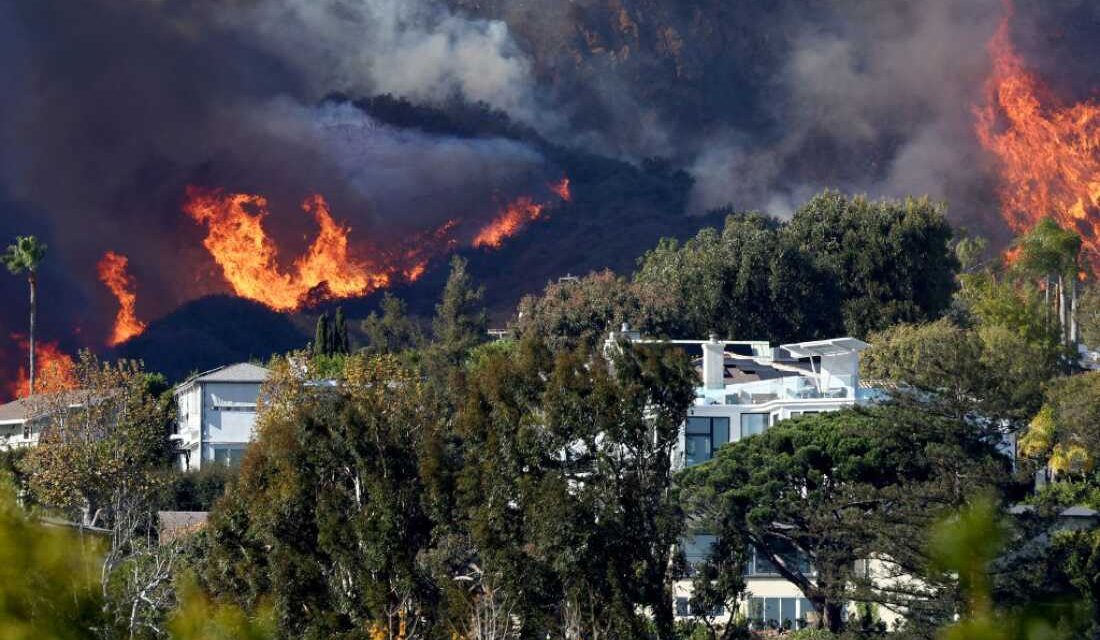
Wildfire experts have identified a significant risk linked to homes surrounded by dense vegetation, such as those affected by the Palisades Fire in 2025. New regulations in California require homeowners to manage plant growth within five feet of any structure. This move aims to protect communities from severe wildfires sweeping across the Western U.S.
California has announced the most stringent rules nationwide to mitigate the threat of fires. In wildfire-prone areas, residents must now maintain a safe clearance of vegetation to prevent homes from catching fire. Studies indicate that dry, dense vegetation around buildings assists the spread of wildfires. During intense fires, high winds can spread burning embers over considerable distances. When these embers lodge in vegetation, they ignite, threatening nearby structures.
On Wednesday, the California Board of Forestry and Fire Protection voted on these measures following years of debate. Initially, there were proposals to eliminate all vegetation within five feet of a house, aside from well-maintained trees. This faced pushback due to concerns over garden aesthetics and maintenance costs. Eventually, a compromise was reached. Within the five-foot ‘Zone Zero’, lawns, flowers, and non-woody plants up to 18 inches are permissible, unless directly under a roof. Trees are allowed but must be pruned to remain five feet away from any structure.
The rules are effective immediately for new constructions but will be phased in for existing buildings. Almost 2 million homes in high-risk areas will be affected. Rising temperatures from climate change are partly responsible for increasingly severe wildfires. Over the past decade, more than 57,000 homes and structures in California have been destroyed.
“California faces an existential crisis impacting our health, finances, and housing market,” testified Yana Valachovic from the University of California Cooperative Extension. She also advised on the new regulations.
Challenges in Wildfire Preparedness
The situation in California reflects broader tensions across the Western U.S. on wildfire preparedness. Experts caution that fires originating in wildlands can rapidly transition into urban fires, devastating numerous homes in seemingly safe neighborhoods.
Recent fires destroyed over 800 homes in Spokane, Washington. Across various states, discussions have emerged over wildfire regulations affecting property rights, urban wildlife habitats, and costly maintenance.
“These new rules will impose significant financial burdens on millions of Californian homeowners,” argued Dave Lefkowitz, president of the Mandeville Canyon Association. Rules in Oregon and Washington faced defeat due to misinformation and demands for further scientific research.
The Importance of Vegetation Management
Research and experiments demonstrate that even plants with moisture content can catch fire under dry, windy conditions typical of extreme wildfires. Studies in California indicate that vegetation within six feet of a building significantly raises the risk of property loss.
Managing plant growth also establishes “defensible spaces,” aiding firefighters in effectively defending structures. California has pioneered wildfire regulations, which continue to inspire similar policies in other states.
Building codes in California mandate fire-resistant construction materials, a practice adopted by several states recently. Although nothing guarantees survival during wildfires, addressing both vegetation and building materials enhances protection. In some extreme fires, homes have survived due to these precautions.
Implementation of New Regulations
The new rules provide increased flexibility for homeowners, but experts believe they might fall short, as any combustible material near a house poses a risk. Enforcement will depend on inspections by local fire departments and state agencies, who conduct annual home inspections.
Todd Lando from the Central Marin Fire Department highlighted the challenges during a hearing. A clear Zone Zero requires a simple check for combustible materials, simplifying understanding and action for homeowners.
Inspectors will initially focus on educating homeowners, with mandatory compliance expected later. For existing homes, the vegetation rules are slated to take effect by 2029.
 Black Bear in Colorado Dies After Being Trapped in Vehicle
  Minnesota Governor Blocks Mineral Mining in Boundary Waters
  Alaska’s Arctic Report Card Faces Changes
  Legal Action Taken to Halt U.S. Deep-Sea Mining Plans Near American Samoa
  Trump Pauses Tariffs and Suggests Revival of Keystone XL Pipeline
  Debate Over U.S. ‘Roadless Rule’ and Forest Management