A legal environmental group, Earthjustice, filed a lawsuit against the U.S. government to prevent the Trump administration’s proposal to auction sections of water off American Samoa for potential deep-sea mining. The lawsuit targets the U.S. National Marine Fisheries Service and U.S. Commerce Secretary Howard Lutnick, representing Fa‘asao Amerika Samoa and Conservation Council for Hawai‘i.
Earthjustice seeks judicial intervention to halt the lease plans and ensure compliance with the Endangered Species Act and other federal regulations. “The United States has never opened its waters to deep-sea mining. Until now,” the lawsuit asserts.
The proposed leases encompass approximately 33 million acres (13.4 million hectares) of seabed, rich in minerals such as nickel, cobalt, and manganese, vital for battery and electronics production. The nonprofit insists the U.S. must determine whether mining activities would harm critical habitats or heighten the extinction threat to various species.
The environmental coalition criticized the National Marine Fisheries Service’s assertion that leases would not impact critical habitats or endangered species, labeling it “arbitrary and capricious.”
The lawsuit emphasizes the importance of a healthy ocean ecosystem for the Samoan people, which sustains households, guards shorelines, and supports cultural traditions over a millennium old. Many species migrating between American Samoa and Hawaiian waters are considered sacred, including sea turtles known as “i‘a sa” or “sacred fish.” There is a local prohibition on capturing or harming these sacred species.
Failure to adhere to U.S. environmental protection acts is said to jeopardize “professional, scientific, educational, aesthetic, spiritual, and cultural interests” in American Samoan and Hawaiian waters. The surrounding waters host diverse marine life, including coral reefs, sponges, crabs, sea turtles, and numerous fish species. The habitats of endangered sea turtles, whales, threatened coral species, and animals like the giant manta ray are at risk.
Proposed leasing areas are located 57 miles (92 kilometers) from the Rose Atoll National Wildlife Refuge.
Despite international calls for moratoriums or bans on deep-sea mining, the Trump administration aims to fast-track mining approvals due to environmental concerns such as noise, light, and sediment disturbances. “To date, there has not been a commercial seabed mining operation established anywhere in the world,” stated Earthjustice.
The International Seabed Authority, under the U.N., has issued exploration licenses but no commercial mining permissions. Most exploration occurs in the Clarion-Clipperton Fracture Zone between Hawaii and Mexico.
The U.S. manages exploration and mineral recovery through the National Oceanic and Atmospheric Administration, as it hasn’t ratified the U.N. Convention on the Law of the Sea. The fisheries service spokesperson commented on litigation constraints. The Department of Commerce did not immediately reply to requests for comments.
Recently, a federal leasing notice was issued for Northern Mariana Islands waters, covering 69 million acres (28 million hectares). “Critical minerals are essential to America’s national security, economic strength, and resource sovereignty,” said Matt Giacona, acting director of the Marine Minerals Administration. He stressed the importance of resource independence for powering the U.S. economy and maintaining the defense industrial base.
Environmentalists and scientists have condemned these mining plans. Nick Katkevich from the Center for Biological Diversity labeled them “disgraceful,” echoing concerns over the experimental and hazardous nature of deep-sea mining projects, stressing their threat to marine life.
 The Threat of Melting Glaciers: A Call to Action
 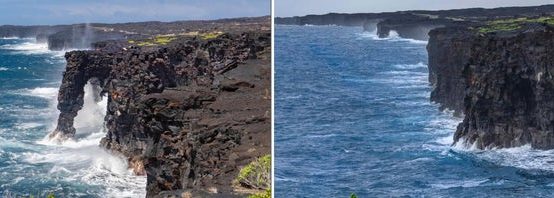 Collapse of Hawai’i’s Hōlei Sea Arch Amidst Storms
  Los Angeles Faces Uncommon Heatwave in October
  Drought Drives Black Bears Closer to Human Activity
  Atlantic Ends September Without a Hurricane for First Time Since 1994
 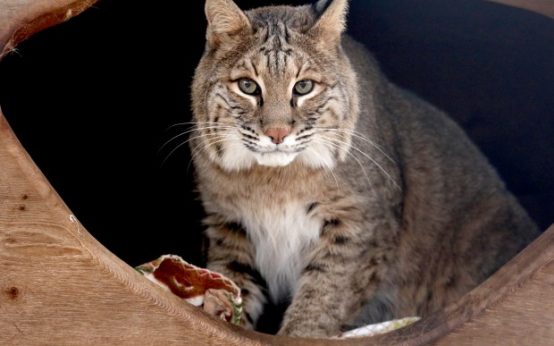 Bobcat Sightings and Conservation Efforts in Illinois