President Donald Trump announced that he would delay imposing 50 percent tariffs on Canadian imports for three days. Trump attributed the delay to a tentative agreement between the United States and Canada, which still requires final documentation. The tariffs were initially set to be enforced starting Wednesday, targeting around $20 billion worth of Canadian goods, according to the Associated Press.
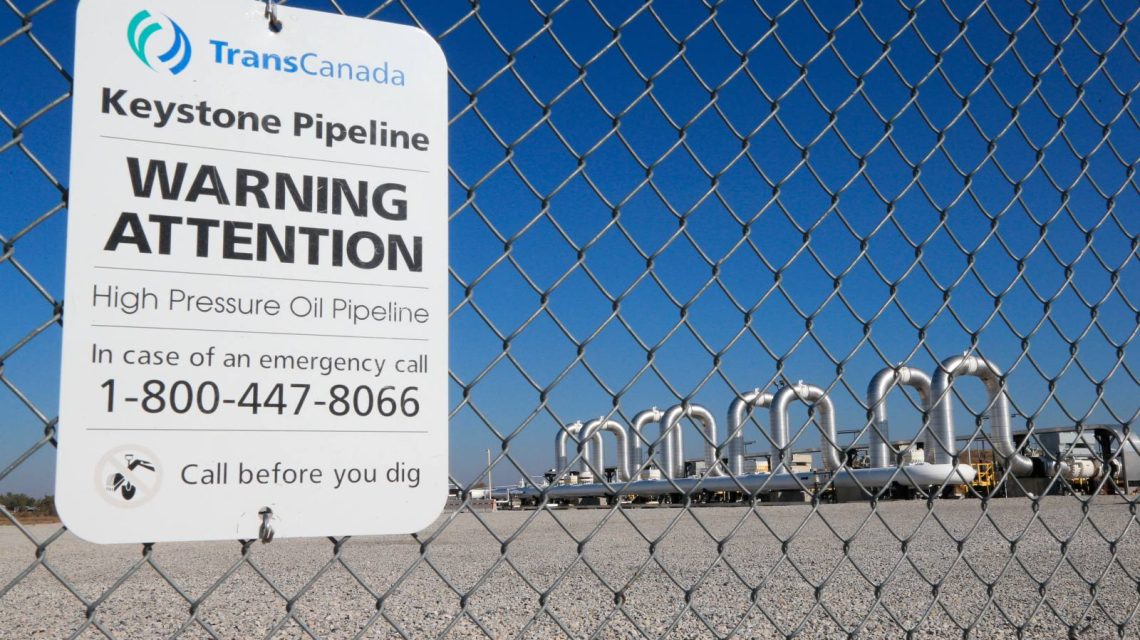
Trump suggested that the agreement could lead to the revival of the Keystone XL Pipeline, a project previously canceled by President Joe Biden in 2021. Trump hinted at the pipeline’s potential reinstatement in his social media post, calling it an opportunity to revive what was once halted. Should the pipeline be revived, it would aim to reverse some Biden-era policies, but it would still face regulatory and development challenges.
Canadian Prime Minister Mark Carney acknowledged via social media that the negotiations between the two countries had made progress. However, he refrained from announcing a finalized deal, indicating that official documentation and finalization efforts would continue. Newsweek reached out to the White House for comment on Tuesday night.
Understanding the Keystone XL Pipeline
The Keystone XL Pipeline was one of the most controversial energy infrastructure projects in recent North American history. It fueled debates about climate change, energy security, employment opportunities, Indigenous rights, and U.S.-Canada relations. Proposed in 2008 by TransCanada Corporation, now TC Energy, Keystone XL aimed to expand the existing Keystone Pipeline System, which transports crude oil from Alberta, Canada, into the United States.
The project would have extended from Hardisty, Alberta, to Steele City, Nebraska. There, it would connect with existing pipelines leading to refineries along the Gulf Coast. Proponents argued that it would bolster energy independence in North America and generate jobs. Conversely, critics saw it as emblematic of ongoing reliance on fossil fuels.
The pipeline’s design called for a capacity of up to 830,000 barrels of oil each day. Environmental concerns included potential spills, particularly in sensitive regions like Nebraska’s Sandhills and the Ogallala Aquifer, a major freshwater reserve in the U.S.
Crossing the U.S.-Canada border required a presidential permit, transforming an otherwise typical infrastructure project into a contentious political issue. After extensive review, President Barack Obama rejected the pipeline in November 2015. The project found new life when Trump took office in 2017 but then faced cancellation again when Biden revoked the cross-border permit upon assuming office in 2021.
Current Developments on the U.S.-Canada Agreement
The United States Trade Representative commented on Trump’s announcement via social media, congratulating the President and providing details on the agreement. It will encompass comprehensive market access for American goods, economic security commitments, digital trade alignment, and multiple provisions to safeguard the American market and workforce in collaboration with Canadian partners.
This story is still developing and will be updated as further information becomes available. For further inquiries, contact Edward T. Cummins at Newsweek.
 Phil Collins Criticizes Trump, Talks Unwritten Song about America
  Byron Donalds Targets Black Voters in Florida Governor Race
  Brazil’s Presidential Race Heads to Runoff
  Sen. Thom Tillis Criticizes Trump’s Administration in New Book
  Controversy Surrounds Steve Hilton’s Campaign Ad Amid Gubernatorial Race
  Trump Calls for Probe into Alleged ‘Paid Protesters’