Current Market Overview
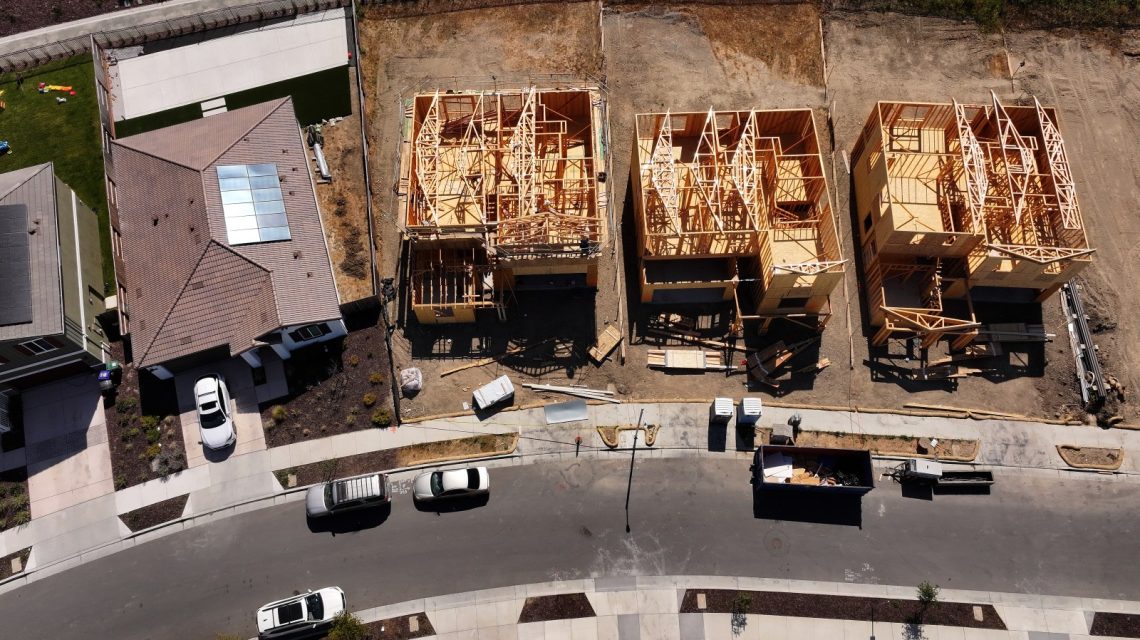
Recent data shows a significant drop in new home prices. The median sales price for new homes fell to $393,800 last month, marking a 2.3% decrease from June’s $403,100 and a 0.9% drop compared to a year ago. This is the cheapest prices for new homes since July 2021, as per information from the U.S. Census Bureau and the Department of Housing and Urban Development. Realtor.com indicates this is a notable shift since home prices have surged roughly 30% nationwide since 2019.
For homebuyers, these changes are promising. New homes now cost as much as during the pandemic buying rush, and they are less expensive than existing homes. In July, the median price for existing homes was $434,100, which is considerably higher than the price for new homes. New homes present an advantage, promising fewer repair needs compared to existing homes.
Buyer Activity and Supply Levels
Despite lower prices, homebuyer interest remains low. New home prices are declining because of oversupply rather than high demand. In July, sales of new single-family homes dropped to a seasonally adjusted annual rate of 607,000. Compared to June’s 678,000, this represents a 10.5% decrease, and it is down 6.3% from a year earlier.
The inventory of new homes for sale increased slightly to 488,000 at the end of July, up from June but still below July 2025 levels. The key issue plaguing both new and existing home sales is affordability, driven by rising home prices and increasing mortgage rates. The national average rate for a 30-year fixed mortgage stood at 6.65% as of late August, higher than anticipated rates earlier this year.
Regional Variations in Home Sales
Sales trends differ across regions. The Northeast saw the year’s highest rate for new home sales, jumping 30.3% from June and a staggering 95.5% from July 2025. Conversely, in the South, new home sales fell 13% from June and 5.2% from a year earlier, and the Midwest experienced sharp declines of 42.7% month-over-month and 50.6% year-on-year. Meanwhile, sales in the West rose by 6.2% from June and 2.2% from last year.
These regional differences reflect inventory variations. The South, particularly Florida and Texas, faces high inventory levels due to rapid development during the pandemic, but dwindling demand affected by rising costs and workforce changes has reduced market appeal. In contrast, the Northeast has not overcome its housing shortage, maintaining strong demand.
Future Predictions
Ongoing economic uncertainties, partially fueled by the conflict in Iran, continue to impact consumer financial confidence. These concerns, along with affordability challenges and mortgage rates, might suppress demand further. Substantial nationwide price increases similar to those witnessed during the pandemic boom are unlikely.
Home prices are projected to grow modestly, at 1% to 3% nationally. Regional disparities will likely persist, with the Northeast and Midwest markets possibly staying robust, while Southern markets such as Florida and Texas might see weaker growth due to abundant inventory.
 Navigating Los Angeles Real Estate on a Budget
  Mortgage Rates Return Above 7% After Twenty Months
  Inland Empire Grapples with Growing Housing Affordability Concerns
  Challenges in Los Angeles’ Multifamily Housing Market
  Jevon Carter Sells Chicago Town Home
  Charming River Forest Home With Custom Features