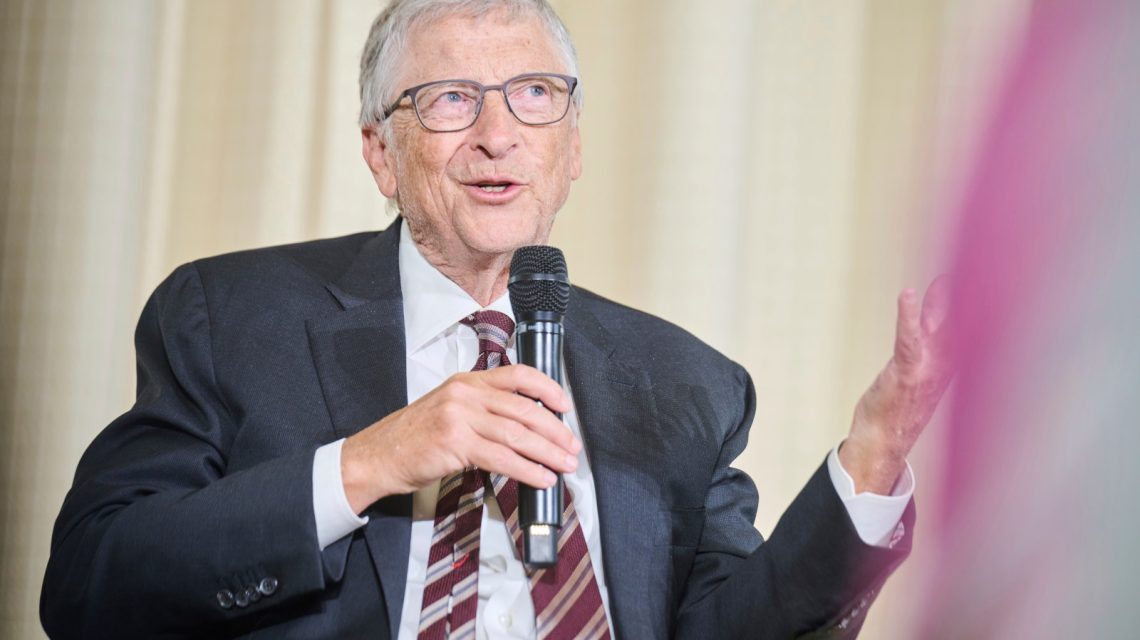
Bill Gates, co-founder of Microsoft, has voiced concerns over the rapid progress of artificial intelligence (AI) and the absence of significant safeguards. During a conversation with CNN’s Anderson Cooper, Gates emphasized the need for public involvement in AI’s future decisions. He highlighted both the advantages and dangers of the technology that warrant more open discussion.
Gates pointed to various risks, such as cyberattacks, bioterrorism, and broader social and psychological implications. He expressed his surprise at the lack of stronger protective measures. Gates argued that merely restricting data centers would not significantly slow AI development, as companies could establish them elsewhere. He stressed the necessity for comprehensive public discourse on AI’s benefits and drawbacks.
“We have to get everybody’s voice in this. You know, these are a set of Democratic tradeoffs that have to be made.”
Following his comments, Newsweek reached out to the White House for their response to Gates’ AI concerns.
Gates’ Reflections in His Essay
Gates’ remarks coincide with his nearly 6,000-word essay in which he warned that the world is entering a “turbulent” AI phase. He stated that leaders are not sufficiently preparing for upcoming disruptions, especially as AI enters sectors like law, medicine, and manufacturing.
While Gates hesitates to call for a complete halt to AI progress, he supports a credible global accord to slow its growth. He acknowledged, however, that geopolitical and economic competition limits such an agreement’s feasibility. Gates proposed solutions including taxing AI and reserving specific jobs for humans.
Risks of AI According to Gates
Gates identified three main risks associated with AI: job displacement, the rise of harmful activities, and social impacts. He warned that AI might eradicate jobs across various sectors, particularly affecting entry- and mid-level workers.
“In terms of the impact on the job market, this is very different from any technology that I’ve been involved in.”
Gates also mentioned AI’s potential to enhance negative activities such as cyberattacks, disinformation, and bioterrorism. Additionally, he noted concerns over AI replacing human connections, particularly for children.
Proposed Measures for AI
Gates advocated immediate government action to manage AI’s growth, including establishing institutions to mitigate risks. He suggested taxing AI and robots to fund worker retraining and enhance the safety net. Gates also recommended reserving certain roles for humans, focusing on jobs requiring judgment and interpersonal skills.
Oren Etzioni, from the University of Washington, agreed with much of Gates’ risk assessment but disagreed with some proposed solutions. Etzioni supports taxing robots but opposed the AI token tax, advising current agencies to formulate appropriate AI policies instead of forming new ones.
“It’s not too late to address AI’s risks if policymakers act promptly.”
Gates on AI’s Potential Impact
Gates compared AI’s impact to nuclear technology, emphasizing its vast potential and diverse implications. He acknowledged both positive and negative facets coexisting in this technology.
“I still think it’s within our grasp to shape this in a net positive way.”
 Trump’s 2024 Campaign Targets Young Men Through Cryptocurrency
  How Modern Windows Improve Home Insulation
  State Department Simplifies Passport Process with Online Applications
  Senate Democrats Block Data Center Bill Over Efficiency Concerns
  Future Cities: Ambitious Projects Aiming for Innovation and Sustainability
  High-Profile Hearing and AI Developments: Key Political Moves