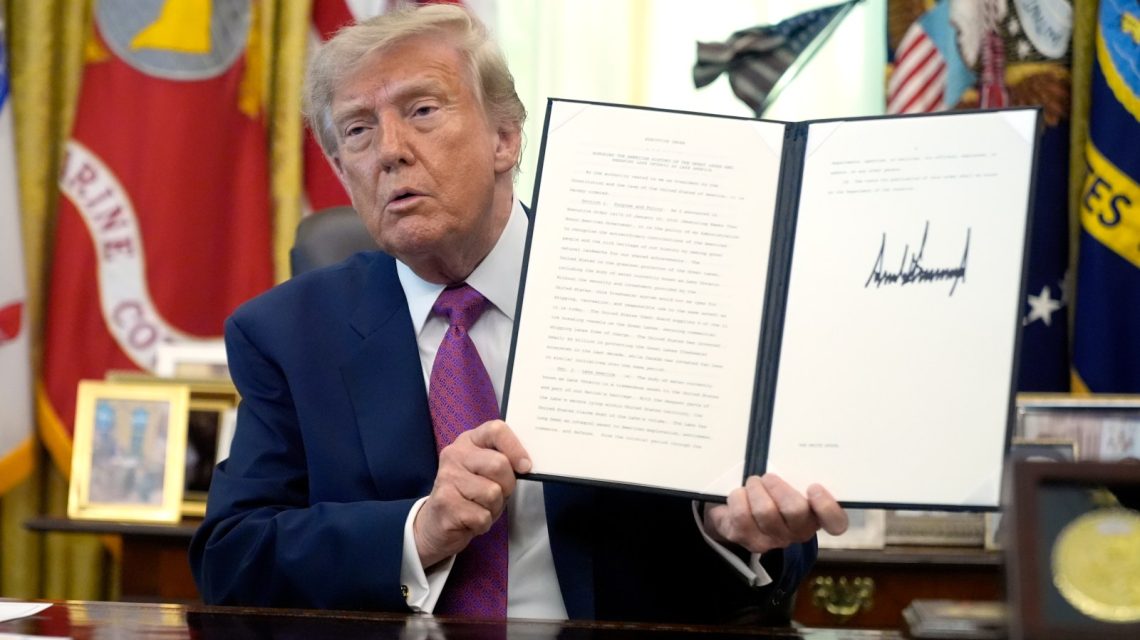
The Trump administration is once again trying to limit eligibility for the Public Service Loan Forgiveness (PSLF) program. This program allows employees in government and nonprofit sectors to cancel remaining student debt after ten years of qualifying payments.
Recently, the Department of Education appealed a court ruling that blocked an initiative to restrict qualifying employers for PSLF. The administration believes these changes are needed to ensure federal benefits are provided only to organizations it considers legitimate public service entities.
Undersecretary of Education Nicholas Kent stated that the rule aims to assure federal benefits support teachers, first responders, and civil servants actively serving communities.
Efforts to reach the Department of Education for comment were made by Newsweek.
Why PSLF Matters
PSLF is a key student loan forgiveness program for federal borrowers. Established by Congress in 2007, it permits qualifying public servants, like teachers and government workers, to receive loan forgiveness after 120 qualifying payments.
The recent court appeal introduces uncertainty for borrowers seeking forgiveness. Changes to employer eligibility could prevent some workers from receiving intended relief. The administration emphasizes that adjustments are to ensure taxpayer-funded benefits support lawful public-service organizations.
Understanding the Proposed Changes
The Department of Education aimed to implement a rule letting the secretary decide an employer’s qualification for PSLF based on legality. Organizations perceived as having “substantial illegal purpose” could be excluded, such as those supporting illegal immigration or gender-affirming care.
Kevin Thompson, CEO of 9i Capital Group, warns that success for the Trump administration in this legal challenge may disqualify many borrowers’ years of service.
Two federal judges blocked the proposed regulation. Judge Amir Ali noted that Congress did not permit the Education Department to independently redefine employers beyond established legal standards.
The Education Department is appealing these decisions to revive the rule. Meanwhile, borrowers pursuing PSLF remain eligible under current requirements.
How to Apply for Loan Forgiveness
Borrowers must work full-time for eligible government or nonprofit employers and have Direct Loans. They may need to consolidate into the Direct Loan program. Enroll in a qualifying repayment plan and make 120 monthly payments while employed by qualified public-service employers.
After meeting these criteria, forgiveness applications are made through the Education Department’s PSLF process. Despite ongoing litigation, PSLF is available under federal law.
Factors Increasing Loan Balance
- Accruing interest when payments don’t cover full interest.
- Interest accumulation during forbearance or deferment.
- Capitalized interest added to principal.
- Extended repayment periods increasing interest paid.
Large balances highlight PSLF’s value for borrowers in public service roles for a decade. Experts note the program forgives remaining balances after required payments. However, ongoing legal battles put some nonprofit employees’ forgiveness at risk.
Thompson expressed concern that if the administration succeeds, further steps could be taken to remove disagreeable elements, potentially forcing repayment.
The Status of PSLF
The PSLF program remains intact amidst the appeals. The Trump administration seeks to narrow eligibility via the appeal process, but the program’s core structure continues. The focus is on employer eligibility, not the program itself.
The administration argues against taxpayer subsidies for organizations with illegal activities, yet the courts maintain that Congress legislates qualified public-service employment.
What Lies Ahead
The appeal will proceed to a higher court to determine the administration’s ability to enforce new restrictions. Until then, current PSLF rules stand, and borrowers should follow existing requirements.
Financial literacy instructor Alex Beene advises that although outcomes are uncertain, borrowers must stay informed about the litigation due to potential impacts on future payments.
 The Surveillance Threat to U.S. Federal Agents
  Trump Administration Distributes ACA Refund Checks
  Trump Administration’s Approach to Illegal Alien Deportations
  New Jersey Voter Fraud Prompts Renewed Push for SAVE Act
  Concerns Over Changes to Voter-Registration Form for Americans Abroad
  Trump’s 2024 Campaign Targets Young Men Through Cryptocurrency